Wadén Katarina, Karlöf Eva, Narayanan Sampath, Lengquist Mariette, Hansson Göran K, Hedin Ulf, Roy Joy, Matic Ljubica
Vascular Surgery, Department of Molecular Medicine and Surgery, Karolinska Institutet and Karolinska University Hospital, 17176 Stockholm, Sweden.
Cardiovascular Medicine Unit, Department of Medicine, Center for Molecular Medicine, Karolinska Institutet and Karolinska University Hospital, 17176 Stockholm, Sweden.
iScience. 2022 Apr 8;25(5):104219. doi: 10.1016/j.isci.2022.104219. eCollection 2022 May 20.
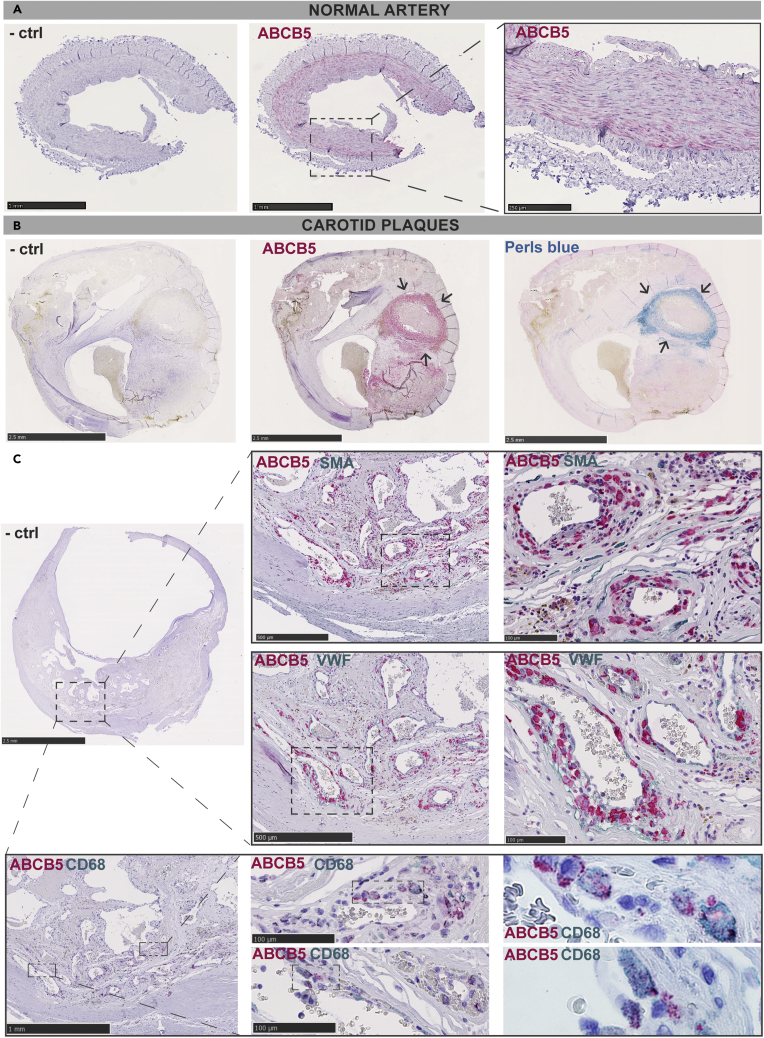
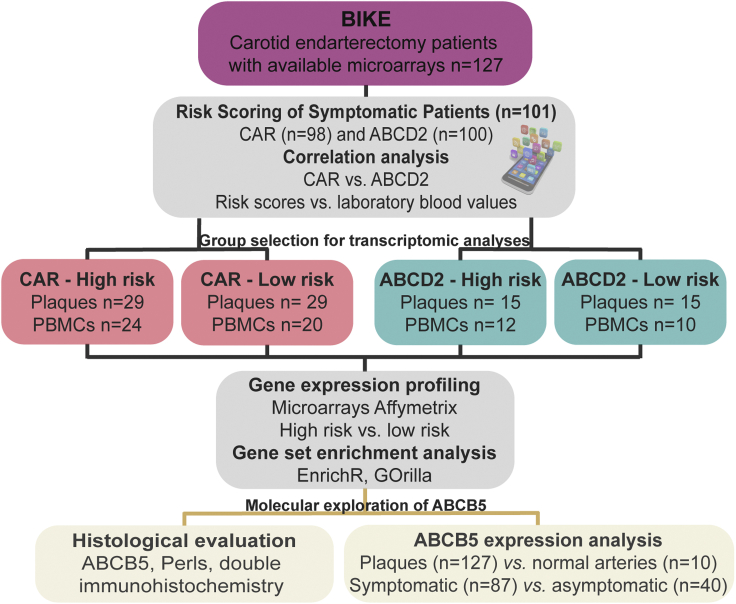
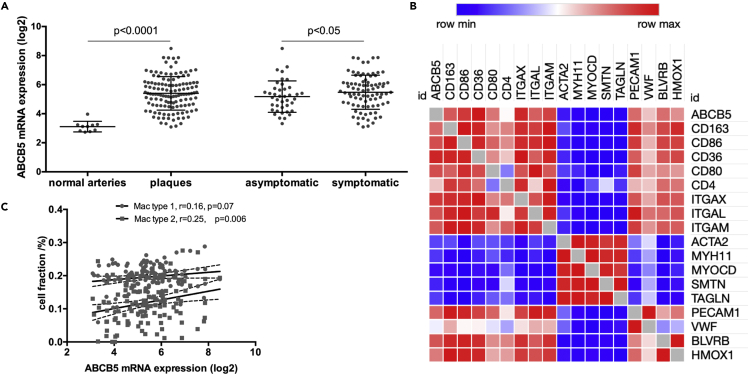
Unstable carotid stenosis is an important cause of ischemic stroke, yet the basis of disease pathophysiology remains largely unknown. We hypothesized that integrated analyses of symptomatic carotid stenosis patients at increased stroke risk stratified by clinical scores, CAR and ABCD2, with transcriptomic and clinical data could improve identification of molecular pathways and targets for instability. We show that high CAR score reflects plaque instability processes related to intra-plaque hemorrhage, angiogenesis, inflammation, and foam cell differentiation, whereas ABCD2 associates with neutrophil-mediated immunity, foam cell differentiation, cholesterol transport, and coagulation. Repressed processes in plaques from high-risk patients were ossification, chondrocyte differentiation, SMC migration, and ECM organization. gene was found as the top upregulated in high-risk patient's plaques, localized to macrophages in areas with neovascularization and intra-plaque hemorrhage. The link between and intra-plaque hemorrhage suggests its key role for plaque instability that warrants further exploration.
不稳定型颈动脉狭窄是缺血性中风的重要原因,但其疾病病理生理学基础在很大程度上仍不清楚。我们假设,通过临床评分、CAR和ABCD2对中风风险增加的有症状颈动脉狭窄患者进行分层,并结合转录组学和临床数据进行综合分析,可以改善对不稳定分子途径和靶点的识别。我们发现,高CAR评分反映了与斑块内出血、血管生成、炎症和泡沫细胞分化相关的斑块不稳定过程,而ABCD2则与中性粒细胞介导的免疫、泡沫细胞分化、胆固醇转运和凝血有关。高危患者斑块中受抑制的过程包括骨化、软骨细胞分化、平滑肌细胞迁移和细胞外基质组织。在高危患者的斑块中发现某基因是上调最明显的基因,定位于新生血管形成和斑块内出血区域的巨噬细胞中。该基因与斑块内出血之间的联系表明其在斑块不稳定中起关键作用,值得进一步探索。