Su Tianjuan, He Bo, Zhao Fang, Jiang Kai, Lin Gonghua, Huang Zuhao
School of Life Sciences Jinggangshan University Ji'an China.
College of Life Sciences Anhui Normal University Wuhu China.
Ecol Evol. 2022 Apr 24;12(4):e8863. doi: 10.1002/ece3.8863. eCollection 2022 Apr.
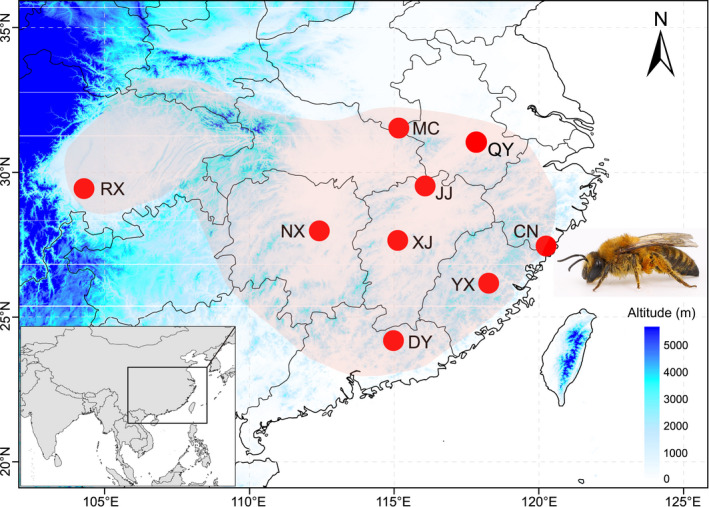
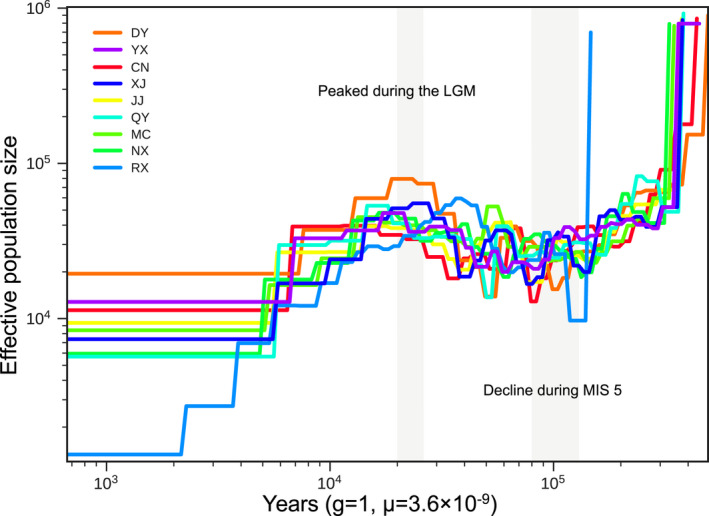
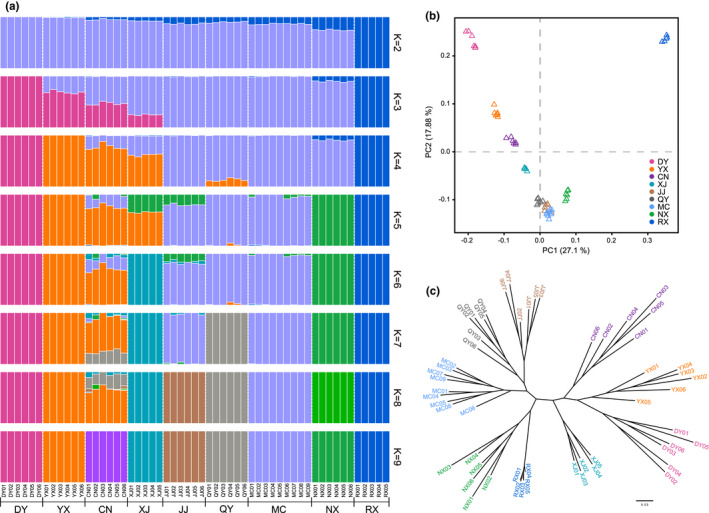
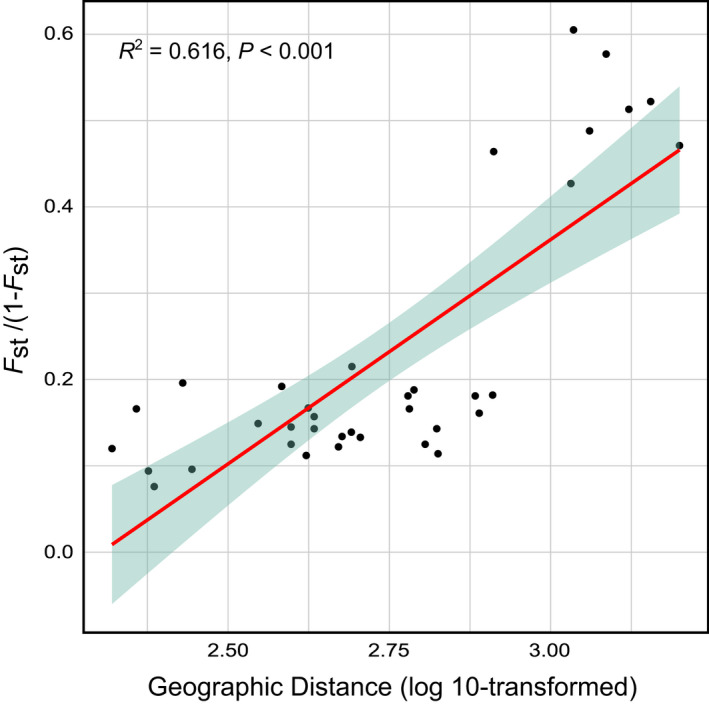
Diet specialization may affect the population genetic structure of pollinators by reducing gene flow and driving genetic differentiation, especially in pollen-specialist bees. is a pollen-specialist pollinator of , one of the most important staple oil crops in China. . blooms in cold climates and contains special compounds that make it an unusable pollen source to other pollinators. Thus, . undoubtedly plays a key role as the main pollinator of . , with biological and economic significance. Here, we use a population genomic approach to analyze the roles of geography and climate on the genetic structure, genetic diversity, and demographic history of . . A total of 1,035,407 SNPs were identified from a 582.77 Gb dataset. Clustering and phylogenetic analyses revealed a marked genetic structure, with individuals grouped into nine local clusters. A significant isolation by distance was detected by both the Mantel test ( = .866, = .008) and linear regression ( = .616, < .001). Precipitation and sunshine duration were positively and significantly ( ≥ .765, ≤ .016) correlated with observed heterozygosity ( ) and expected heterozygosity ( ). These results showed that . populations had a distinct phylogeographic pattern determined by geographical distance and environmental factors (precipitation and sunshine duration). In addition, an analysis of paleogeographic dynamics indicated that . populations exhibited patterns of glacial expansion and interglacial contraction, likely resulting from post-glacial habitat contraction and fragmentation. Our results indicated that the peculiar phylogeographic patterns in . populations may be related to their specialization under long-term adaptation to host plants. This work improves our understanding of the population genetics in pollen-specialist bees. The distinct genetic clusters identified in this study should be taken into consideration for the protection and utilization of this specialized crop pollinator.
食性特化可能通过减少基因流动和推动遗传分化来影响传粉者的种群遗传结构,尤其是在花粉特化的蜜蜂中。[蜜蜂名称]是[作物名称]的花粉特化传粉者,[作物名称]是中国最重要的主要油料作物之一。[作物名称]在寒冷气候下开花,并且含有特殊化合物,使其成为其他传粉者无法利用的花粉来源。因此,[蜜蜂名称]无疑作为[作物名称]的主要传粉者发挥着关键作用,具有生物学和经济意义。在此,我们采用种群基因组方法来分析地理和气候对[蜜蜂名称]的遗传结构、遗传多样性和种群历史的作用。从582.77Gb的数据集中共鉴定出1,035,407个单核苷酸多态性(SNP)。聚类和系统发育分析揭示了显著的遗传结构,个体被分为9个本地簇。通过Mantel检验(r = 0.866,P = 0.008)和线性回归(β = 0.616,P < 0.001)均检测到显著的距离隔离。降水量和日照时长与观察到的杂合度(Ho)和预期杂合度(He)呈显著正相关(r ≥ 0.765,P ≤ 0.016)。这些结果表明,[蜜蜂名称]种群具有由地理距离和环境因素(降水量和日照时长)决定的独特系统地理格局。此外,古地理动态分析表明,[蜜蜂名称]种群呈现出冰川扩张和间冰期收缩的模式,这可能是由于冰后期栖息地收缩和破碎化所致。我们的结果表明,[蜜蜂名称]种群中独特的系统地理格局可能与其在长期适应寄主植物过程中的特化有关。这项工作增进了我们对花粉特化蜜蜂种群遗传学的理解。本研究中鉴定出的不同遗传簇在保护和利用这种特化作物传粉者时应予以考虑。