Ma Ruoyao, Farrell Damien, Gonzalez Gabriel, Browne John A, Nakajima Chie, Suzuki Yasuhiko, Gordon Stephen V
UCD School of Veterinary Medicine, University College Dublin, Dublin, Ireland.
Hokkaido University International Institute for Zoonosis Control, Sapporo, Japan.
Front Microbiol. 2022 Apr 14;13:817952. doi: 10.3389/fmicb.2022.817952. eCollection 2022.
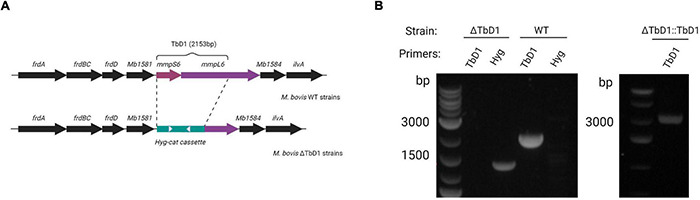
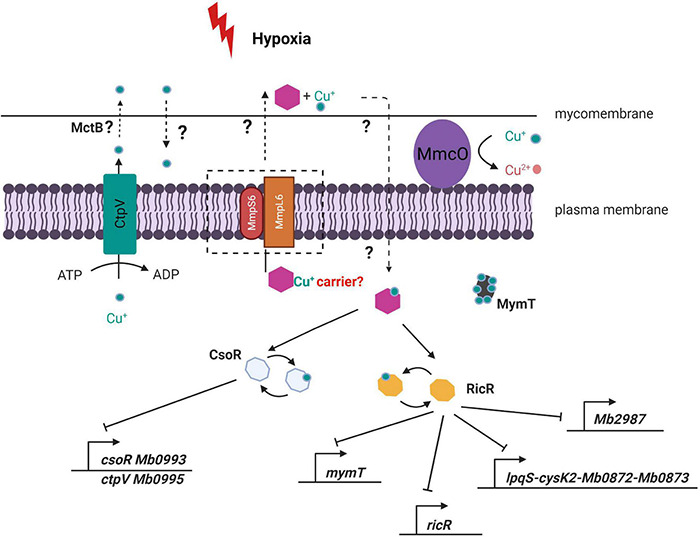
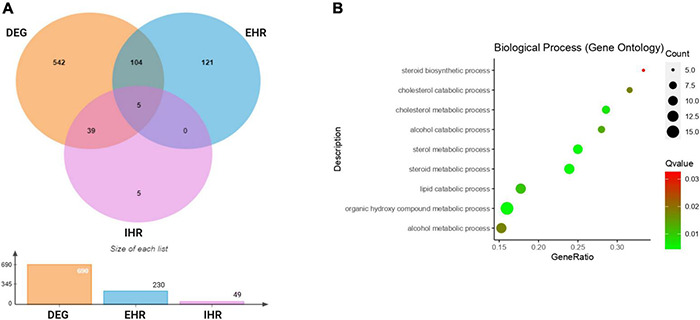
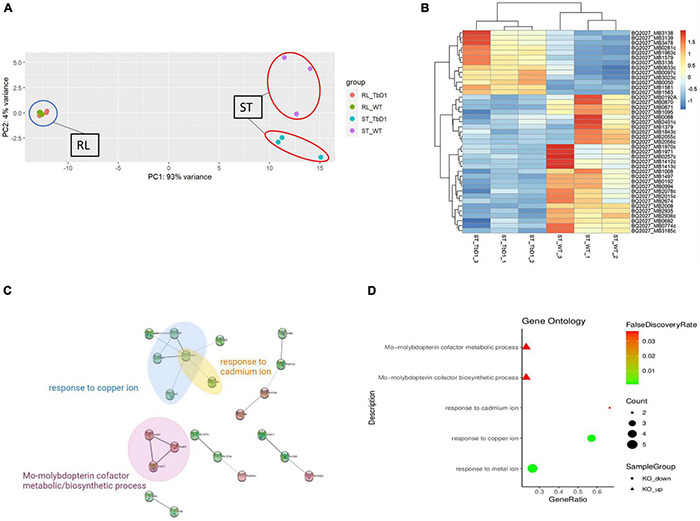
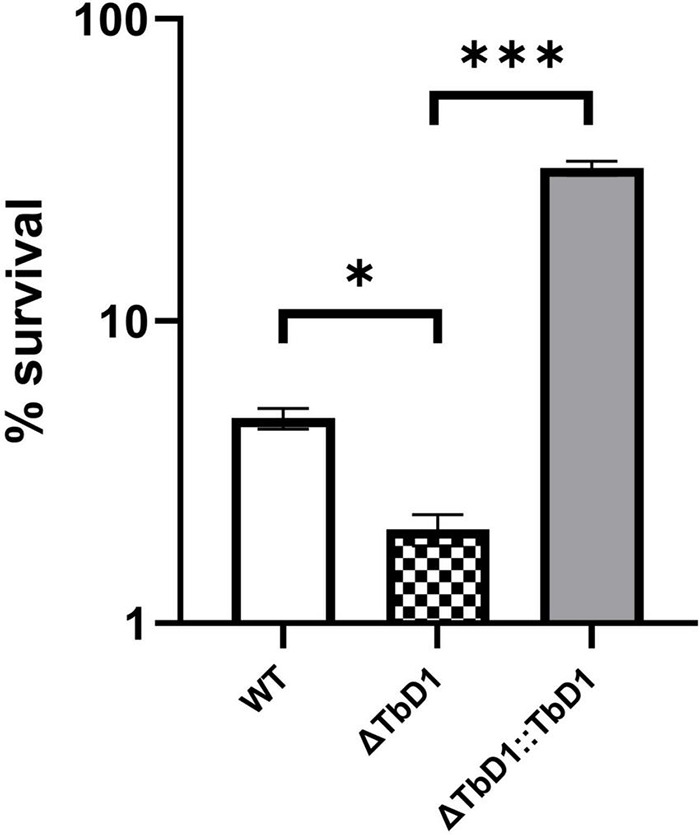
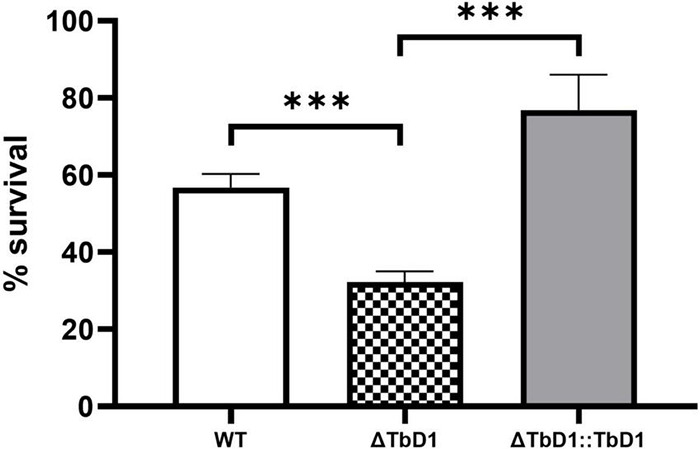
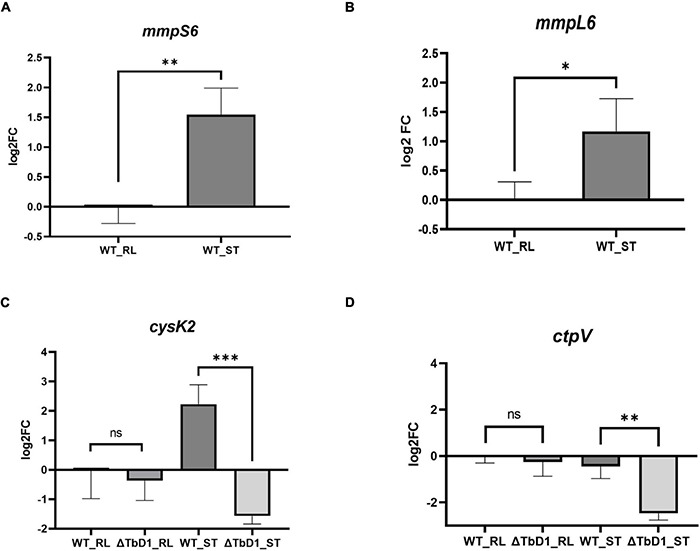
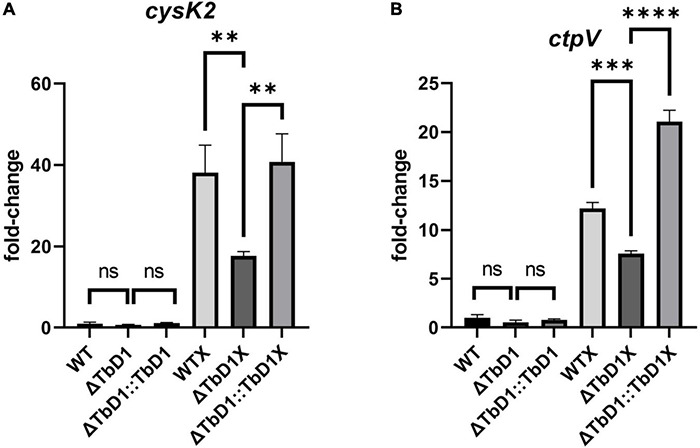
The complex (MTBC) contains the causative agents of tuberculosis (TB) in mammals. The archetypal members of the MTBC, and , cause human tuberculosis and bovine tuberculosis, respectively. Although and share over 99.9% genome identity, they show distinct host adaptation for humans and animals; hence, while the molecular basis of host adaptation is encoded in their genomes, the mechanistic basis of host tropism is still unclear. Exploration of the phenotypic consequences of known genetic difference between and offers one route to explore genotype-phenotype links that may play a role in host adaptation. The TbD1 (" deletion 1 region") locus encompasses the and genes. TbD1 is absent in "modern" lineages (Lineages 2, 3, and 4) but present in "ancestral" (Lineages 1 and 7), lineages (Lineages 5 and 6), newly identified lineages (Lineages 8 and 9), and animal adapted strains, such as . The function of TbD1 has previously been investigated in , where conflicting data has emerged on the role of TbD1 in sensitivity to oxidative stress, while the underlying mechanistic basis of such a phenotype is unclear. In this study, we aimed to shed further light on the role of the TbD1 locus by exploring its function in . Toward this, we constructed an TbD1 knockout (ΔTbD1) strain and conducted comparative transcriptomics to define global gene expression profiles of wild-type (WT) and the ΔTbD1 strains under culture conditions (rolling and standing cultures). This analysis revealed differential induction of a hypoxia-driven copper response in WT and ΔTbD1 strains. phenotypic assays demonstrated that the deletion of TbD1 sensitized to HO and hypoxia-specific copper toxicity. Our study provides new information on the function of the TbD1 locus in and its role in stress responses in the MTBC.
结核分枝杆菌复合群(MTBC)包含哺乳动物结核病(TB)的病原体。MTBC的典型成员结核分枝杆菌和牛分枝杆菌分别导致人类结核病和牛结核病。尽管结核分枝杆菌和牛分枝杆菌的基因组同一性超过99.9%,但它们对人类和动物表现出明显的宿主适应性;因此,虽然宿主适应性的分子基础编码在它们的基因组中,但宿主嗜性的机制基础仍不清楚。探索结核分枝杆菌和牛分枝杆菌之间已知遗传差异的表型后果为探索可能在宿主适应性中起作用的基因型-表型联系提供了一条途径。TbD1(“缺失1区域”)位点包含Rv3872和Rv3873基因。TbD1在结核分枝杆菌“现代”谱系(谱系2、3和4)中不存在,但存在于“祖先”结核分枝杆菌(谱系1和7)、非洲分枝杆菌谱系(谱系5和6)、新鉴定的分枝杆菌谱系(谱系8和9)以及动物适应菌株(如牛分枝杆菌)中。此前已在结核分枝杆菌中研究了TbD1的功能,关于TbD1在氧化应激敏感性中的作用出现了相互矛盾的数据,而这种表型的潜在机制基础尚不清楚。在本研究中,我们旨在通过探索TbD1位点在牛分枝杆菌中的功能来进一步阐明其作用。为此,我们构建了牛分枝杆菌TbD1基因敲除(ΔTbD1)菌株,并进行了比较转录组学分析,以确定牛分枝杆菌野生型(WT)和ΔTbD1菌株在两种培养条件(滚动培养和静置培养)下的全局基因表达谱。该分析揭示了WT和ΔTbD1菌株中缺氧驱动的铜反应的差异诱导。表型分析表明,TbD1的缺失使牛分枝杆菌对过氧化氢和缺氧特异性铜毒性敏感。我们的研究提供了关于TbD1位点在牛分枝杆菌中的功能及其在MTBC应激反应中的作用的新信息。