Xiang Cheng, Liao Yilin, Chen Zhuoyuan, Xiao Bo, Zhao Ziyue, Li Aoyu, Xia Yu, Wang Pingxiao, Li Hui, Xiao Tao
Department of Orthopaedics, The Second Xiangya Hospital, Central South University, Changsha, China.
Second Xiangya Hospital, Central South University, Changsha, China.
Front Pharmacol. 2022 Apr 14;13:854215. doi: 10.3389/fphar.2022.854215. eCollection 2022.
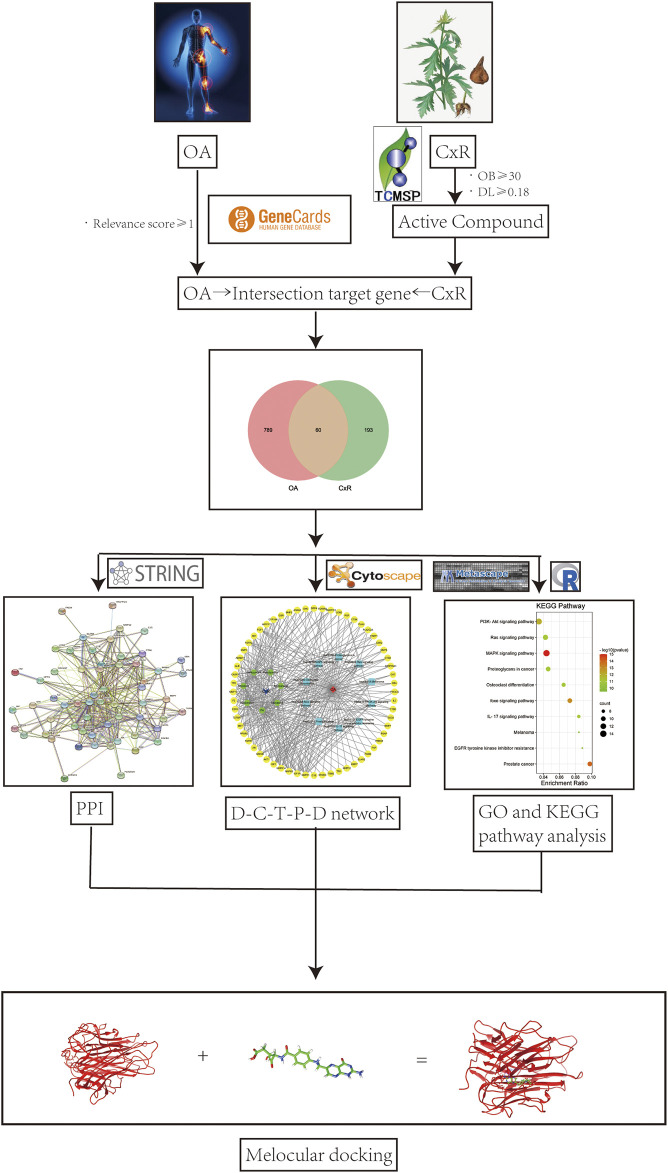
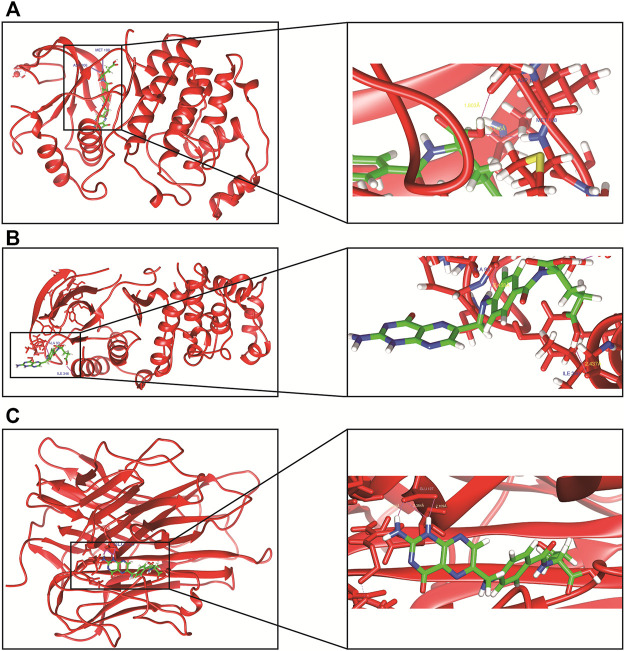
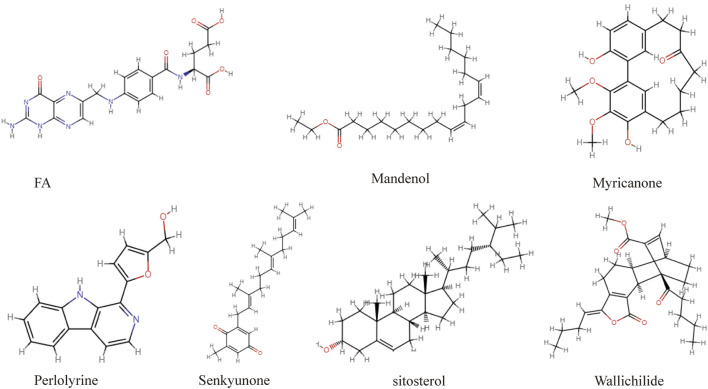
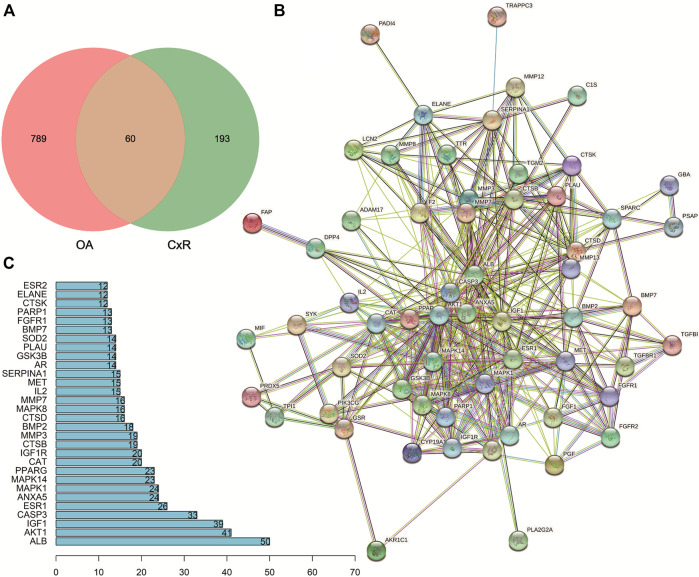
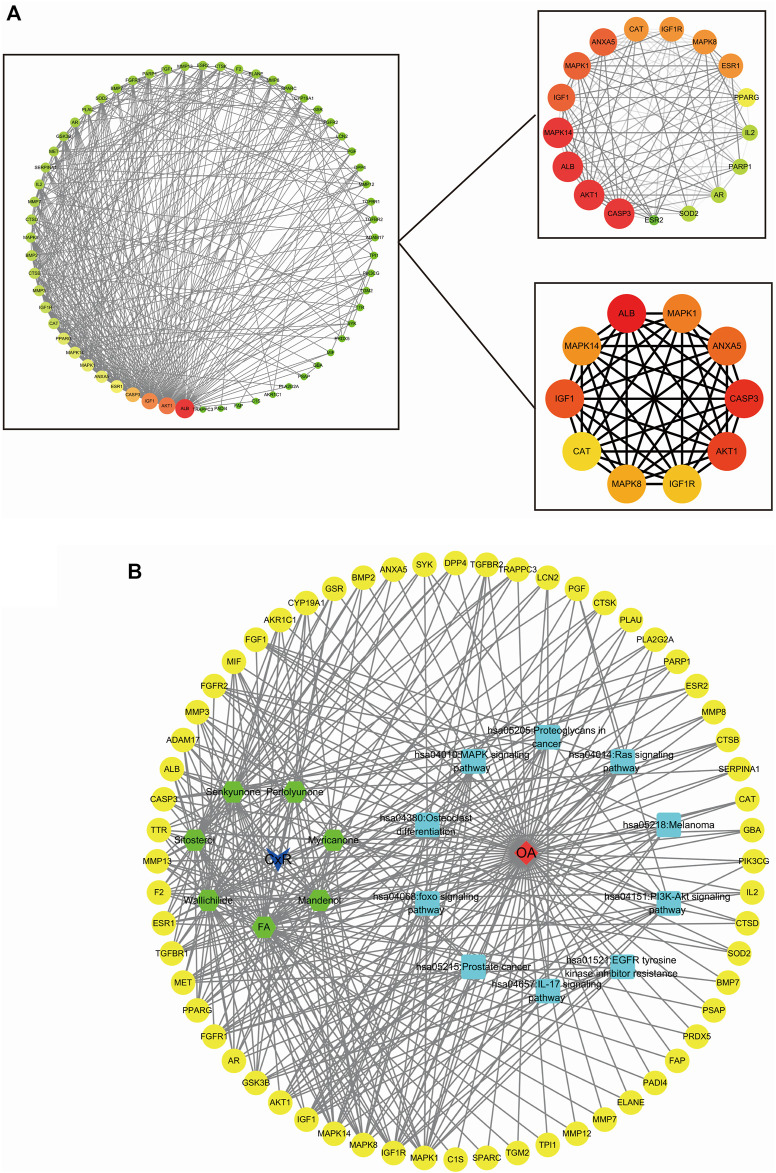
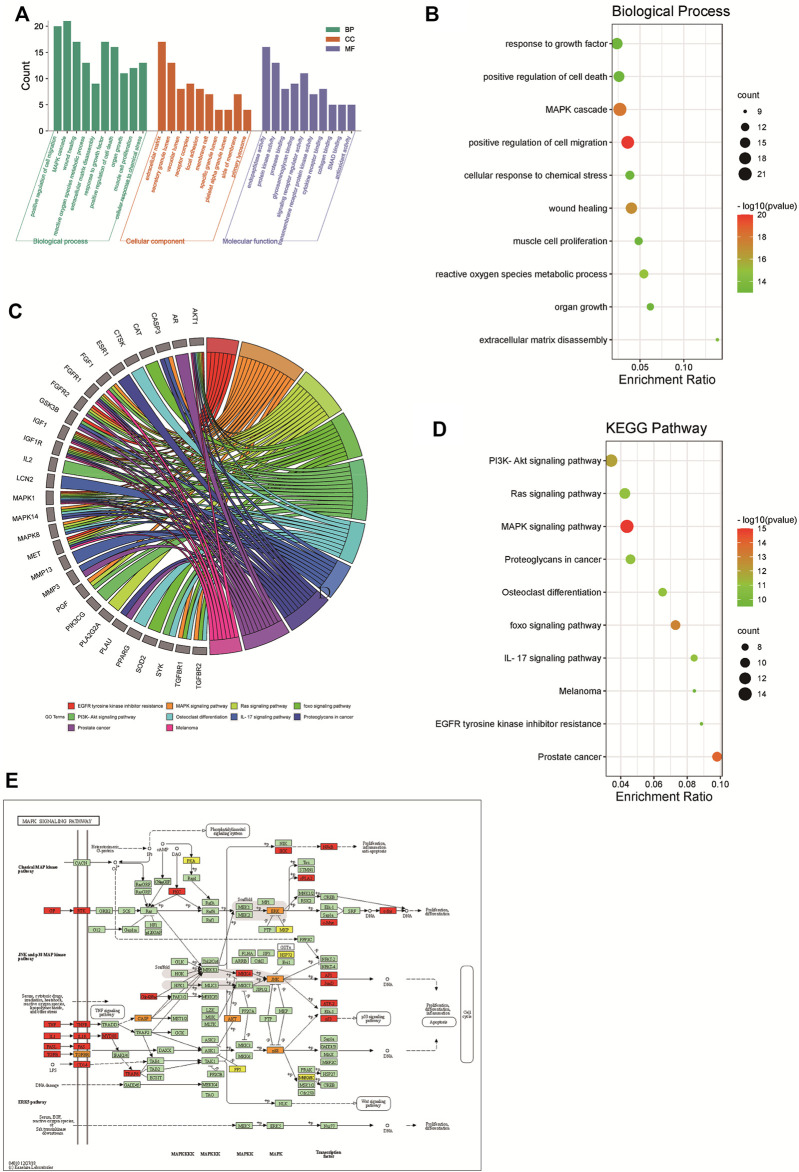
Osteoarthritis (OA) is a degenerative disease which serious affects patients. Ligusticum chuanxiong (CX) has been shown to have a certain curative effect on osteoarthritis in traditional Chinese medicine therapy. This study is based on network pharmacology and molecular docking technology to explore the potential mechanism of CX. Components of CX to treat osteoarthritis were screened in the TCMSP database and targets were predicted by the PharmMapper database, the osteoarthritis targets were collected from the GeneCards database, and intersection genes were found to be the possible targets of CX anti-OA. The STRING database and Cytoscape software were utilized for protein-protein interaction analysis and further screening of core targets. The Metascape database was used for KEGG and GO enrichment analyses. Then, the top 10 pathways were selected to construct "drug-compound-target-pathway-disease" network analysis. Finally, molecular docking was used to analyze the binding affinity of seven compounds with core targets and TNF-α. Seven compounds with 253 non-repetitive targets of CX were screened from the TCMSP database and 60 potential intersection targets of CX anti-OA were found. PPI network analysis showed that the core targets were ALB, AKT1, IGF1, CASP3, MAPK1, ANXA5, and MAPK14, while GO and KEGG pathway enrichment analyses showed that the relevant biological processes involved in the treatment of osteoarthritis by CX might include the MAPK cascade and reactive oxygen species metabolic process. The KEGG pathway analysis result was mainly associated with the MAPK signaling pathway and PI3K-AKT signaling pathway. We further docked seven ingredients with MAPK1 and MAPK14 enriched in the MAPK pathway, and TNF-α as the typical inflammatory cytokine. The results also showed good binding affinity, especially FA, which may be the most important component of CX anti-OA. Our research revealed the potential mechanism of CX in the treatment of OA, and our findings can also pave the way for subsequent basic experimental verification and a new research direction.
骨关节炎(OA)是一种严重影响患者的退行性疾病。在中医治疗中,川芎(CX)已被证明对骨关节炎有一定疗效。本研究基于网络药理学和分子对接技术探索川芎的潜在作用机制。在中药系统药理学数据库与分析平台(TCMSP)数据库中筛选川芎治疗骨关节炎的成分,并通过中药靶点预测数据库(PharmMapper)预测靶点,从基因卡片数据库(GeneCards)收集骨关节炎靶点,找出交集基因作为川芎抗骨关节炎的潜在靶点。利用STRING数据库和Cytoscape软件进行蛋白质-蛋白质相互作用分析并进一步筛选核心靶点。使用Metascape数据库进行京都基因与基因组百科全书(KEGG)和基因本体论(GO)富集分析。然后,选择前10条通路构建“药物-化合物-靶点-通路-疾病”网络分析。最后,使用分子对接分析7种化合物与核心靶点及肿瘤坏死因子-α(TNF-α)的结合亲和力。从TCMSP数据库中筛选出具有253个非重复靶点的7种化合物,发现川芎抗骨关节炎的60个潜在交集靶点。蛋白质-蛋白质相互作用(PPI)网络分析表明,核心靶点为白蛋白(ALB)、蛋白激酶B1(AKT1)、胰岛素样生长因子1(IGF1)、半胱天冬酶3(CASP3)、丝裂原活化蛋白激酶1(MAPK1)、膜联蛋白A5(ANXA5)和丝裂原活化蛋白激酶14(MAPK14),而GO和KEGG通路富集分析表明,川芎治疗骨关节炎涉及的相关生物学过程可能包括丝裂原活化蛋白激酶级联反应和活性氧代谢过程。KEGG通路分析结果主要与丝裂原活化蛋白激酶信号通路和磷脂酰肌醇-3激酶-蛋白激酶B信号通路相关。我们进一步将7种成分与丝裂原活化蛋白激酶通路中富集的丝裂原活化蛋白激酶1和丝裂原活化蛋白激酶14以及作为典型炎性细胞因子的肿瘤坏死因子-α进行对接。结果也显示出良好的结合亲和力,尤其是阿魏酸(FA),它可能是川芎抗骨关节炎的最重要成分。我们的研究揭示了川芎治疗骨关节炎的潜在机制,我们的研究结果也可为后续的基础实验验证和新的研究方向铺平道路。