Department of Physical Therapy Science, Nagasaki University Graduate School of Biomedical Sciences, Nagasaki, Japan.
Department of Rehabilitation, Tagami Hospital, Nagasaki, Japan.
Int J Chron Obstruct Pulmon Dis. 2022 Apr 22;17:893-903. doi: 10.2147/COPD.S359223. eCollection 2022.
The presence of pain can be associated with an exaggerated negative cognitive and emotional response, leading to worsening of existing symptoms. This study aimed to describe the multifaceted impact of chronic pain on cognition, emotional and physical health in people with chronic obstructive pulmonary diseases (COPD) and to explore the clinical impact of pain.
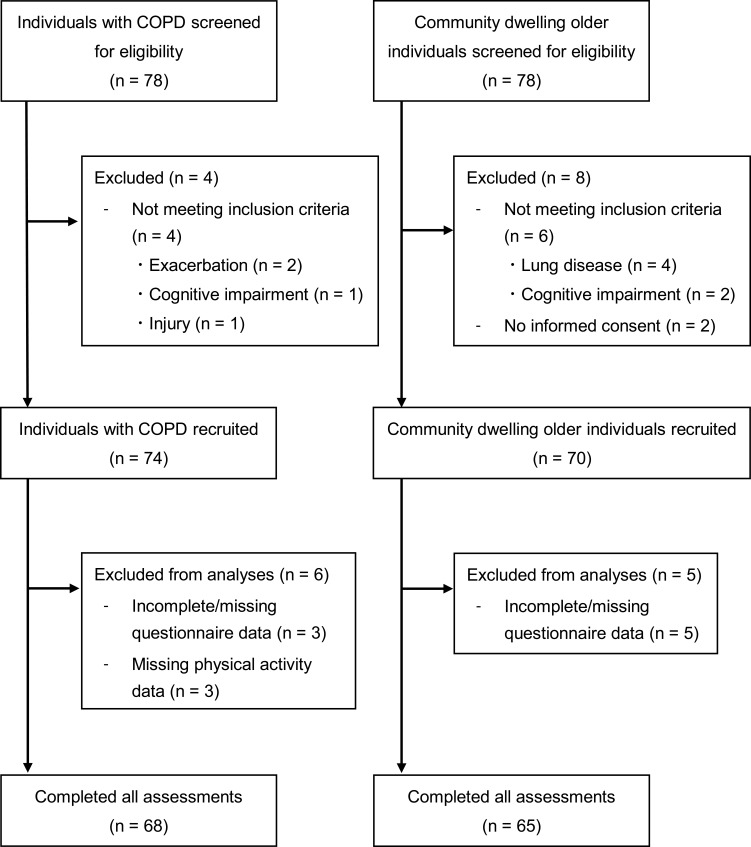
A prospective, cross-sectional multicenter study was carried out in 68 people with COPD (COPD group) and 65 community-dwelling age-matched participants (control group). Participants were assessed for the presence of chronic pain, pain location, intensity and catastrophizing, pain-related fear (kinesiophobia), anxiety and depression, physical activity, and sleep duration. The COPD group also completed assessments of dyspnea, exercise tolerance (6-minute walk distance [6MWD]), and activities of daily living (ADL).
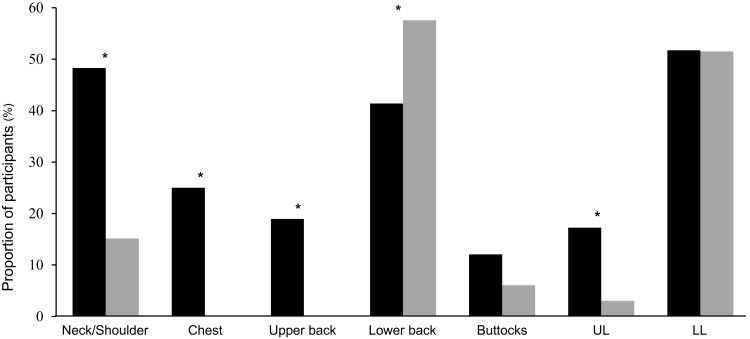
The prevalence of pain was higher in the COPD group (85% vs 51%, p<0.001). The COPD group reported pain located in neck/shoulder, upper back, thorax and upper limbs, while the control group had more pain in the lower back. Pain catastrophizing and kinesiophobia were reported by 28% and 67% vs 9% and 42%, in the COPD and control groups respectively (both p<0.05). People with COPD and pain (n=58) reported greater dyspnea (p<0.001), and impairment in ADL (p<0.05), and lower 6MWD and physical activity (both p<0.01) compared to COPD participants without pain (n=10).
This study demonstrated that, compared to community-dwelling participants, there is a higher prevalence of chronic pain in people with COPD. Pain combined with dyspnea may impact adversely on cognitive function and lead to anxiety and depression, as well as greater impairment in exercise tolerance, physical activity, and ADL. These results suggested that it is necessary to assess the symptoms of chronic pain and inflect in chronic pain coping strategies.
疼痛的存在可能与夸大的负面认知和情绪反应有关,从而导致现有症状恶化。本研究旨在描述慢性疼痛对慢性阻塞性肺疾病(COPD)患者认知、情绪和身体健康的多方面影响,并探讨疼痛的临床影响。
进行了一项前瞻性、横断面多中心研究,纳入 68 名 COPD 患者(COPD 组)和 65 名年龄匹配的社区居住参与者(对照组)。评估参与者是否存在慢性疼痛、疼痛部位、强度和灾难化、与疼痛相关的恐惧(运动恐惧)、焦虑和抑郁、身体活动和睡眠时间。COPD 组还完成了呼吸困难、运动耐量(6 分钟步行距离[6MWD])和日常生活活动(ADL)的评估。
COPD 组疼痛的患病率较高(85% vs 51%,p<0.001)。COPD 组报告的疼痛部位在颈部/肩部、上背部、胸部和上肢,而对照组的下背部疼痛较多。COPD 组和对照组分别有 28%和 67%报告疼痛灾难化,而分别有 9%和 42%报告运动恐惧(均 p<0.05)。有疼痛(n=58)的 COPD 患者报告呼吸困难更严重(p<0.001),ADL 受损(p<0.05),6MWD 和身体活动减少(均 p<0.01),与无疼痛的 COPD 参与者(n=10)相比。
本研究表明,与社区居住的参与者相比,COPD 患者慢性疼痛的患病率更高。疼痛加上呼吸困难可能会对认知功能产生不利影响,并导致焦虑和抑郁,以及运动耐量、身体活动和 ADL 更大的受损。这些结果表明,有必要评估慢性疼痛的症状,并制定慢性疼痛应对策略。