Zhang Jin, Tao Meng-Ting, Song Chongchong, Sun Bai
Key Laboratory of Water Pollution Control and Wastewater Resource of Anhui Province, College of Environment and Energy Engineering, Anhui Jianzhu University Hefei 230601 PR China
RSC Adv. 2020 Mar 26;10(21):12365-12372. doi: 10.1039/d0ra00915f. eCollection 2020 Mar 24.
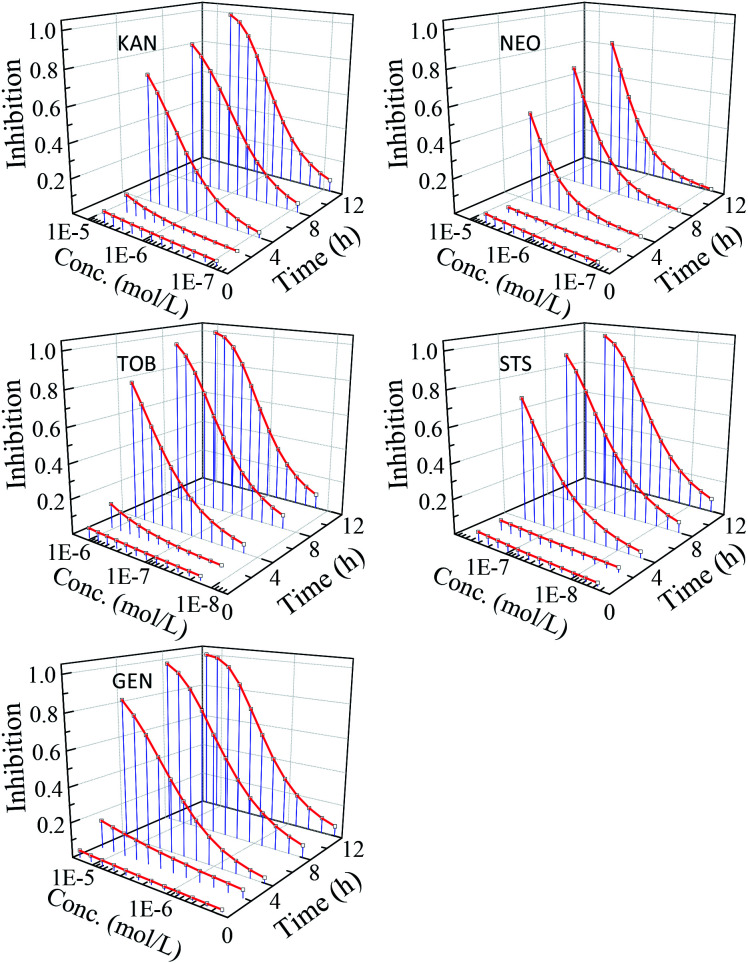
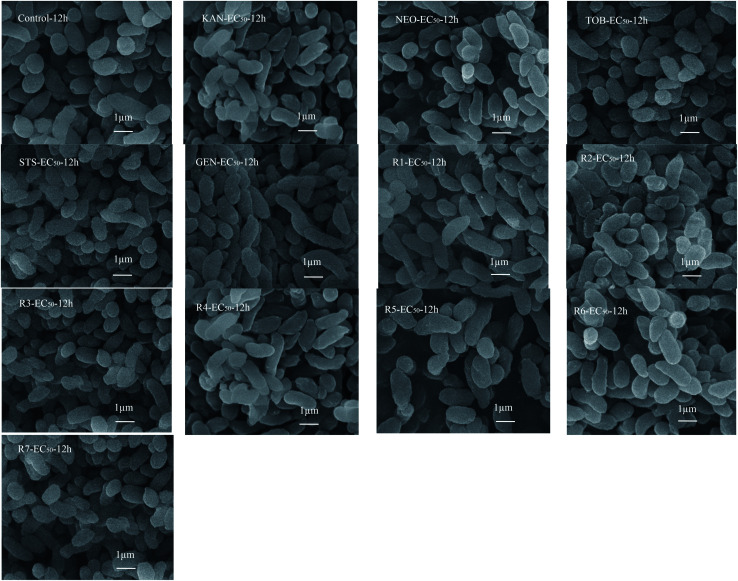
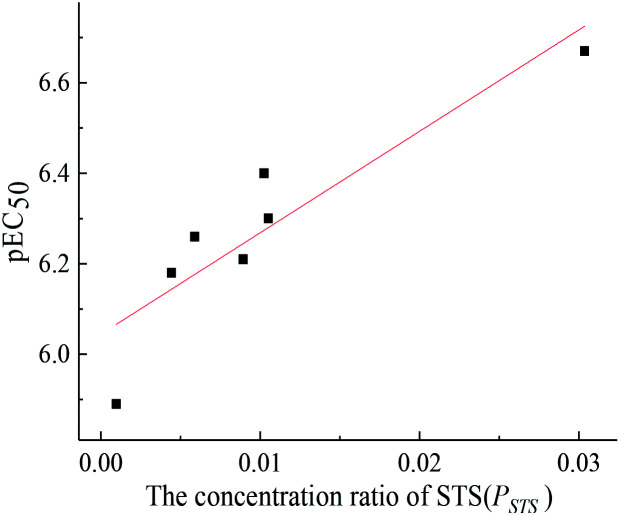
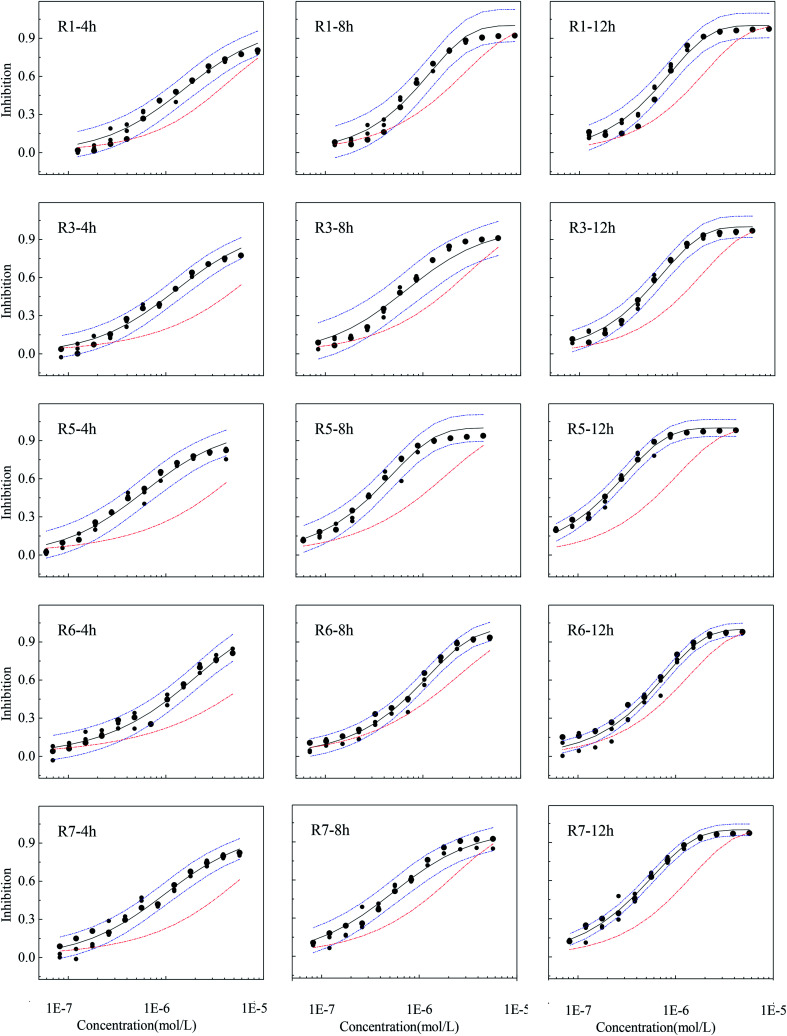
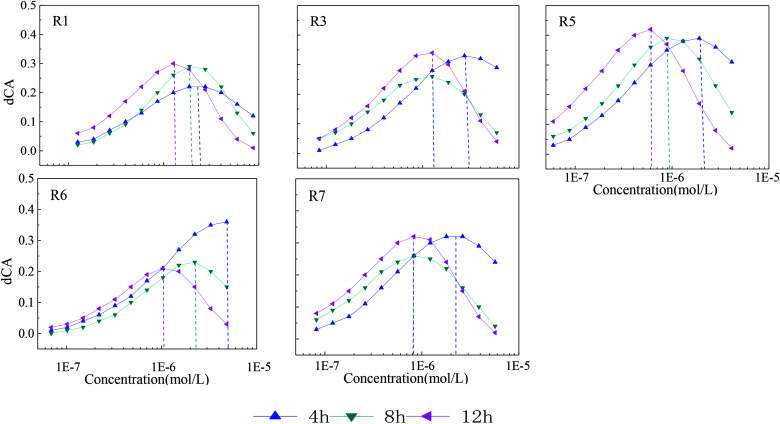
A large number of antibiotics are entering the aquatic environment accompanying human and animal excreta, which will threaten the survival of aquatic organisms and even human health. It has been found that binary mixtures of aminoglycoside (AG) exhibit additive action and can be evaluated well by a classical model, concentration addition (CA) in our past study. Therefore, to investigate the toxicity interaction within multi-component mixtures of AG antibiotics, five antibiotics, kanamycin sulfate (KAN), neomycin sulfate (NEO), tobramycin (TOB), streptomycin sulfate (STS), and gentamicin sulfate (GEN), were selected to construct five-component mixture systems by a uniform design ray method. The toxic effects (luminescence inhibition) of single antibiotic and five-antibiotic mixture systems towards a photobacterium sp.-Q67 () in different exposure time (0.25, 2, 4, 8, and 12 h) were determined by the time-dependent microplate toxicity analysis method. The concentration-effect data were fitted by a nonlinear least square method, toxicity interaction within mixture systems was analyzed by a CA model, and the interaction intensity was characterized by deviation from the CA model (dCA). Besides, the toxicity mechanism of five antibiotics and their five-component mixtures to was analyzed by electron microscopy. The results show that toxicity of five antibiotics and their five-component mixture systems to is time-dependent and has strong long-term toxicity. Different from binary AG antibiotic mixture systems, five-antibiotic mixture systems exhibit obviously time-dependent synergism. In addition, toxicity of the five-antibiotic mixtures can be 1.4 times higher than that of the mixtures without synergisms at the same concentration level. According to dCA, synergism intensity (dCA) curves of rays move slowly from the high concentration region to the medium or lower one and the maximum dCA values also increase, decrease, or first increase, then decrease with the lengthening of exposure time. The inhibition activity and synergism intensity of mixture rays have good correlation with the concentration ratios of STS, the key component for synergism. The cell morphology of indicates the strong toxicity of five antibiotics and their mixture rays is not due to the destruction of cell structure, but the inhibition of the light-emitting activity of the photobacterium.
大量抗生素随着人类和动物排泄物进入水生环境,这将威胁水生生物的生存,甚至人类健康。在我们过去的研究中发现,氨基糖苷类(AG)二元混合物表现出相加作用,并且可以通过经典模型浓度相加(CA)进行很好的评估。因此,为了研究AG抗生素多组分混合物中的毒性相互作用,选择了五种抗生素,硫酸卡那霉素(KAN)、硫酸新霉素(NEO)、妥布霉素(TOB)、硫酸链霉素(STS)和硫酸庆大霉素(GEN),通过均匀设计射线法构建五组分混合物体系。采用时间依赖型微孔板毒性分析方法,测定了单一抗生素和五抗生素混合物体系在不同暴露时间(0.25、2、4、8和12小时)对发光细菌sp.-Q67()的毒性效应(发光抑制)。浓度效应数据采用非线性最小二乘法拟合,混合物体系内的毒性相互作用通过CA模型分析,相互作用强度通过偏离CA模型(dCA)来表征。此外,通过电子显微镜分析了五种抗生素及其五组分混合物对的毒性机制。结果表明,五种抗生素及其五组分混合物体系对的毒性具有时间依赖性,且具有很强的长期毒性。与二元AG抗生素混合物体系不同,五抗生素混合物体系表现出明显的时间依赖性协同作用。此外,在相同浓度水平下,五抗生素混合物的毒性可能比无协同作用的混合物高1.4倍。根据dCA,射线的协同作用强度(dCA)曲线从高浓度区域缓慢移动到中低浓度区域,并且最大dCA值也随着暴露时间的延长而增加、减少或先增加后减少。混合物射线的抑制活性和协同作用强度与协同作用的关键组分STS的浓度比具有良好的相关性。的细胞形态表明,五种抗生素及其混合物射线的强毒性不是由于细胞结构的破坏,而是对发光细菌发光活性的抑制。