Kambara Takahiro, Amatya Vishwa Jeet, Kushitani Kei, Fujii Yutaro, Endo Ihiro, Takeshima Yukio
Department of Pathology, Graduate School of Biomedical and Health Sciences, Hiroshima University, Hiroshima, Hiroshima 734-8551, Japan.
Oncol Lett. 2022 Jun;23(6):174. doi: 10.3892/ol.2022.13294. Epub 2022 Apr 13.
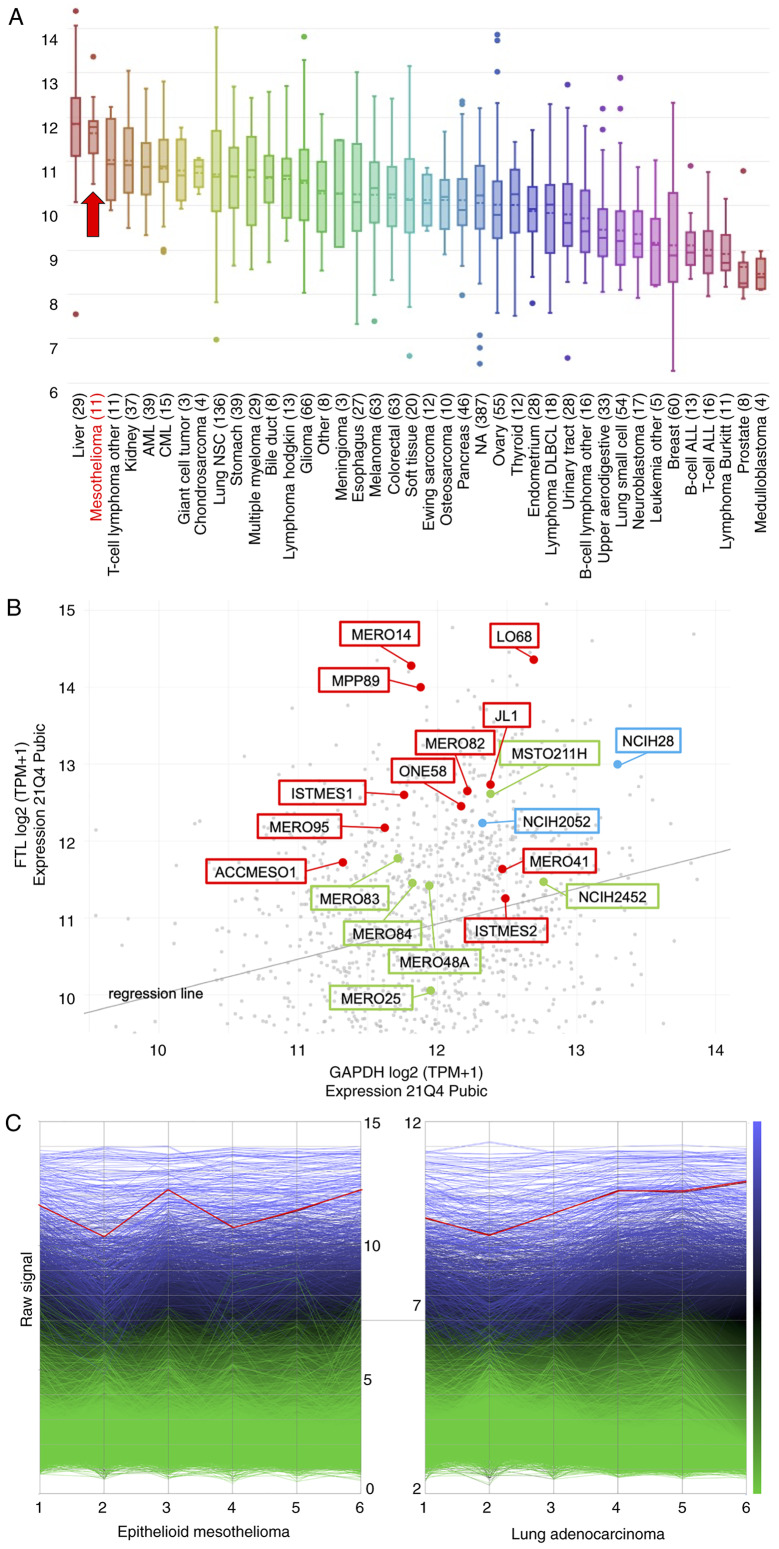
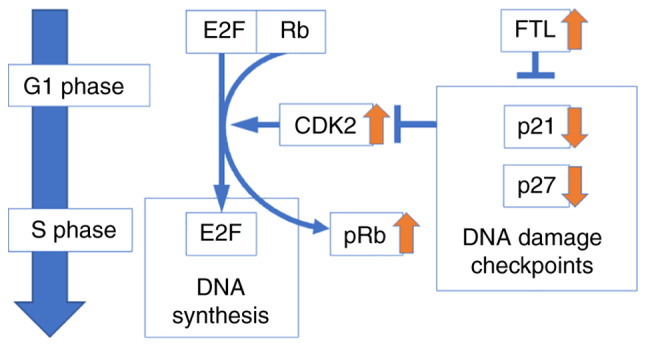
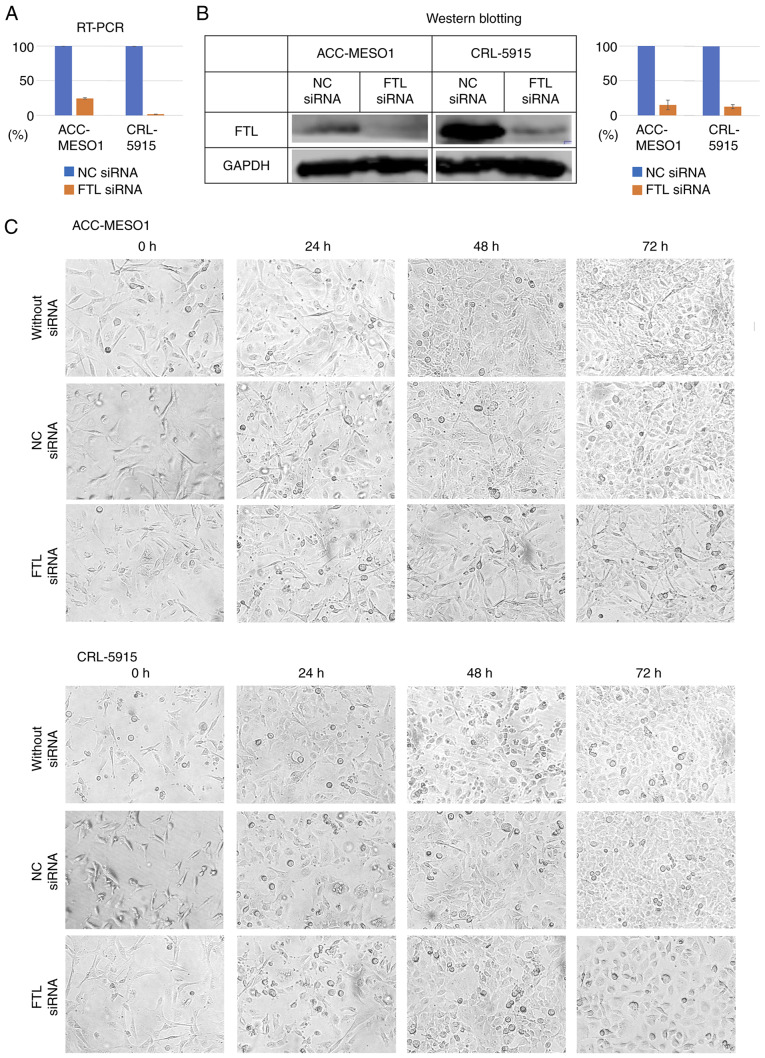
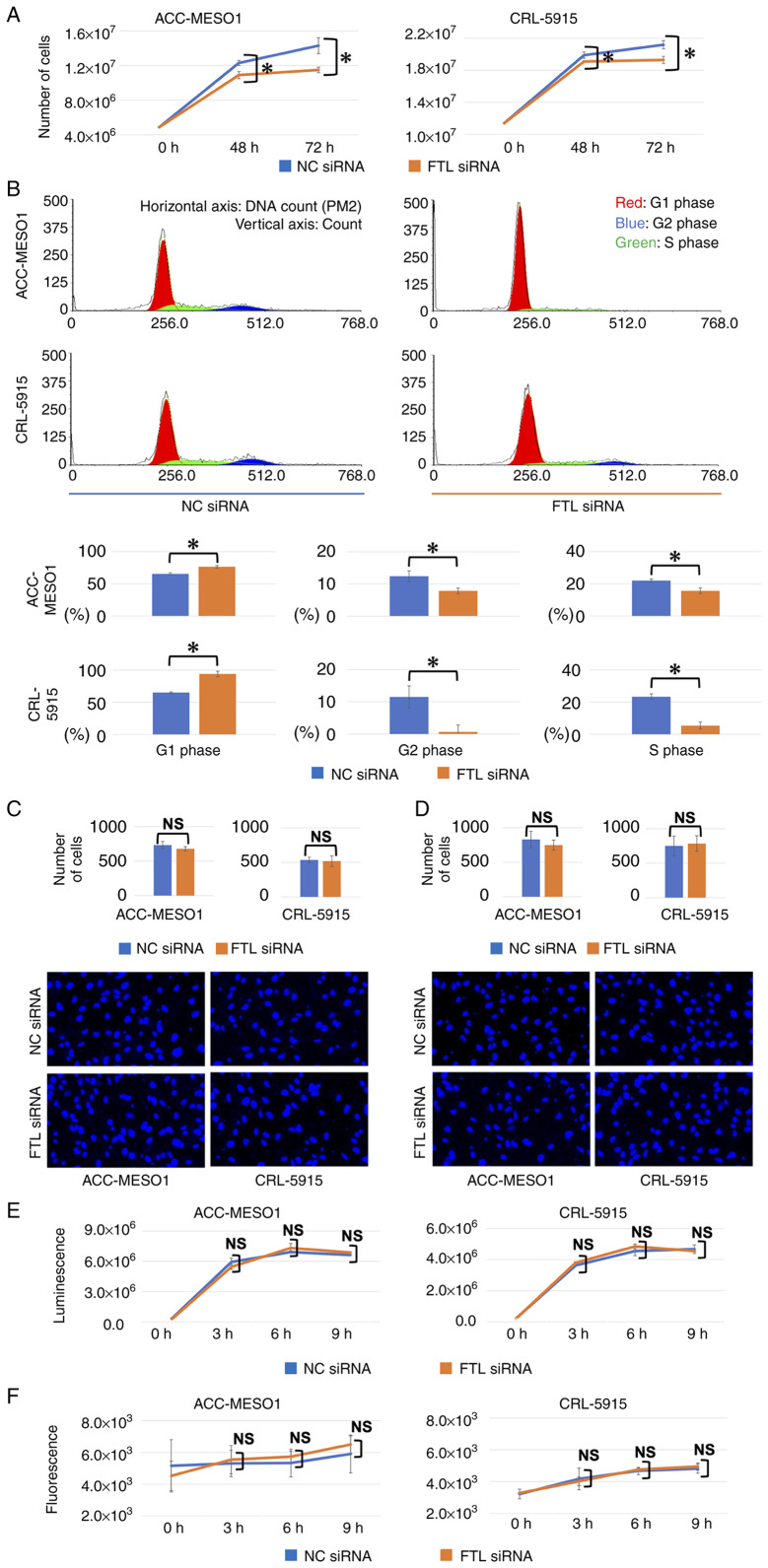
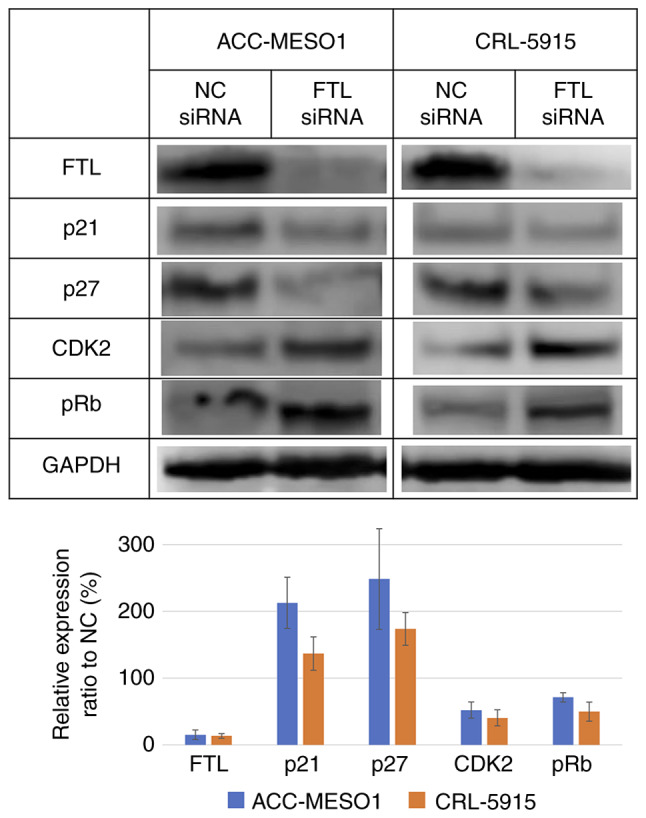
Pleural malignant mesothelioma is a malignant tumor with a poor prognosis that is strongly associated with asbestos exposure during its development. Because there is no adequate treatment for malignant mesothelioma, investigation of its molecular mechanism is important. The ferritin light chain (FTL) is a subunit of ferritin, and its high expression in malignant tumors, including malignant mesothelioma, has recently been reported; however, its role in malignant mesothelioma is unclear. The purpose of the present study was to clarify the function of FTL in malignant mesothelioma. The expression levels of FTL in malignant mesothelioma were examined using the Cancer Cell Line Encyclopedia database and our previous data. The short interfering (si)RNA against FTL was transfected into two mesothelioma cell lines, ACC-MESO-1 and CRL-5915, and functional analysis was performed. Expression of p21, p27, cyclin-dependent kinase 2 (CDK2) and phosphorylated retinoblastoma protein (pRb) associated with the cell cycle were examined as candidate genes associated with FTL. The expression levels of the FTL mRNA were higher in malignant mesothelioma compared with other tumors in the Cancer Cell Line Encyclopedia database, and among other genes in our previous study. Reverse transcription-quantitative PCR and western blotting demonstrated suppression of FTL expression in two cell lines transfected with FTL siRNA compared with cells transfected with negative control (NC) siRNA. In the two cell lines transfected with FTL siRNA, proliferation was significantly suppressed, and cell cycle arrest was observed in the G phase. The levels of p21 and p27 were increased, while those of CDK2 and pRb were decreased compared with NC. However, no significant differences in invasion and migration ability were revealed between FTL siRNA-transfected cells and NC. In conclusion, FTL may increase the proliferative capacity of malignant mesothelioma cells by affecting p21, p27, CDK2 and pRb, and promoting the cell cycle at the G phase.
胸膜恶性间皮瘤是一种预后较差的恶性肿瘤,其发生发展与石棉暴露密切相关。由于恶性间皮瘤尚无有效的治疗方法,因此对其分子机制的研究具有重要意义。铁蛋白轻链(FTL)是铁蛋白的一个亚基,最近有报道称其在包括恶性间皮瘤在内的恶性肿瘤中高表达;然而,其在恶性间皮瘤中的作用尚不清楚。本研究的目的是阐明FTL在恶性间皮瘤中的功能。利用癌细胞系百科全书数据库和我们之前的数据检测了恶性间皮瘤中FTL的表达水平。将针对FTL的短发夹RNA(shRNA)转染至两种间皮瘤细胞系ACC-MESO-1和CRL-5915中,并进行功能分析。检测了与细胞周期相关的p21、p27、细胞周期蛋白依赖性激酶2(CDK2)和磷酸化视网膜母细胞瘤蛋白(pRb)的表达,作为与FTL相关的候选基因。与癌细胞系百科全书数据库中的其他肿瘤以及我们之前研究中的其他基因相比,恶性间皮瘤中FTL mRNA的表达水平更高。逆转录定量PCR和蛋白质印迹法显示,与转染阴性对照(NC)shRNA的细胞相比,转染FTL shRNA的两种细胞系中FTL表达受到抑制。在转染FTL shRNA的两种细胞系中,细胞增殖明显受到抑制,细胞周期停滞在G期。与NC相比,p21和p27的水平升高,而CDK2和pRb的水平降低。然而,转染FTL shRNA的细胞与NC之间在侵袭和迁移能力上没有显著差异。总之,FTL可能通过影响p21、p27、CDK2和pRb,促进细胞周期进入G期,从而增加恶性间皮瘤细胞的增殖能力。