Zhu Haiqiang, Gong Lu, Luo Yan, Tang Junhu, Ding Zhaolong, Li Xiaochen
College of Ecology and Environment, Xinjiang University, Urumqi, China.
Key Laboratory of Oasis Ecology, Ministry of Education, Urumqi, China.
Front Plant Sci. 2022 Apr 14;13:849483. doi: 10.3389/fpls.2022.849483. eCollection 2022.
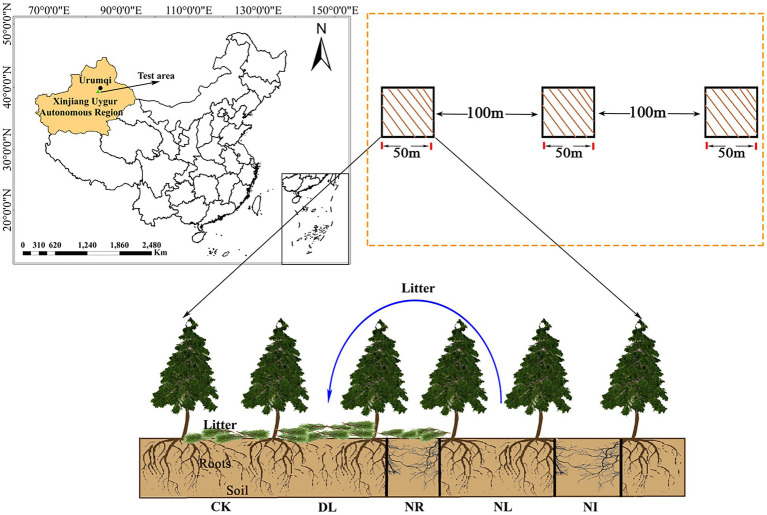
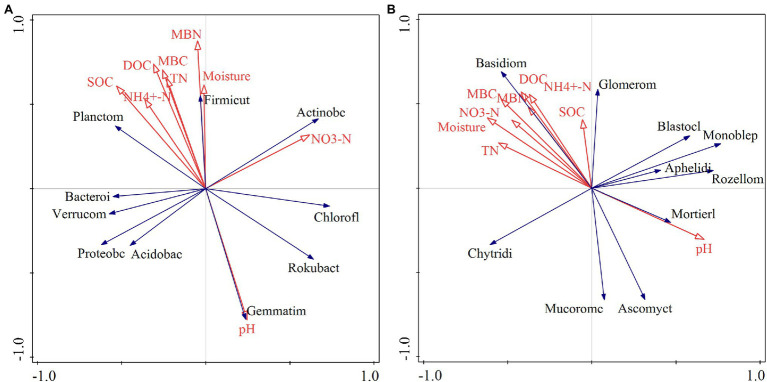
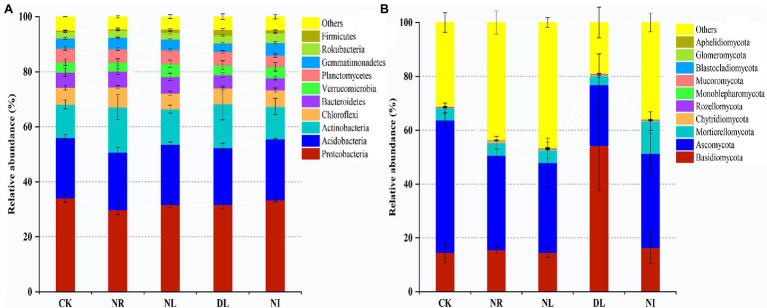
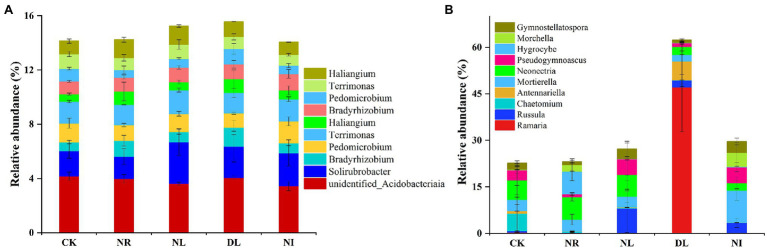
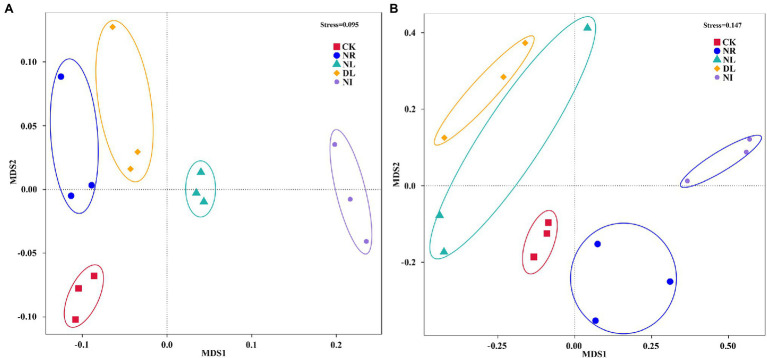
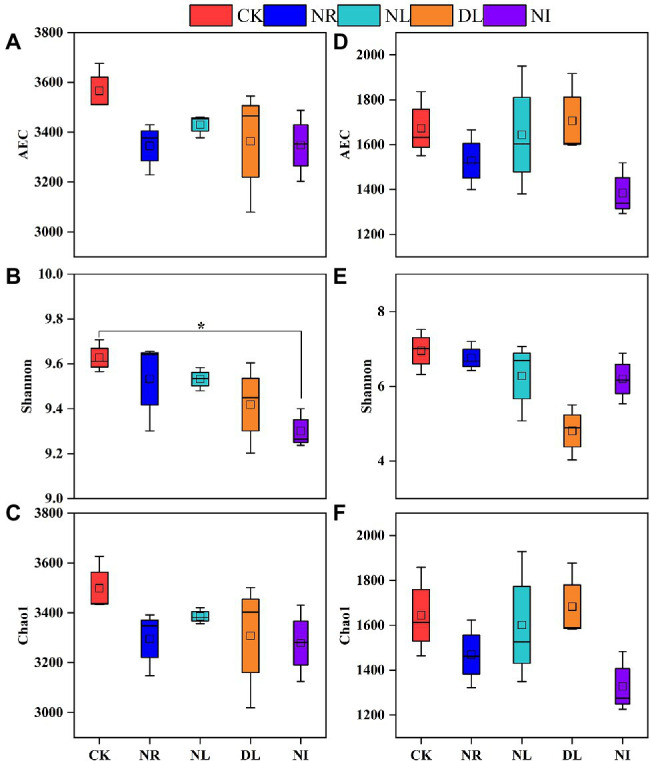
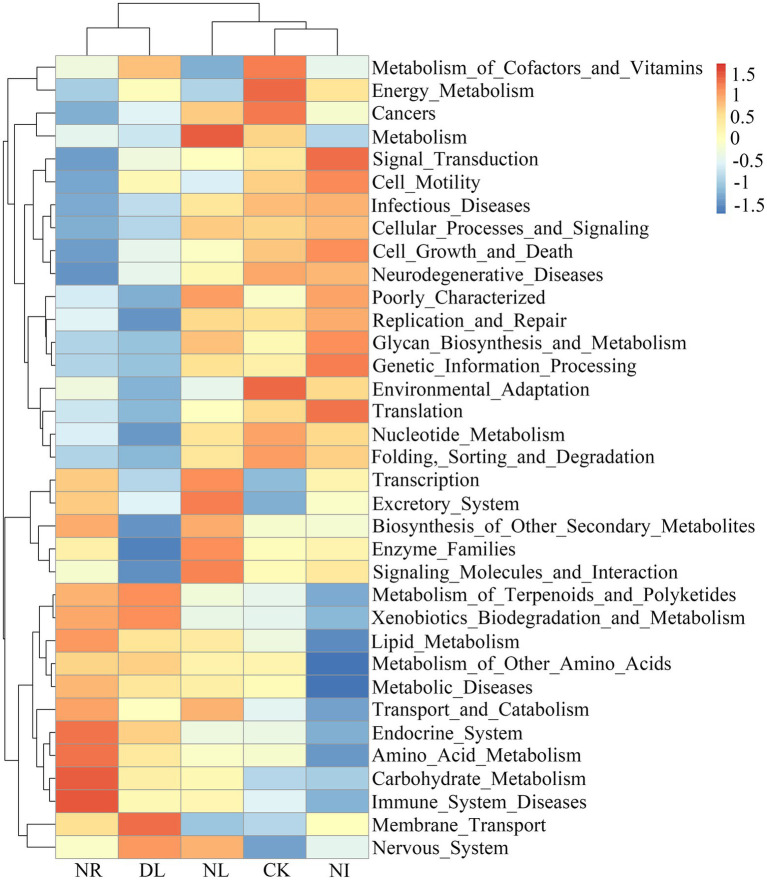
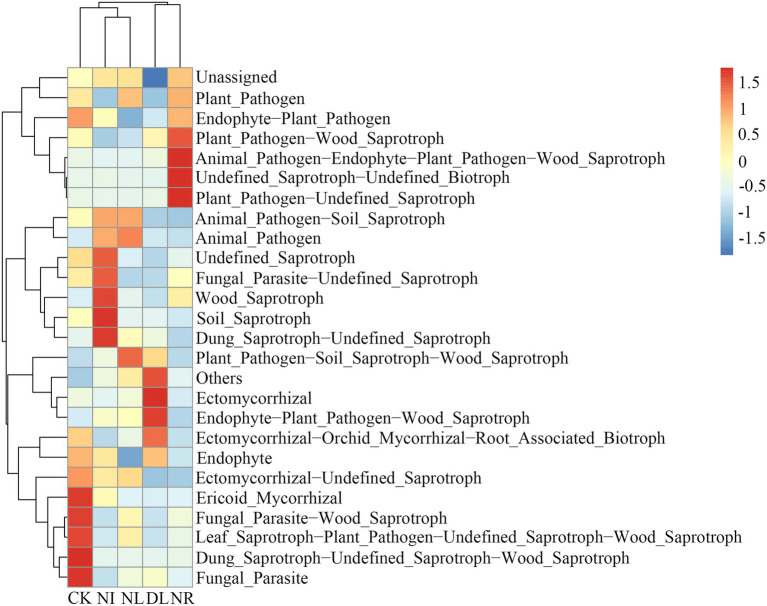
Soil microorganisms are the key driver of the geochemical cycle in forest ecosystem. Changes in litter and roots can affect soil microbial activities and nutrient cycling; however, the impact of this change on soil microbial community composition and function remain unclear. Here, we explored the effects of litter and root manipulations [control (CK), doubled litter input (DL), litter removal (NL), root exclusion (NR), and a combination of litter removal and root exclusion (NI)] on soil bacterial and fungal communities and functional groups during a 2-year field experiment, using illumina HiSeq sequencing coupled with the function prediction platform of PICRUSt and FUNGuild. Our results showed that litter and root removal decreased the diversity of soil bacteria and fungi (AEC, Shannon, and Chao1). The bacterial communities under different treatments were dominated by the phyla Proteobacteria, Acidobacteria, and Actinomycetes, and NL and NR reduced the relative abundance of the first two phyla. For the fungal communities, Basidiomycetes, Ascomycota, and Mortierellomycota were the dominant phyla. DL increased the relative abundance of Basidiomycetes, while NL and NR decreased the relative abundance of Ascomycota. We also found that litter and root manipulations altered the functional groups related to the metabolism of cofactors and vitamins, lipid metabolism, biosynthesis of other secondary metabolites, environmental adaptation, cell growth, and death. The functional groups including ectomycorrhizal, ectomycorrhizal-orchid mycorrhizal root-associated biotrophs and soil saprotrophs in the fungal community were also different among the different treatments. Soil organic carbon (SOC), pH, and soil water content are important factors driving changes in bacterial and fungal communities, respectively. Our results demonstrate that the changes in plant detritus altered the soil microbial community structure and function by affecting soil physicochemical factors, which provides important data for understanding the material cycle of forest ecosystems under global change.
土壤微生物是森林生态系统地球化学循环的关键驱动因素。凋落物和根系的变化会影响土壤微生物活动和养分循环;然而,这种变化对土壤微生物群落组成和功能的影响仍不清楚。在此,我们在一项为期两年的田间试验中,利用Illumina HiSeq测序技术结合PICRUSt和FUNGuild功能预测平台,探究了凋落物和根系处理[对照(CK)、凋落物加倍输入(DL)、凋落物去除(NL)、根系排除(NR)以及凋落物去除和根系排除组合(NI)]对土壤细菌和真菌群落及其功能类群的影响。我们的结果表明,凋落物和根系去除降低了土壤细菌和真菌的多样性(ACE、香农和Chao1指数)。不同处理下的细菌群落以变形菌门、酸杆菌门和放线菌门为主,NL和NR降低了前两个门的相对丰度。对于真菌群落,担子菌门、子囊菌门和被孢霉门是优势门。DL增加了担子菌门的相对丰度,而NL和NR降低了子囊菌门的相对丰度。我们还发现,凋落物和根系处理改变了与辅因子和维生素代谢、脂质代谢、其他次生代谢物生物合成、环境适应、细胞生长和死亡相关的功能类群。真菌群落中包括外生菌根、外生菌根 - 兰花菌根根相关生物营养体和土壤腐生菌在内的功能类群在不同处理间也存在差异。土壤有机碳(SOC)、pH值和土壤含水量分别是驱动细菌和真菌群落变化的重要因素。我们的结果表明,植物残体的变化通过影响土壤理化因子改变了土壤微生物群落结构和功能,这为理解全球变化下森林生态系统的物质循环提供了重要数据。