College of Resources and Environment Science, Xinjiang University, Urumqi, China.
Ministry of Education, Key Laboratory of Oasis Ecology, Urumqi, China.
PLoS One. 2021 Feb 25;16(2):e0247725. doi: 10.1371/journal.pone.0247725. eCollection 2021.
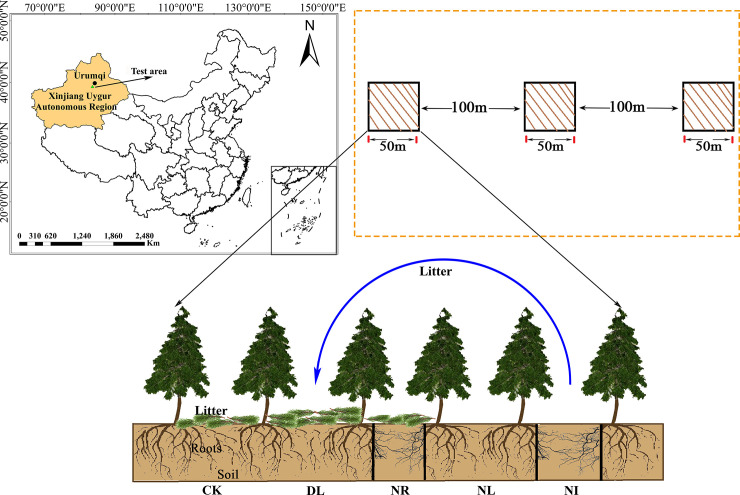
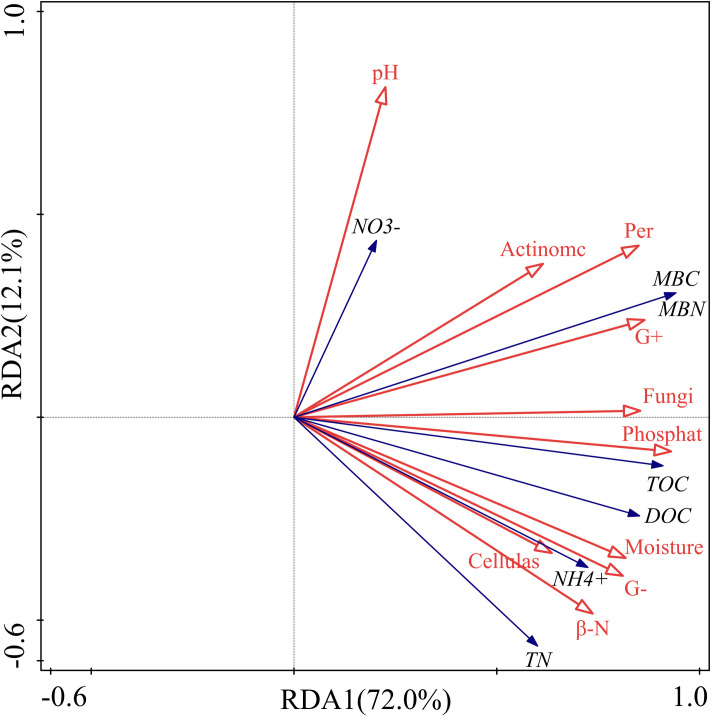
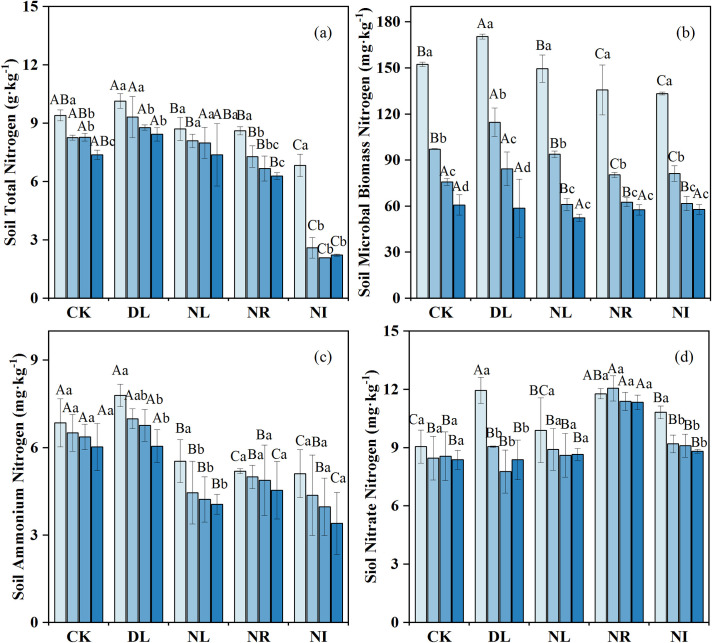
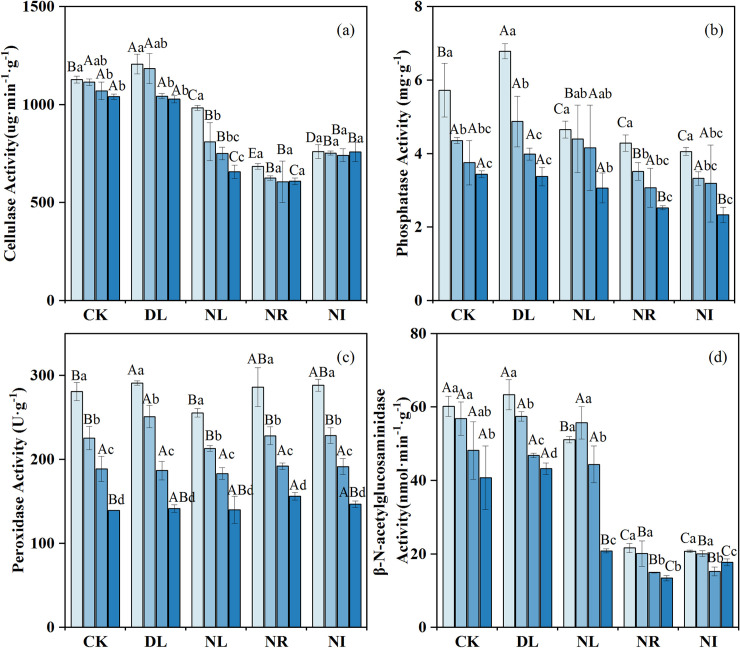
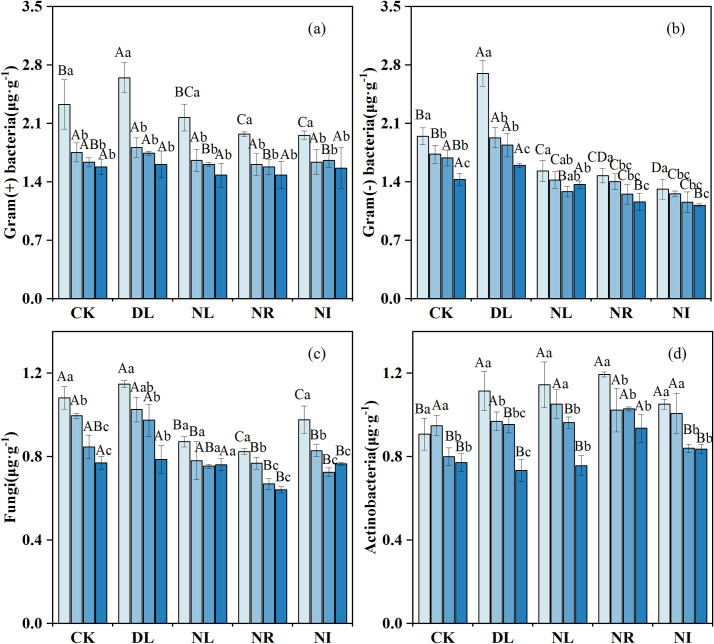
Plant detritus represents the major source of soil carbon (C) and nitrogen (N), and changes in its quantity can influence below-ground biogeochemical processes in forests. However, we lack a mechanistic understanding of how above- and belowground detrital inputs affect soil C and N in mountain forests in an arid land. Here, we explored the effects of litter and root manipulations (control (CK), doubled litter input (DL), removal of litter (NL), root exclusion (NR), and a combination of litter removal and root exclusion (NI)) on soil C and N concentrations, enzyme activity and microbial biomass during a 2-year field experiment. We found that DL had no significant effect on soil total organic carbon (SOC) and total nitrogen (TN) but significantly increased soil dissolved organic carbon (DOC), microbial biomass C, N and inorganic N as well as soil cellulase, phosphatase and peroxidase activities. Conversely, NL and NR reduced soil C and N concentrations and enzyme activities. We also found an increase in the biomass of soil bacteria, fungi and actinomycetes in the DL treatment, while NL reduced the biomass of gram-positive bacteria, gram-negative bacteria and fungi by 5.15%, 17.50% and 14.17%, respectively. The NR decreased the biomass of these three taxonomic groups by 8.97%, 22.11% and 21.36%, respectively. Correlation analysis showed that soil biotic factors (enzyme activity and microbial biomass) and abiotic factors (soil moisture content) significantly controlled the change in soil C and N concentrations (P < 0.01). In brief, we found that the short-term input of plant detritus could markedly affect the concentrations and biological characteristics of the C and N fractions in soil. The removal experiment indicated that the contribution of roots to soil nutrients is greater than that of the litter.
植物凋落物是土壤碳(C)和氮(N)的主要来源,其数量的变化会影响森林的地下生物地球化学过程。然而,我们缺乏对干旱地区山地森林中地上和地下凋落物输入如何影响土壤 C 和 N 的机制理解。在这里,我们通过为期两年的野外实验,探讨了凋落物和根系处理(对照(CK)、凋落物加倍输入(DL)、凋落物去除(NL)、根系排除(NR)以及凋落物去除和根系排除的组合(NI))对土壤 C 和 N 浓度、酶活性和微生物生物量的影响。我们发现,DL 对土壤总有机碳(SOC)和总氮(TN)没有显著影响,但显著增加了土壤溶解有机碳(DOC)、微生物生物量 C、N 和无机 N 以及土壤纤维素酶、磷酸酶和过氧化物酶活性。相反,NL 和 NR 降低了土壤 C 和 N 浓度以及酶活性。我们还发现,DL 处理增加了土壤细菌、真菌和放线菌的生物量,而 NL 分别降低了革兰氏阳性菌、革兰氏阴性菌和真菌的生物量 5.15%、17.50%和 14.17%。NR 分别降低了这三个分类群的生物量 8.97%、22.11%和 21.36%。相关性分析表明,土壤生物因素(酶活性和微生物生物量)和非生物因素(土壤含水量)显著控制了土壤 C 和 N 浓度的变化(P<0.01)。总之,我们发现植物凋落物的短期输入可以显著影响土壤 C 和 N 组分的浓度和生物学特征。去除实验表明,根系对土壤养分的贡献大于凋落物。