Department of Hematology, The First Affiliated Hospital of USTC, The CAS Key Laboratory of Innate Immunity and Chronic Disease, School of Basic Medical Sciences, Division of Life Sciences and Medicine, University of Science and Technology of China, Hefei, China.
Department of Oncology, The First Affiliated Hospital of USTC, Division of Life Sciences and Medicine, University of Science and Technology of China, Hefei, China.
Genome Med. 2022 May 3;14(1):46. doi: 10.1186/s13073-022-01049-3.
Natural killer (NK) cells are innate lymphoid cells that mediate antitumour and antiviral responses. However, very little is known about how ageing influences human NK cells, especially at the single-cell level.
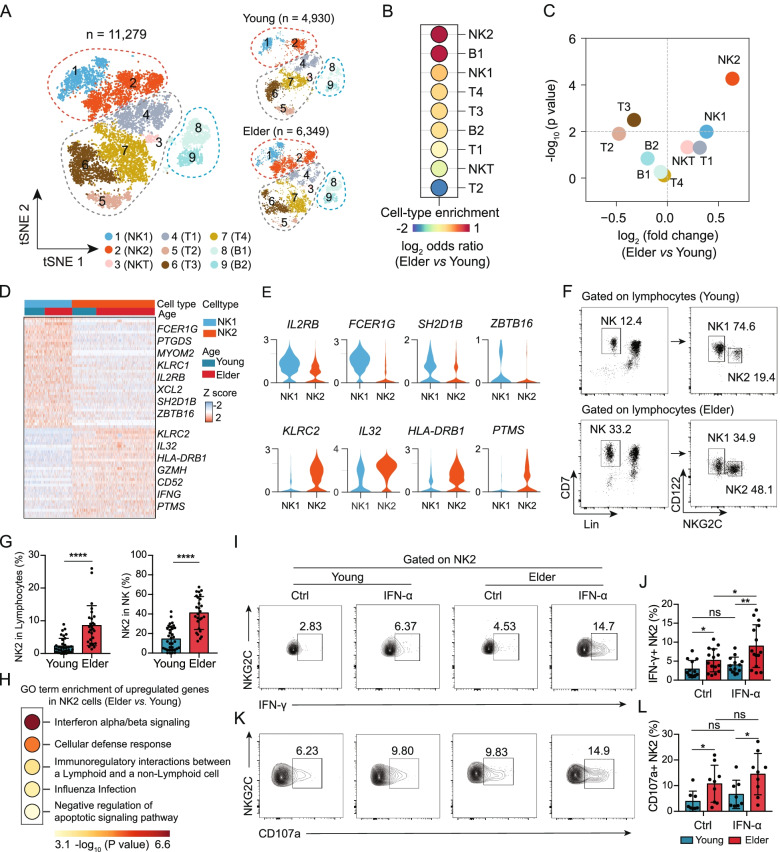
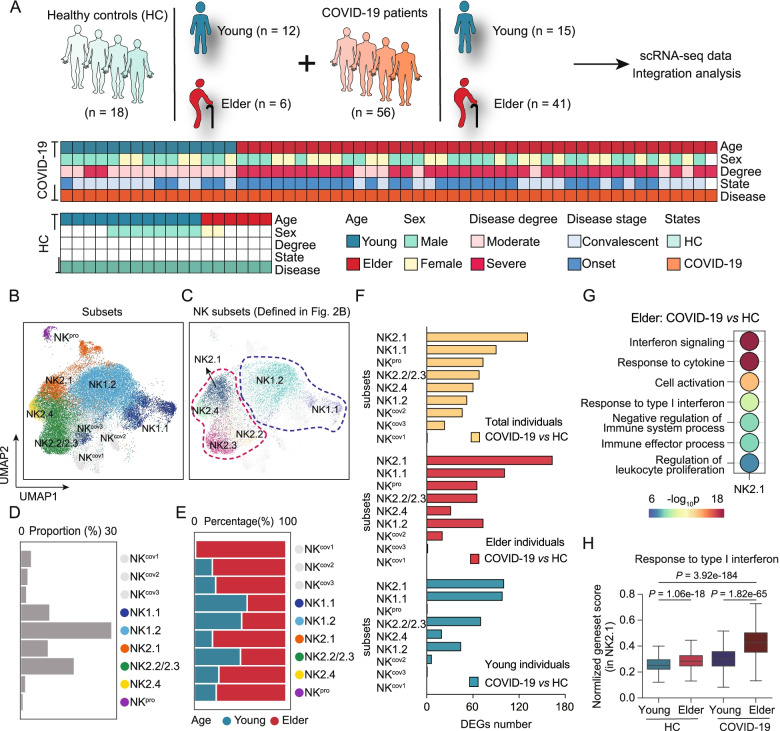
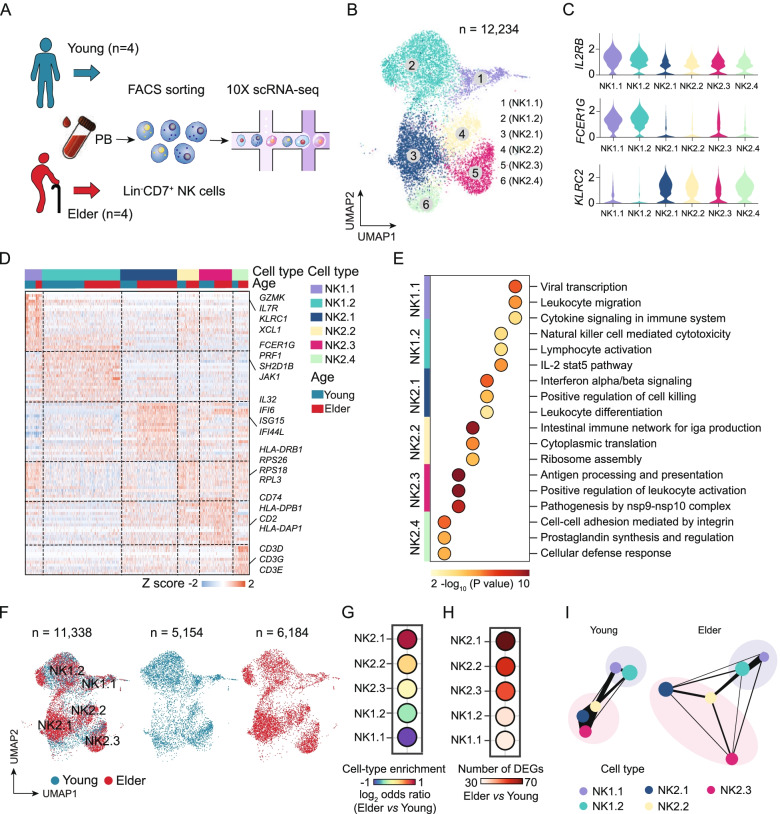
We applied single-cell sequencing (scRNA-seq) to human lymphocytes and NK cells from 4 young and 4 elderly individuals and then analysed the transcriptome data using Seurat. We detected the proportion and phenotype of NK cell subsets in peripheral blood samples from a total of 62 young and 52 elderly healthy donors by flow cytometry. We also used flow cytometry to examine the effector functions of NK cell subsets upon IFN-α/IL-12+IL-15/K562/IL-2 stimulation in vitro in peripheral blood samples from a total of 64 young and 63 elderly healthy donors. We finally studied and integrated single-cell transcriptomes of NK cells from 15 young and 41 elderly COVID-19 patients with those from 12 young and 6 elderly healthy control individuals to investigate the impacts of ageing on NK cell subsets in COVID-19 disease.
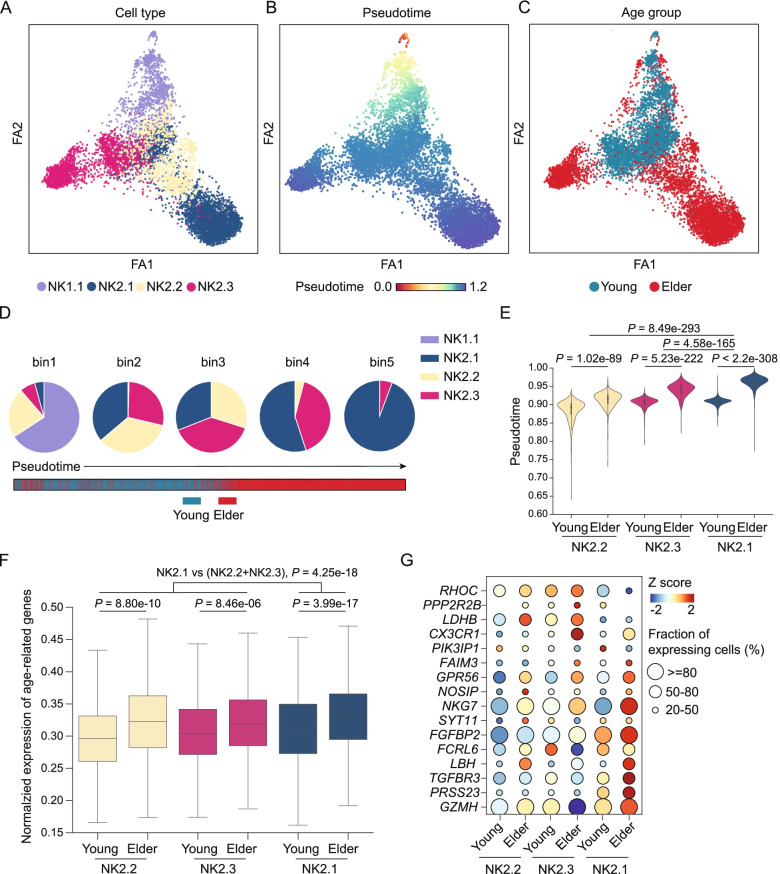
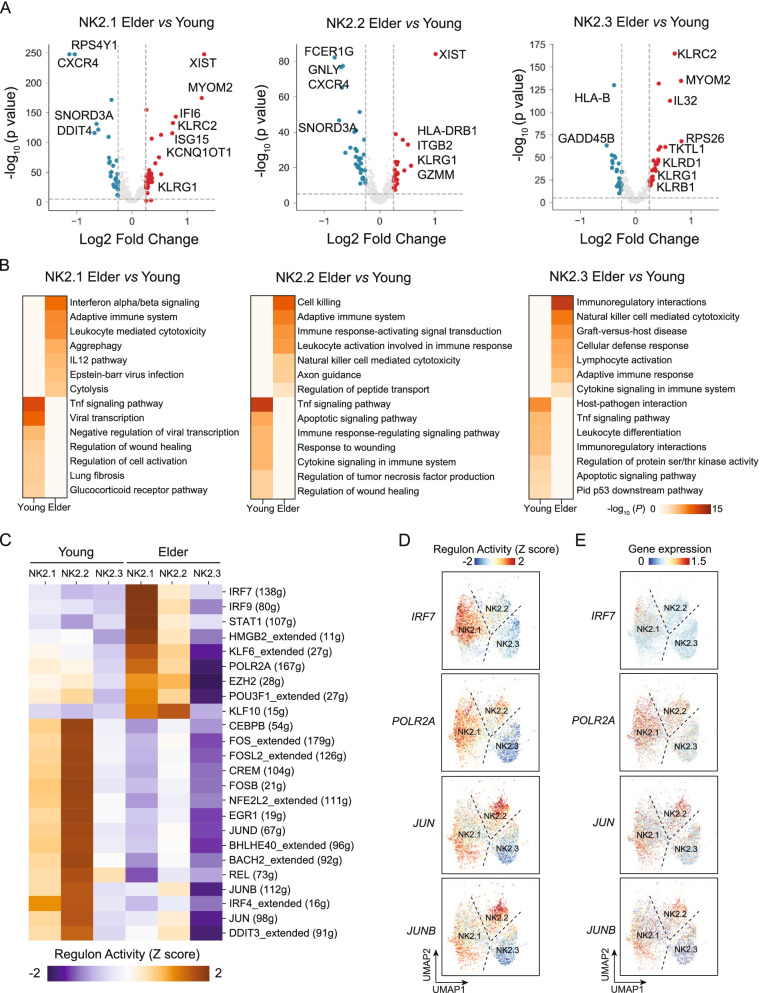
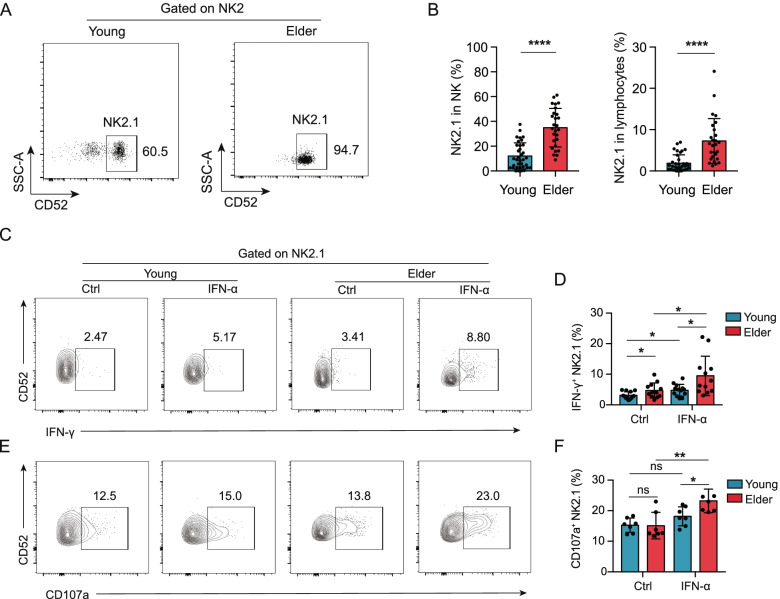
We discovered a memory-like NK subpopulation (NK2) exhibiting the largest distribution change between elderly and young individuals among lymphocytes. Notably, we discovered a unique NK subset that was predominantly CD52 NK2 cells (NK2.1). These memory-like NK2.1 cells accumulated with age, exhibited proinflammatory characteristics, and displayed a type I interferon response state. Integrative analyses of a large-cohort COVID-19 dataset and our datasets revealed that NK2.1 cells from elderly COVID-19 patients are enriched for type I interferon signalling, which is positively correlated with disease severity in COVID-19.
We identified a unique memory-like NK cell subset that accumulates with ageing and correlates with disease severity in COVID-19. Our results identify memory-like NK2.1 cells as a potential target for developing immunotherapies for infectious diseases and for addressing age-related dysfunctions of the immune system.
自然杀伤 (NK) 细胞是先天淋巴细胞,可介导抗肿瘤和抗病毒反应。然而,人们对衰老如何影响人类 NK 细胞知之甚少,尤其是在单细胞水平上。
我们应用单细胞测序 (scRNA-seq) 对来自 4 名年轻人和 4 名老年人的人类淋巴细胞和 NK 细胞进行了分析,并使用 Seurat 对转录组数据进行了分析。我们通过流式细胞术检测了来自 62 名年轻人和 52 名老年人健康供体的外周血样本中 NK 细胞亚群的比例和表型。我们还使用流式细胞术检测了来自 64 名年轻人和 63 名老年人健康供体的外周血样本中 NK 细胞亚群在体外受到 IFN-α/IL-12+IL-15/K562/IL-2 刺激后的效应功能。最后,我们研究并整合了来自 15 名年轻人和 41 名老年人 COVID-19 患者的 NK 细胞的单细胞转录组与来自 12 名年轻人和 6 名老年人健康对照个体的转录组,以研究衰老对 COVID-19 疾病中 NK 细胞亚群的影响。
我们发现,在淋巴细胞中,记忆样 NK 亚群 (NK2) 在老年人和年轻人之间的分布变化最大。值得注意的是,我们发现了一种独特的 NK 亚群,主要是 CD52+NK2 细胞(NK2.1)。这些记忆样 NK2.1 细胞随年龄增长而积累,表现出促炎特征,并呈现 I 型干扰素反应状态。对大规模 COVID-19 数据集和我们数据集的综合分析表明,来自老年 COVID-19 患者的 NK2.1 细胞富含 I 型干扰素信号,这与 COVID-19 的疾病严重程度呈正相关。
我们鉴定了一种独特的记忆样 NK 细胞亚群,它随年龄增长而积累,并与 COVID-19 疾病的严重程度相关。我们的研究结果表明,记忆样 NK2.1 细胞可能成为开发针对传染病的免疫疗法以及解决与年龄相关的免疫系统功能障碍的潜在靶点。