Xu Yuan, Al-Mualm Mahmood, Terefe Ermias Mergia, Shamsutdinova Maksuda Ilyasovna, Opulencia Maria Jade Catalan, Alsaikhan Fahad, Turki Jalil Abduladheem, Hammid Ali Thaeer, Enayati Ayesheh, Mirzaei Hassan, Khori Vahid, Jabbari Ali, Salehi Aref, Soltani Alireza, Mohamed Abdullah
First People's Hospital of Wuyi County, Zhejiang Province, Wuyi, Zhejiang 321200, China.
Department of Clinical Laboratory Techniques, Al-Nisour University College, Baghdad, Iraq.
Arab J Chem. 2022 Jul;15(7):103942. doi: 10.1016/j.arabjc.2022.103942. Epub 2022 Apr 27.
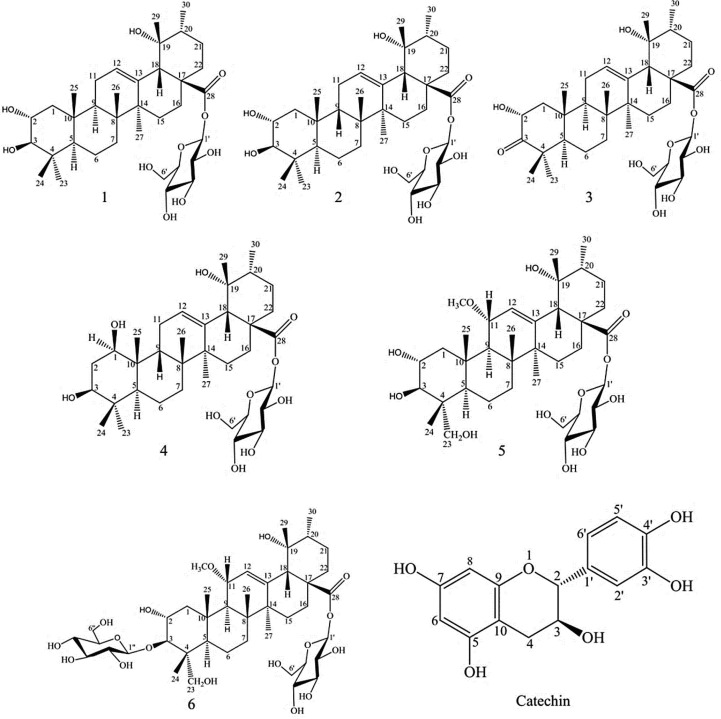
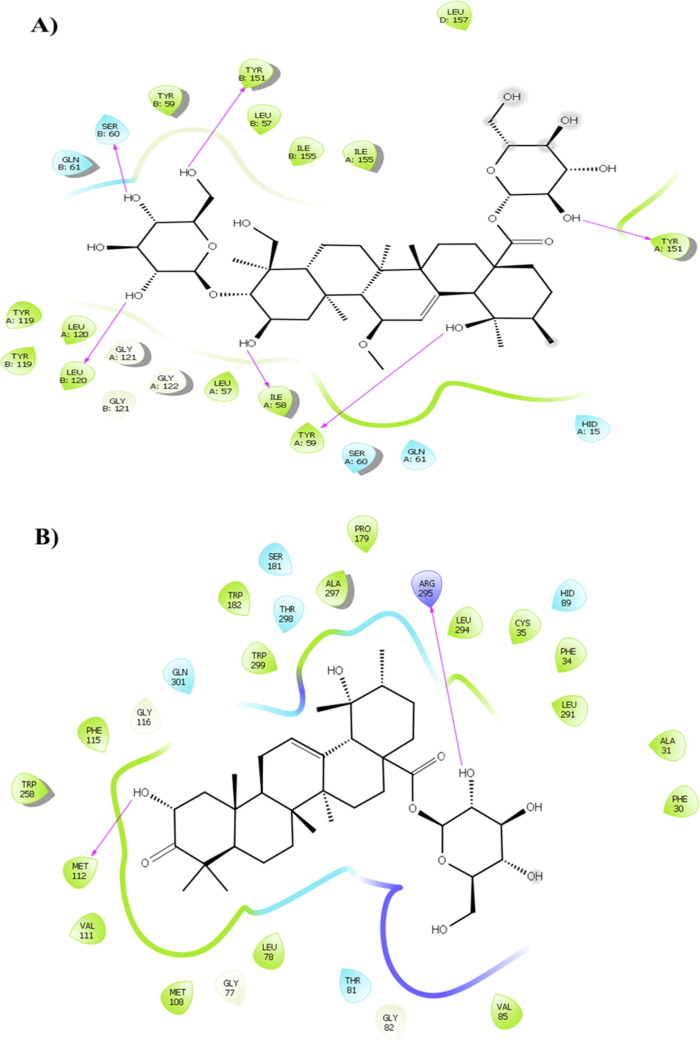
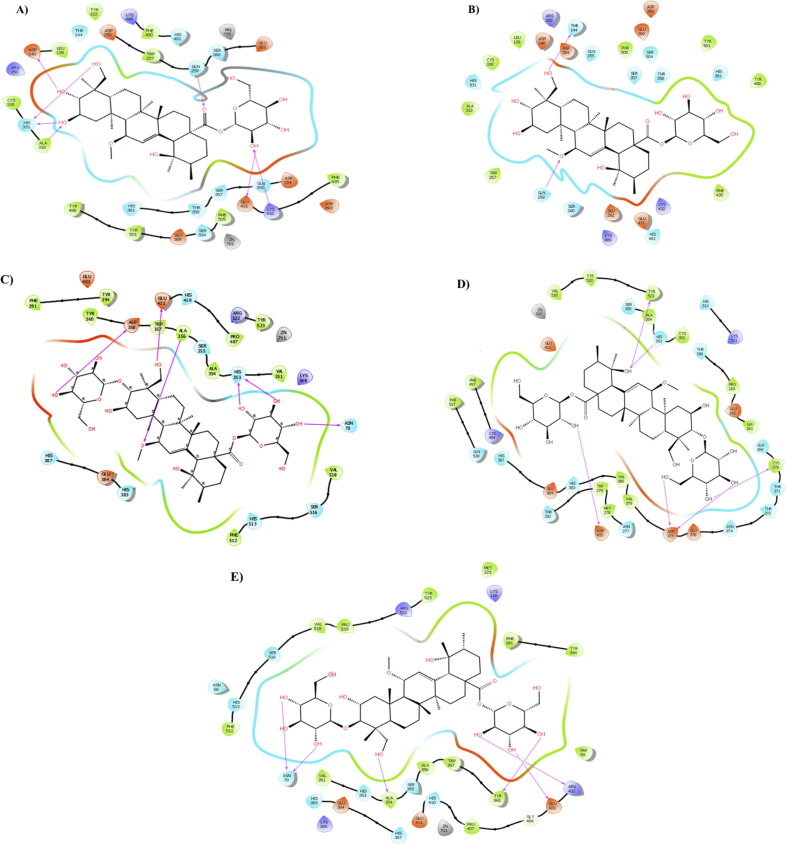
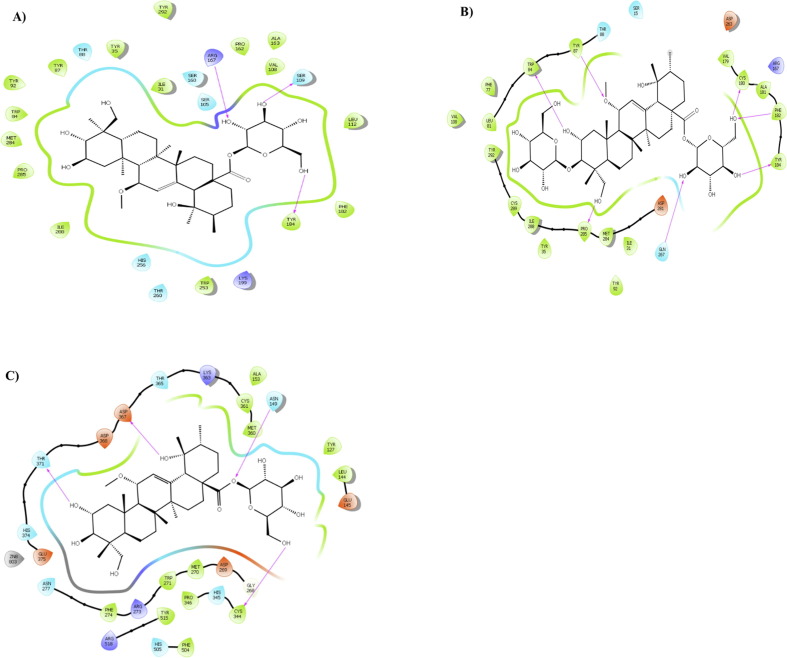
In the novel SARS-CoV-2 (COVID-19) as a global emergency event, the main reason of the cardiac injury from COVID-19 is angiotensin-converting enzyme 2 (ACE2) targeting in SARS-CoV-2 infection. The inhibition of ACE2 induces an increase in the angiotensin II (Ang II) and the angiotensin II receptor type 1 (AT1R) leading to impaired cardiac function or cardiac inflammatory responses. The ethyl acetate fraction of L. root can rescue heart dysfunction, oxidative stress, cardiac arrhythmias and apoptosis. Therefore, isolated components of evaluated to identify natural anti-SARS-CoV-2 agents via molecular docking. molecular docking study were carried out using the Auto Dock software on the isolated compounds of root. The protein targets of selective ACE and others obtained from Protein Data Bank (PDB). The best binding pose between amino acid residues involved in active site of the targets and compounds was discovered via molecular docking. Furthermore, ADMET properties of the compounds were evaluated. The triterpenoids of showed more ACE inhibitory potential than catechin in both domains. They were selective on the nACE domain, especially compound 5. Also, the compound 5 & 6 had the highest binding affinity toward active site of nACE, cACE, AT1R, ACE2, and TNF-α receptors. Meanwhile, compound 3 showed more activity to inhibit TXA2. Drug likeness and ADMET analysis showed that the compounds passed the criteria of drug likeness and Lipinski rules. The current study depicted that root showed cardioprotective effect in COVID-19 infection and manipulation of angiotensin II-induced side effects
在新型严重急性呼吸综合征冠状病毒2(SARS-CoV-2,即新冠病毒)引发的全球紧急事件中,新冠病毒导致心脏损伤的主要原因是其感染过程中对血管紧张素转换酶2(ACE2)的靶向作用。ACE2受到抑制会导致血管紧张素II(Ang II)和血管紧张素II 1型受体(AT1R)增加,进而导致心脏功能受损或心脏炎症反应。L.根的乙酸乙酯部位可挽救心脏功能障碍、氧化应激、心律失常和细胞凋亡。因此,对其分离成分进行评估,以通过分子对接鉴定天然抗SARS-CoV-2药物。使用自动对接软件对L.根的分离化合物进行分子对接研究。从蛋白质数据库(PDB)获得选择性ACE等的蛋白质靶点。通过分子对接发现靶点活性位点的氨基酸残基与化合物之间的最佳结合构象。此外,还评估了化合物的ADMET性质。L.的三萜类化合物在两个结构域中均显示出比儿茶素更强的ACE抑制潜力。它们对nACE结构域具有选择性,尤其是化合物5。此外,化合物5和6对nACE、cACE、AT1R、ACE2和TNF-α受体的活性位点具有最高的结合亲和力。同时,化合物3对抑制血栓素A2表现出更强的活性。药物相似性和ADMET分析表明,这些化合物符合药物相似性标准和Lipinski规则。当前研究表明,L.根在新冠病毒感染中显示出心脏保护作用,并可调控血管紧张素II引起的副作用