MRC Weatherall Institute of Molecular Medicine, Radcliffe Department of Medicine, University of Oxford,Oxford, OxfordshireOX3 9DS, UK.
Institute of Developmental and Regenerative Medicine, Old Road Campus, Oxford, OxfordshireOX3 7DQ, UK.
Development. 2022 Apr 15;149(8). doi: 10.1242/dev.199906. Epub 2022 May 3.
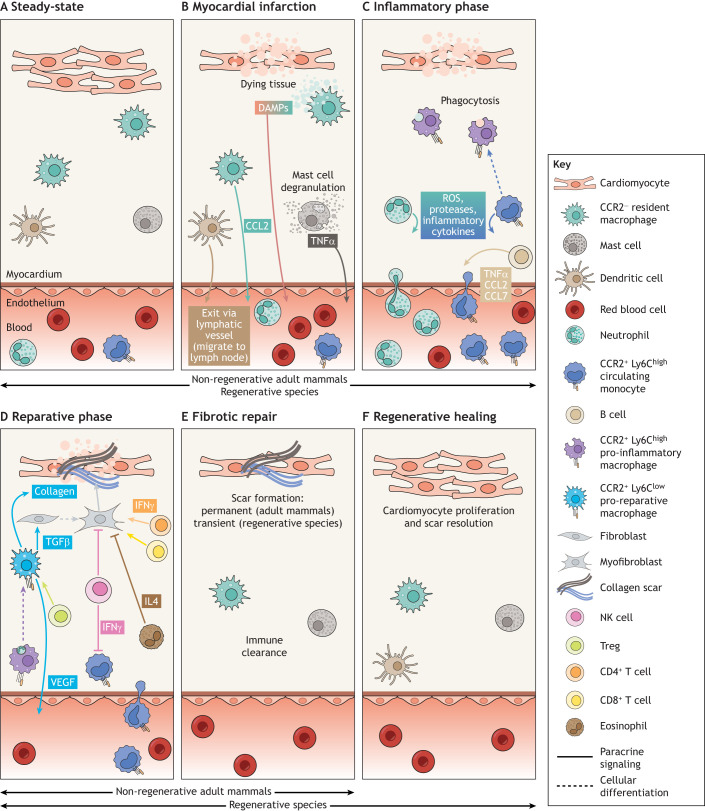
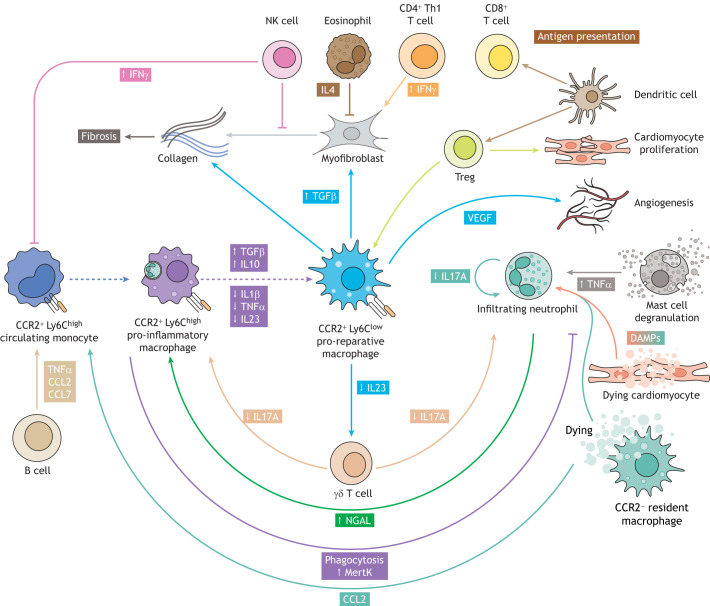
The immune system is fundamental to tissue homeostasis and is the first line of defense following infection, injury or disease. In the damaged heart, large numbers of immune cells are recruited to the site of injury. These cells play an integral part in both repair by scar formation and the initiation of tissue regeneration. They initially assume inflammatory phenotypes, releasing pro-inflammatory cytokines and removing dead and dying tissue, before entering a reparative stage, replacing dead muscle tissue with a non-contractile scar. In this Review, we present an overview of the innate and adaptive immune response to heart injury. We explore the kinetics of immune cell mobilization following cardiac injury and how the different innate and adaptive immune cells interact with one another and with the damaged tissue. We draw on key findings from regenerative models, providing insight into how to support a robust immune response permissible for cardiac regeneration. Finally, we consider how the latest technological developments can offer opportunities for a deeper and unbiased functional understanding of the immune response to heart disease, highlighting the importance of such knowledge as the basis for promoting regeneration following cardiac injury in human patients.
免疫系统对于组织稳态至关重要,是感染、损伤或疾病发生后的第一道防线。在受损的心脏中,大量免疫细胞被募集到损伤部位。这些细胞在通过瘢痕形成进行修复和启动组织再生两方面都发挥着不可或缺的作用。它们最初表现出炎症表型,释放促炎细胞因子并清除死亡和垂死的组织,然后进入修复阶段,用非收缩性瘢痕替代死亡的肌肉组织。在这篇综述中,我们概述了心脏损伤后的固有免疫和适应性免疫反应。我们探讨了心脏损伤后免疫细胞动员的动力学,以及不同的固有免疫和适应性免疫细胞如何相互作用以及与受损组织相互作用。我们借鉴了再生模型中的关键发现,深入了解如何支持允许心脏再生的强大免疫反应。最后,我们考虑了最新技术的发展如何为深入了解和客观理解心脏疾病的免疫反应提供机会,强调了这些知识作为促进人类患者心脏损伤后再生的基础的重要性。