Department of Chemistry & Biochemistry, University of California, Santa Barbara, California 93106 United States.
Org Lett. 2022 May 13;24(18):3342-3346. doi: 10.1021/acs.orglett.2c00944. Epub 2022 May 3.
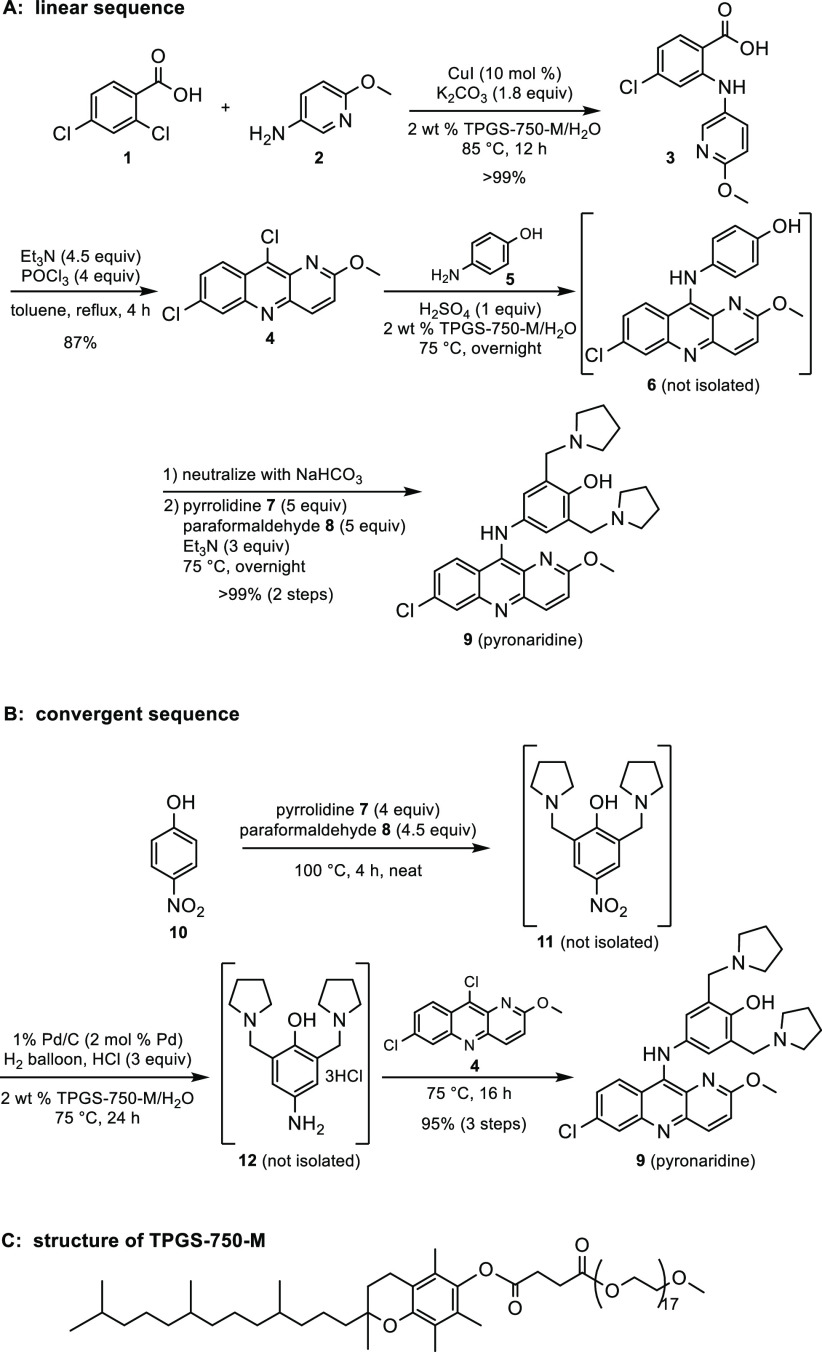
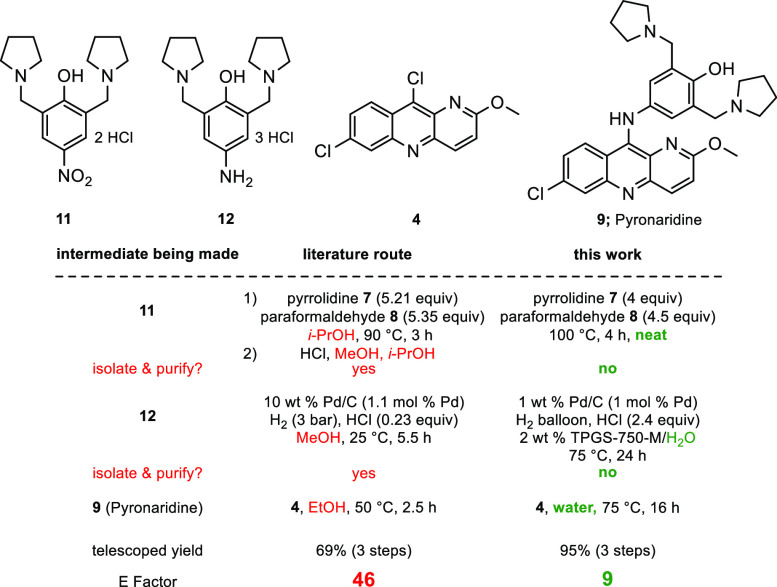
Two routes to the antimalarial drug Pyronaridine are described. The first is a linear sequence that includes a two-step, one-pot transformation in an aqueous surfactant medium, leading to an overall yield of 87%. Alternatively, a convergent route utilizes a telescoped three-step sequence involving an initial neat reaction, followed by two steps performed under aqueous micellar catalysis conditions affording Pyronaridine in 95% overall yield. Comparisons to existing literature performed exclusively in organic solvents reveal a 5-fold decrease in environmental impact as measured by E Factors.
现介绍抗疟药物 Pyronaridine 的两种合成路线。第一种是线性序列,包括在水相表面活性剂介质中的两步一锅转化,总收率为 87%。或者,采用收敛路线,利用包括初始无溶剂反应在内的三步骤缩合序列,然后在水性胶束催化条件下进行两步反应,以 95%的总收率得到 Pyronaridine。与仅在有机溶剂中进行的现有文献相比,E 因子衡量的环境影响降低了 5 倍。