Avram and Stella Goldstein-Goren Department of Biotechnology Engineering, Ben-Gurion University of the Negev, Beer-Sheva 84105, Israel.
Department of Life Sciences, Ben-Gurion University of the Negev, Beer-Sheva 84105, Israel.
Sci Total Environ. 2022 Aug 25;836:155599. doi: 10.1016/j.scitotenv.2022.155599. Epub 2022 Apr 30.
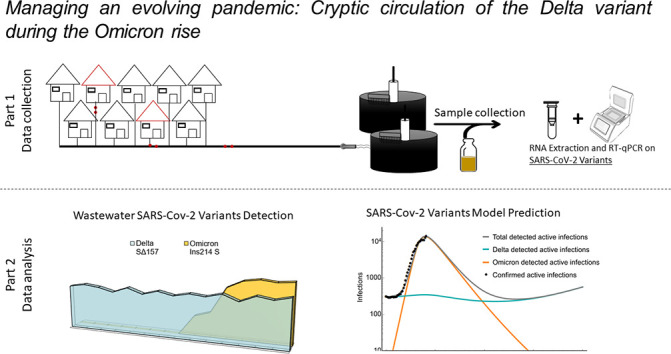
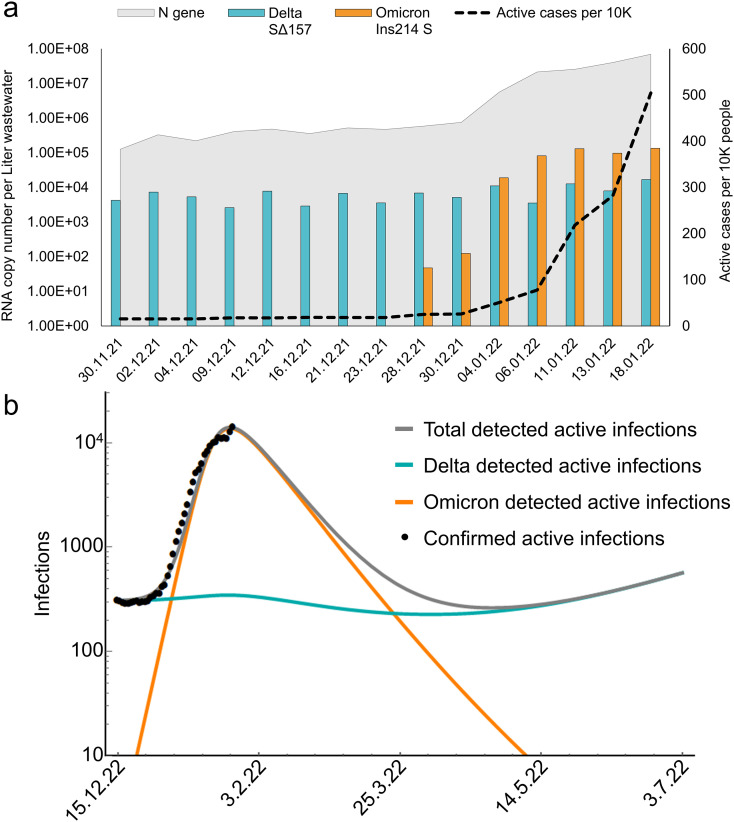
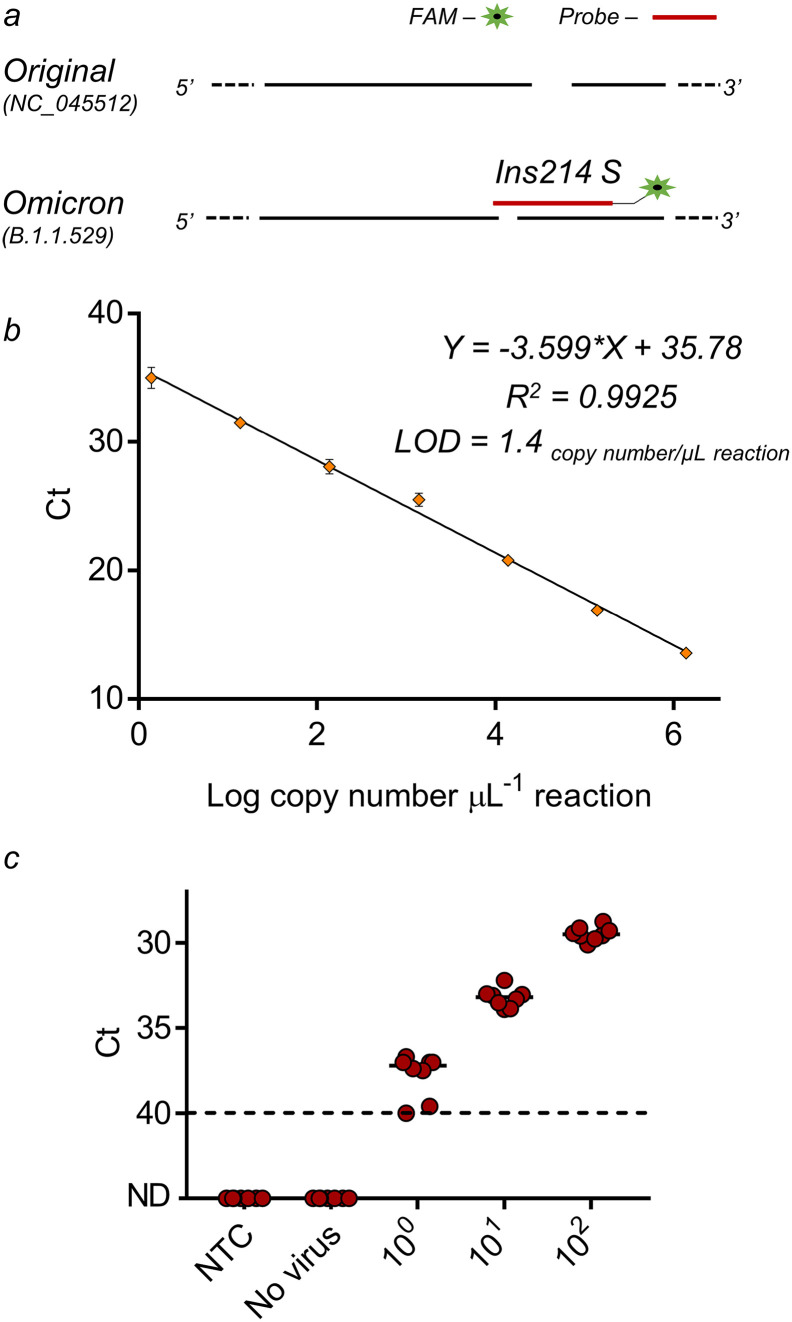
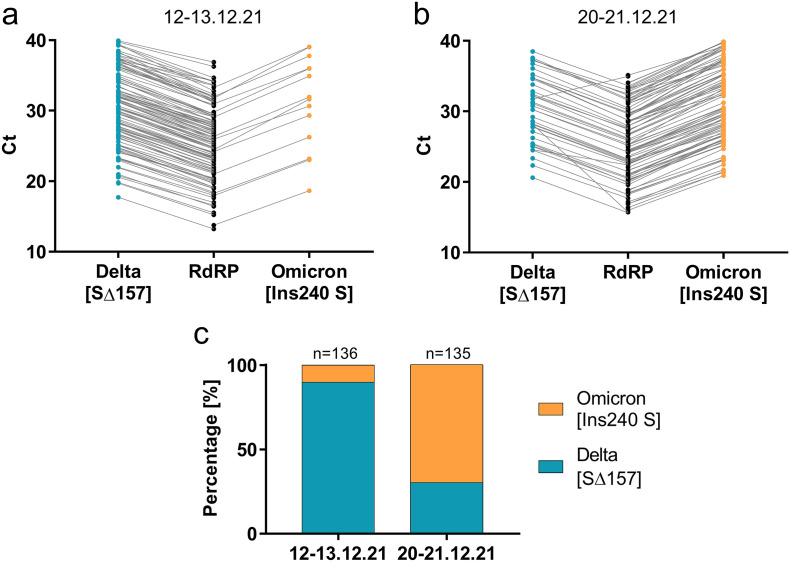
SARS-CoV-2 continued circulation results in mutations and the emergence of various variants. Until now, whenever a new, dominant, variant appeared, it overpowered its predecessor after a short parallel period. The latest variant of concern, Omicron, is spreading swiftly around the world with record morbidity reports. Unlike the Delta variant, previously considered to be the main variant of concern in most countries, including Israel, the dynamics of the Omicron variant showed different characteristics. To enable quick assessment of the spread of this variant we developed an RT-qPCR primers-probe set for the direct detection of Omicron variant. Characterized as highly specific and sensitive, the new Omicron detection set was deployed on clinical and wastewater samples. In contrast to the expected dynamics whereupon the Delta variant diminishes as Omicron variant increases, representative results received from wastewater detection indicated a cryptic circulation of the Delta variant even with the increased levels of Omicron variant. Resulting wastewater data illustrated the very initial Delta-Omicron dynamics occurring in real time. Despite this, the future development and dynamics of the two variants side-by-side is still mainly unknown. Based on the initial results, a double susceptible-infected-recovered model was developed for the Delta and Omicron variants. According to the developed model, it can be expected that the Omicron levels will decrease until eliminated, while Delta variant will maintain its cryptic circulation. If this comes to pass, the mentioned cryptic circulation may result in the reemergence of a Delta morbidity wave or in the possible generation of a new threatening variant. In conclusion, the deployment of wastewater-based epidemiology is recommended as a convenient and representative tool for pandemic containment.
SARS-CoV-2 的持续传播导致了突变和各种变体的出现。到目前为止,每当一种新的、占主导地位的变体出现时,它都会在短暂的平行期后取代其前身。最新的关注变体奥密克戎正在全球迅速传播,并报告了创纪录的发病率。与之前被认为是包括以色列在内的大多数国家主要关注变体的德尔塔变体不同,奥密克戎变体的动态表现出不同的特征。为了能够快速评估这种变体的传播,我们开发了一种用于直接检测奥密克戎变体的 RT-qPCR 引物-探针集。新的奥密克戎检测集具有高度特异性和敏感性,已部署在临床和废水样本上。与预期的动态相反,即德尔塔变体随着奥密克戎变体的增加而减少,从废水检测中收到的代表性结果表明,即使奥密克戎变体水平增加,德尔塔变体仍在秘密传播。废水数据结果说明了实时发生的非常初始的德尔塔-奥密克戎动态。尽管如此,两种变体同时存在的未来发展和动态仍然主要未知。基于初始结果,为德尔塔和奥密克戎变体开发了一个双易感-感染-恢复模型。根据开发的模型,可以预期奥密克戎水平将降低直至消除,而德尔塔变体将保持其秘密传播。如果这种情况发生,上述秘密传播可能导致德尔塔发病率的再次出现,或者可能产生新的威胁变体。总之,建议部署基于废水的流行病学作为控制大流行的便捷和代表性工具。