INSERM, Centre d'Etude des Pathologies Respiratoires (CEPR), UMR 1100, Tours, France.
Université de Tours, Tours, France.
EMBO J. 2022 Jun 14;41(12):e108306. doi: 10.15252/embj.2021108306. Epub 2022 May 4.
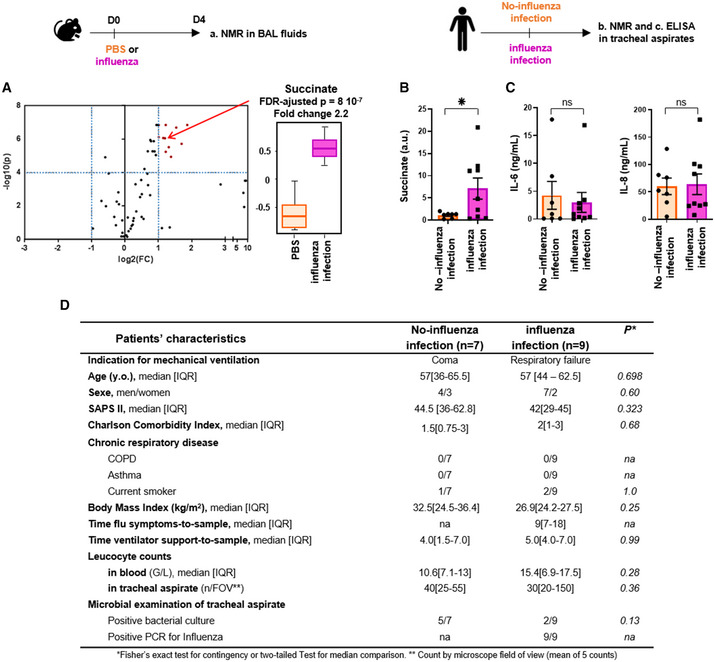
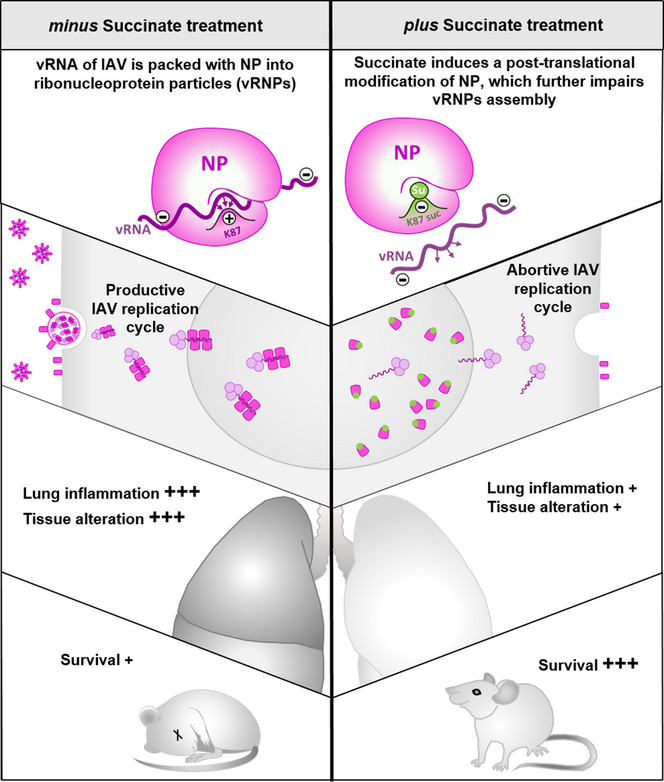
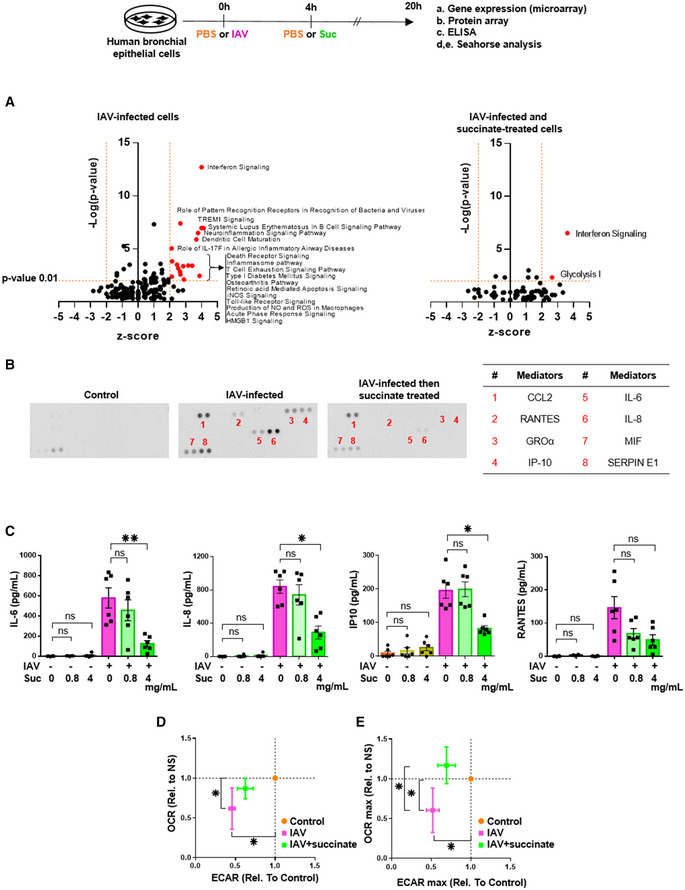
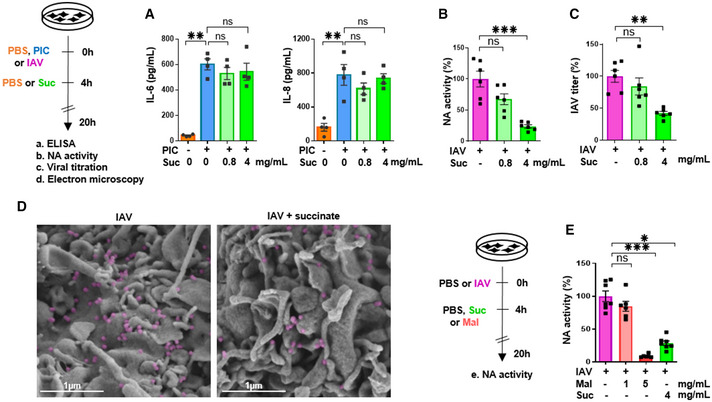
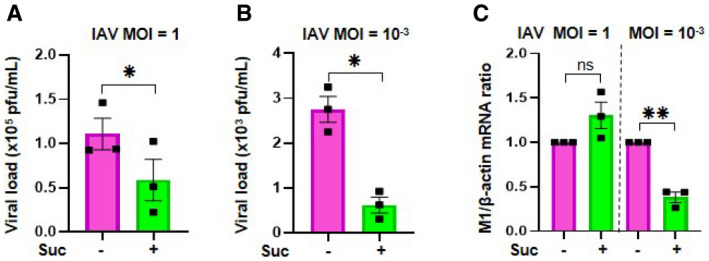
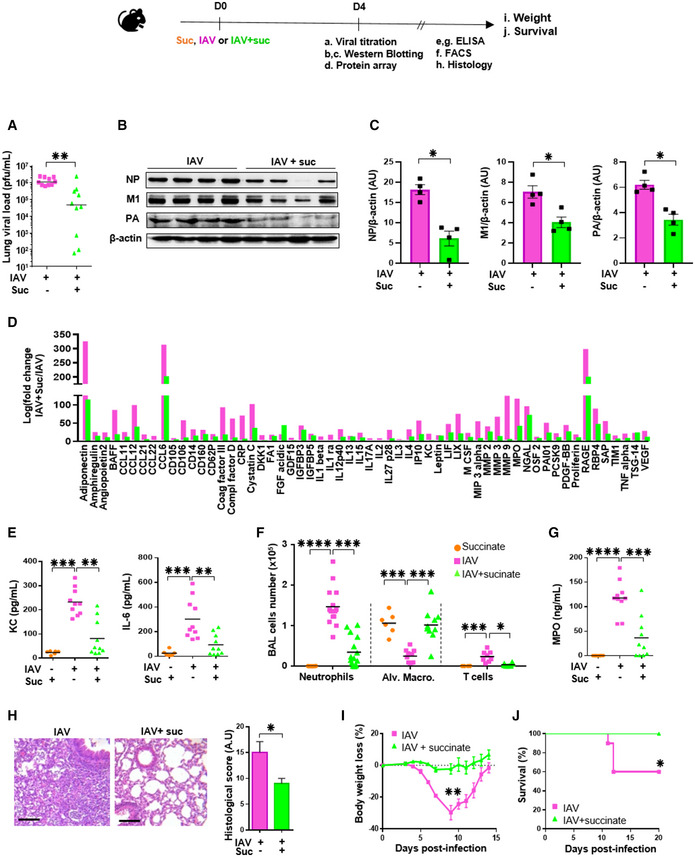
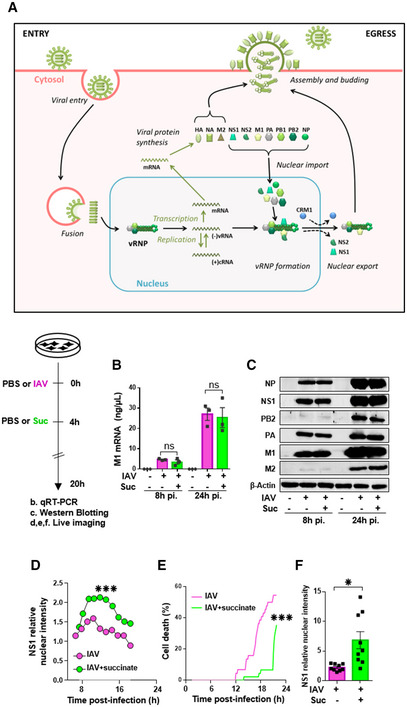
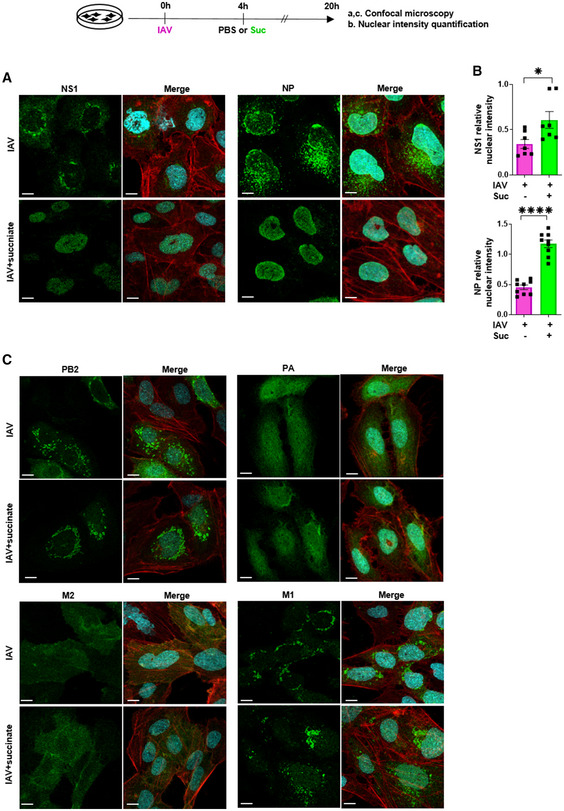
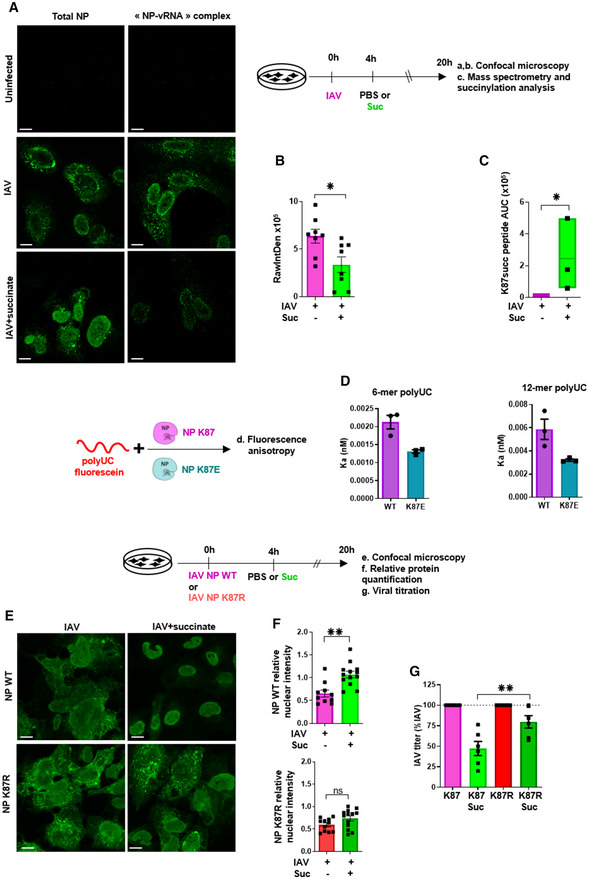
Influenza virus infection causes considerable morbidity and mortality, but current therapies have limited efficacy. We hypothesized that investigating the metabolic signaling during infection may help to design innovative antiviral approaches. Using bronchoalveolar lavages of infected mice, we here demonstrate that influenza virus induces a major reprogramming of lung metabolism. We focused on mitochondria-derived succinate that accumulated both in the respiratory fluids of virus-challenged mice and of patients with influenza pneumonia. Notably, succinate displays a potent antiviral activity in vitro as it inhibits the multiplication of influenza A/H1N1 and A/H3N2 strains and strongly decreases virus-triggered metabolic perturbations and inflammatory responses. Moreover, mice receiving succinate intranasally showed reduced viral loads in lungs and increased survival compared to control animals. The antiviral mechanism involves a succinate-dependent posttranslational modification, that is, succinylation, of the viral nucleoprotein at the highly conserved K87 residue. Succinylation of viral nucleoprotein altered its electrostatic interactions with viral RNA and further impaired the trafficking of viral ribonucleoprotein complexes. The finding that succinate efficiently disrupts the influenza replication cycle opens up new avenues for improved treatment of influenza pneumonia.
流感病毒感染会导致相当高的发病率和死亡率,但目前的治疗方法疗效有限。我们假设研究感染过程中的代谢信号可能有助于设计创新的抗病毒方法。在这里,我们使用感染病毒的小鼠的支气管肺泡灌洗液证明,流感病毒诱导肺部代谢的重大重编程。我们专注于线粒体衍生的琥珀酸,它在受病毒挑战的小鼠和流感肺炎患者的呼吸液中都有积累。值得注意的是,琥珀酸在体外具有很强的抗病毒活性,因为它抑制了 A/H1N1 和 A/H3N2 流感株的增殖,并强烈降低了病毒引发的代谢紊乱和炎症反应。此外,与对照动物相比,接受琥珀酸盐鼻内给药的小鼠肺部的病毒载量降低,存活率提高。抗病毒机制涉及病毒核蛋白在高度保守的 K87 残基上的琥珀酰化,这是一种琥珀酸依赖性的翻译后修饰。病毒核蛋白的琥珀酰化改变了其与病毒 RNA 的静电相互作用,并进一步损害了病毒核糖核蛋白复合物的运输。琥珀酸能有效破坏流感复制周期的发现为改善流感肺炎的治疗开辟了新的途径。