• 文献检索
  • 文档翻译
  • 深度研究
  • 学术资讯
  • Suppr Zotero 插件Zotero 插件
  • 邀请有礼
  • 套餐&价格
  • 历史记录
应用&插件
Suppr Zotero 插件Zotero 插件浏览器插件Mac 客户端Windows 客户端微信小程序
定价
高级版会员购买积分包购买API积分包
服务
文献检索文档翻译深度研究API 文档MCP 服务
关于我们
关于 Suppr公司介绍联系我们用户协议隐私条款
关注我们

Suppr 超能文献

核心技术专利:CN118964589B侵权必究
粤ICP备2023148730 号-1Suppr @ 2026

文献检索

告别复杂PubMed语法,用中文像聊天一样搜索,搜遍4000万医学文献。AI智能推荐,让科研检索更轻松。

立即免费搜索

文件翻译

保留排版,准确专业,支持PDF/Word/PPT等文件格式,支持 12+语言互译。

免费翻译文档

深度研究

AI帮你快速写综述,25分钟生成高质量综述,智能提取关键信息,辅助科研写作。

立即免费体验

教育大众以应对全球公共卫生重点问题:预防痴呆症大规模开放在线课程(MOOC)。

Educating the masses to address a global public health priority: The Preventing Dementia Massive Open Online Course (MOOC).

作者信息

Farrow Maree, Fair Hannah, Klekociuk Shannon Z, Vickers James C

机构信息

Wicking Dementia Research and Education Centre, College of Health and Medicine, University of Tasmania, Hobart, Tasmania, Australia.

出版信息

PLoS One. 2022 May 4;17(5):e0267205. doi: 10.1371/journal.pone.0267205. eCollection 2022.

DOI:10.1371/journal.pone.0267205
PMID:35507576
原文链接:https://pmc.ncbi.nlm.nih.gov/articles/PMC9067672/
Abstract

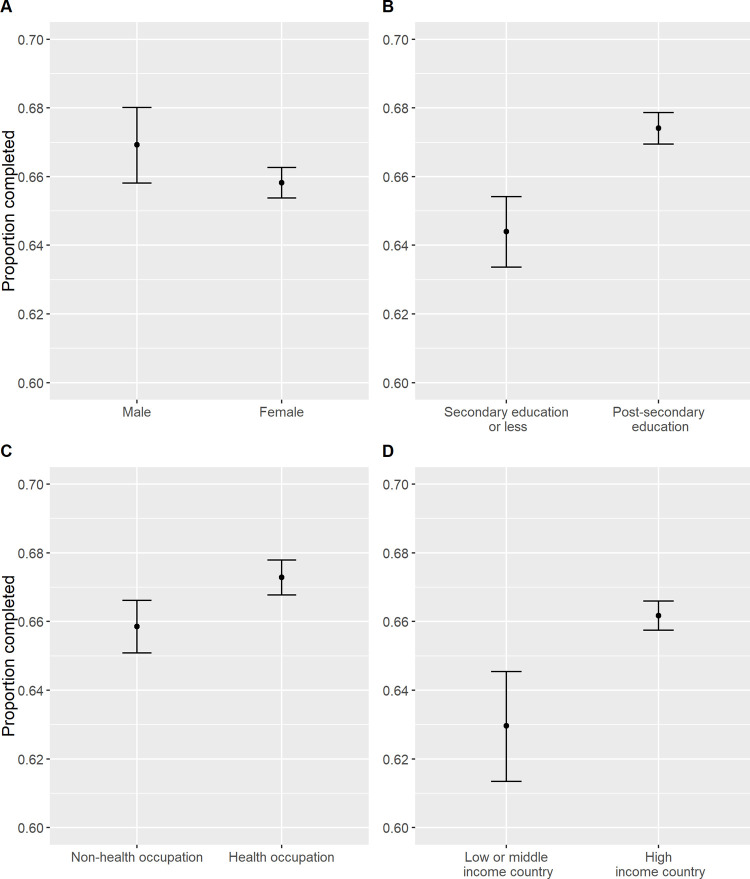
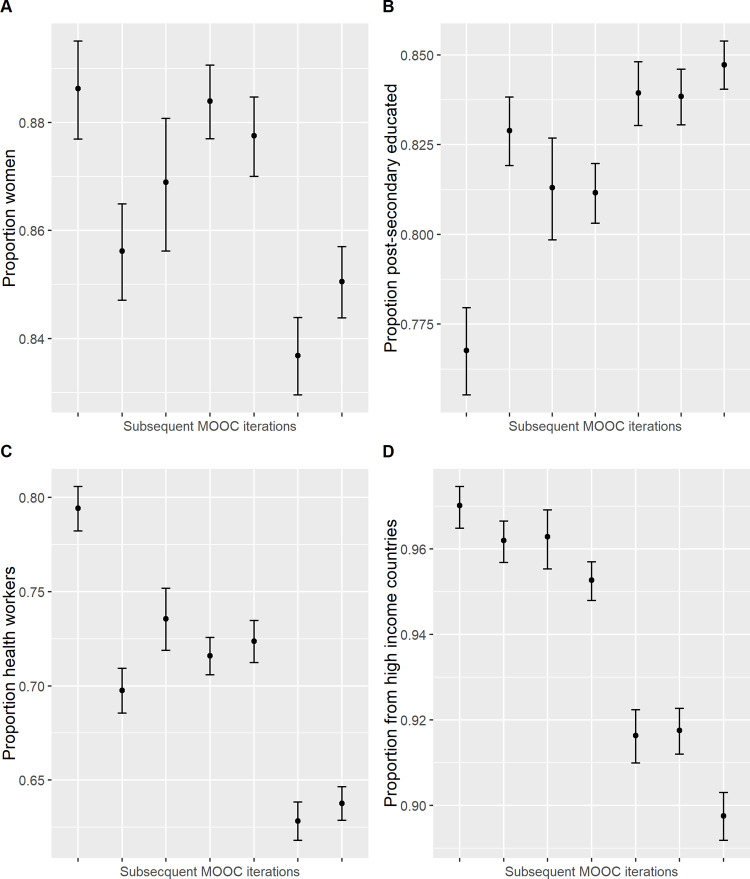
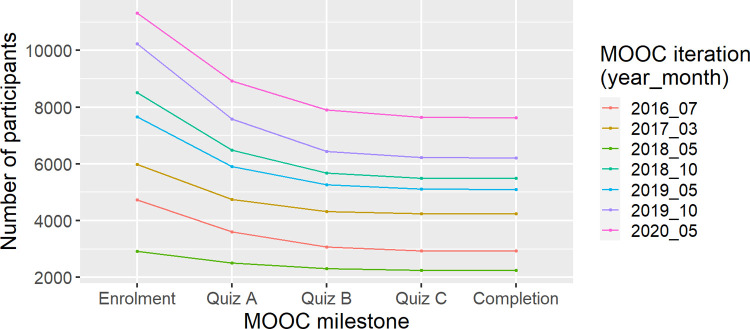
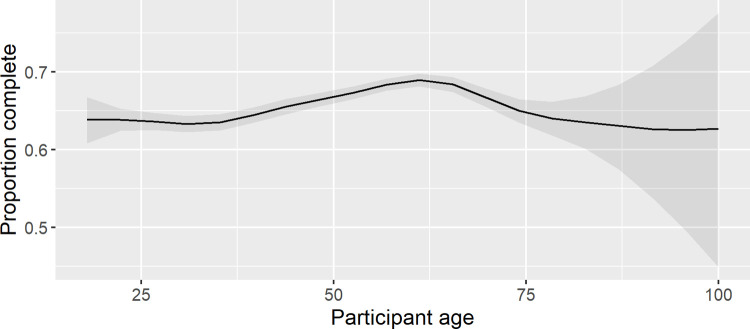
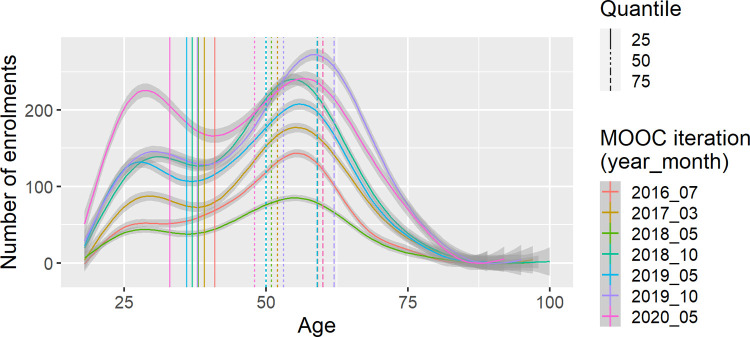
Dementia is a global public health priority and risk reduction is an important pillar of the public health response. While 40% of cases are estimated to be attributable to modifiable health and lifestyle risk factors, public awareness of the evidence is low, limiting peoples' opportunity to adopt risk-reducing behaviours. To address this gap, we designed, implemented, and evaluated an educational intervention, the Preventing Dementia Massive Open Online Course (PDMOOC). This mixed-methods study examined the reach and impact of the free and globally available PDMOOC, to assess its potential to provide effective dementia risk reduction education to a broad international audience. Over 100,000 individuals participated in the PDMOOC across seven iterations from 2016 to 2020, with 55,739 of these consenting to participate in research. Their mean age was 49 years (SD = 15), they came from 167 different countries, and the majority were female (86%), had completed post-secondary education (77%), lived in high-income countries (93%) and worked in health care and social assistance (63%). This demographic profile changed across time, with more men, people with higher education and people from low- and middle-income countries participating in recent course iterations. Two-thirds of participants completed the PDMOOC; completion was associated with being aged 50 to 70 years, residing in a high-income country, having tertiary education, and working in the health sector. Participants reported high levels of satisfaction with the PDMOOC, improved dementia risk reduction understanding and self-efficacy, increased motivation to maintain healthy lifestyles, and, importantly, application of their learning to health behaviour change with the potential to reduce their dementia risk. The PDMOOC educated a large global audience about dementia risk reduction, which contributed to participants making risk-reducing behaviour changes. This suggests MOOCs can be a successful public health strategy to improve dementia risk reduction understanding.

摘要

痴呆症是全球公共卫生的重点关注领域,降低风险是公共卫生应对措施的重要支柱。据估计,40%的病例可归因于可改变的健康和生活方式风险因素,但公众对相关证据的知晓度较低,限制了人们采取降低风险行为的机会。为了填补这一空白,我们设计、实施并评估了一项教育干预措施——预防痴呆大规模开放在线课程(PDMOOC)。这项混合方法研究考察了免费且面向全球的PDMOOC的覆盖范围和影响,以评估其为广大国际受众提供有效痴呆风险降低教育的潜力。2016年至2020年期间,超过10万人参与了PDMOOC的七次迭代,其中55739人同意参与研究。他们的平均年龄为49岁(标准差=15),来自167个不同国家,大多数为女性(86%),完成了高等教育(77%),生活在高收入国家(93%),从事医疗保健和社会援助工作(63%)。这一人口统计学特征随时间发生了变化,在最近几期课程中,参与的男性、受过高等教育的人以及来自低收入和中等收入国家的人有所增加。三分之二的参与者完成了PDMOOC;完成课程与年龄在50至70岁、居住在高收入国家、拥有高等教育以及在卫生部门工作有关。参与者对PDMOOC表示高度满意,对痴呆风险降低的理解和自我效能有所提高,保持健康生活方式的动力增强,重要的是,他们将所学应用于健康行为改变,有可能降低痴呆风险。PDMOOC对全球大量受众进行了痴呆风险降低方面的教育,这促使参与者做出降低风险的行为改变。这表明大规模开放在线课程可以成为提高痴呆风险降低认知的成功公共卫生策略。
https://cdn.ncbi.nlm.nih.gov/pmc/blobs/aeb5/9067672/5589e81cc0eb/pone.0267205.g005.jpg
https://cdn.ncbi.nlm.nih.gov/pmc/blobs/aeb5/9067672/b0e183a050cd/pone.0267205.g001.jpg
https://cdn.ncbi.nlm.nih.gov/pmc/blobs/aeb5/9067672/bf4f0969ebfd/pone.0267205.g002.jpg
https://cdn.ncbi.nlm.nih.gov/pmc/blobs/aeb5/9067672/9f8ebb260d0f/pone.0267205.g003.jpg
https://cdn.ncbi.nlm.nih.gov/pmc/blobs/aeb5/9067672/d797eac31482/pone.0267205.g004.jpg
https://cdn.ncbi.nlm.nih.gov/pmc/blobs/aeb5/9067672/5589e81cc0eb/pone.0267205.g005.jpg
https://cdn.ncbi.nlm.nih.gov/pmc/blobs/aeb5/9067672/b0e183a050cd/pone.0267205.g001.jpg
https://cdn.ncbi.nlm.nih.gov/pmc/blobs/aeb5/9067672/bf4f0969ebfd/pone.0267205.g002.jpg
https://cdn.ncbi.nlm.nih.gov/pmc/blobs/aeb5/9067672/9f8ebb260d0f/pone.0267205.g003.jpg
https://cdn.ncbi.nlm.nih.gov/pmc/blobs/aeb5/9067672/d797eac31482/pone.0267205.g004.jpg
https://cdn.ncbi.nlm.nih.gov/pmc/blobs/aeb5/9067672/5589e81cc0eb/pone.0267205.g005.jpg

相似文献

1
Educating the masses to address a global public health priority: The Preventing Dementia Massive Open Online Course (MOOC).教育大众以应对全球公共卫生重点问题:预防痴呆症大规模开放在线课程(MOOC)。
PLoS One. 2022 May 4;17(5):e0267205. doi: 10.1371/journal.pone.0267205. eCollection 2022.
2
An online, public health framework supporting behaviour change to reduce dementia risk: interim results from the ISLAND study linking ageing and neurodegenerative disease.支持通过行为改变来降低痴呆风险的在线公共卫生框架:衰老与神经退行性疾病关联研究(ISLAND 研究)的中期结果。
BMC Public Health. 2023 Sep 29;23(1):1886. doi: 10.1186/s12889-023-16805-2.
3
Relationship between participants' level of education and engagement in their completion of the Understanding Dementia Massive Open Online Course.参与者的教育水平与其完成“了解痴呆症”大规模开放在线课程的参与度之间的关系。
BMC Med Educ. 2015 Mar 26;15:60. doi: 10.1186/s12909-015-0344-z.
4
Interpersonal communication may improve equity in dementia risk education.人际沟通可能会提高痴呆症风险教育的公平性。
Health Promot J Austr. 2023 Apr;34(2):561-569. doi: 10.1002/hpja.602. Epub 2022 Apr 17.
5
Massive open online course (MOOC) learning builds capacity and improves competence for patient safety among global learners: A prospective cohort study.大规模在线开放课程(MOOC)学习在全球学习者中建立了患者安全能力并提高了他们的能力:一项前瞻性队列研究。
Nurse Educ Today. 2021 Sep;104:104984. doi: 10.1016/j.nedt.2021.104984. Epub 2021 May 26.
6
Leveraging massive open online courses to expand quality of healthcare education to health practitioners in Rwanda.利用大规模在线开放课程将优质医疗教育扩展到卢旺达的医疗从业者。
BMJ Open Qual. 2019 Nov 6;8(4):e000532. doi: 10.1136/bmjoq-2018-000532. eCollection 2019.
7
Lessons learned on teaching a global audience with massive open online courses (MOOCs) on health impacts of climate change: a commentary.关于气候变化对健康影响的大规模开放在线课程(MOOCs)面向全球受众教学的经验教训:评论。
Global Health. 2019 Aug 22;15(1):52. doi: 10.1186/s12992-019-0494-6.
8
Climate Change and Health as Massive Open Online Courses.气候变化与健康作为大规模开放在线课程。
Stud Health Technol Inform. 2018;247:416-420.
9
Implementation research training for learners in low- and middle-income countries: evaluating behaviour change after participating in a massive open online course.低收入和中等收入国家学习者的实施研究培训:评估参与大规模在线开放课程后的行为变化。
Health Res Policy Syst. 2021 Apr 6;19(1):59. doi: 10.1186/s12961-021-00703-3.
10
Cross-sectional survey of attitudes and beliefs towards dementia risk reduction among Australian older adults.澳大利亚老年人对预防痴呆症风险的态度和信念的横断面调查。
BMC Public Health. 2023 May 30;23(1):1021. doi: 10.1186/s12889-023-15843-0.

引用本文的文献

1
A comparison of modifiable risk factors for dementia among South Asian migrants and non-migrants aged 50 or older in Tasmania, Australia.澳大利亚塔斯马尼亚州50岁及以上南亚移民与非移民中痴呆症可改变风险因素的比较。
BMC Public Health. 2025 Jul 3;25(1):2362. doi: 10.1186/s12889-025-23426-4.
2
A Web-Based Lifestyle-Related Course for People Living With Multiple Sclerosis: Quantitative Evaluation of Course Completion, Satisfaction, and Lifestyle Changes Among Participants Enrolled in a Randomized Controlled Trial.一项针对多发性硬化症患者的基于网络的生活方式相关课程:对参与随机对照试验的参与者的课程完成情况、满意度和生活方式改变的定量评估。
JMIR Hum Factors. 2025 May 26;12:e59363. doi: 10.2196/59363.
3

本文引用的文献

1
Broadening the reach of dementia risk-reduction initiatives: strategies from dissemination models.拓宽痴呆风险降低计划的覆盖范围:来自传播模型的策略。
Scand J Public Health. 2023 Mar;51(2):301-308. doi: 10.1177/14034948211055602. Epub 2021 Nov 2.
2
Assessing the Impact of Online Health Education Interventions From 2010-2020: A Systematic Review of the Evidence.评估 2010-2020 年在线健康教育培训干预的效果:证据的系统回顾。
Am J Health Promot. 2022 Jan;36(1):201-224. doi: 10.1177/08901171211039308. Epub 2021 Aug 12.
3
Knowledge, health beliefs and attitudes towards dementia and dementia risk reduction among the Dutch general population: a cross-sectional study.
Stakeholder perceptions of dementia in Colombia: a qualitative study.
哥伦比亚利益相关者对痴呆症的认知:一项定性研究。
BMC Public Health. 2025 Mar 11;25(1):959. doi: 10.1186/s12889-025-22166-9.
4
Development and evaluation of a free e-learning program on dementia risk reduction for the general public: A pre-post study.面向普通大众的痴呆症风险降低免费电子学习项目的开发与评估:一项前后对照研究。
J Alzheimers Dis. 2025 Feb;103(4):1075-1089. doi: 10.1177/13872877241309112. Epub 2025 Jan 10.
5
Who is seeking information about traumatic brain injury? Characterizing online course participants.谁在寻求关于创伤性脑损伤的信息?描述在线课程参与者的特征。
Health Promot Int. 2024 Aug 1;39(4). doi: 10.1093/heapro/daae077.
6
Psychometric of the Persian version of Quality of Life in Late-Stage Dementia (QUALID) in the elderly with Alzheimer's disease.阿尔茨海默病老年患者晚期痴呆生活质量(QUALID)波斯语版的心理计量学研究。
BMJ Open Qual. 2024 Jul 4;13(3):e002673. doi: 10.1136/bmjoq-2023-002673.
7
Parental acceptance of brain health programs for preschool children: a mixed-methods study exploring barriers, facilitators and future approaches.家长对学龄前儿童脑健康项目的接受度:一项探索障碍、促进因素和未来方法的混合方法研究。
Front Public Health. 2024 May 23;12:1383270. doi: 10.3389/fpubh.2024.1383270. eCollection 2024.
8
Utilising massive open online courses to enhance global learning dissemination in cleft lip and palate: a case report of penta helix collaboration.利用大规模开放式在线课程增强唇腭裂全球学习传播:五螺旋协作案例报告。
BMC Med Educ. 2024 Mar 18;24(1):301. doi: 10.1186/s12909-024-05225-4.
9
An online, public health framework supporting behaviour change to reduce dementia risk: interim results from the ISLAND study linking ageing and neurodegenerative disease.支持通过行为改变来降低痴呆风险的在线公共卫生框架:衰老与神经退行性疾病关联研究(ISLAND 研究)的中期结果。
BMC Public Health. 2023 Sep 29;23(1):1886. doi: 10.1186/s12889-023-16805-2.
10
Development and validation of educational multimedia to promote public health literacy about healthy cognitive aging.开发和验证教育多媒体,以提高公众对健康认知老化的健康素养。
Health Expect. 2023 Dec;26(6):2571-2583. doi: 10.1111/hex.13857. Epub 2023 Aug 27.
荷兰一般人群对痴呆症的知识、健康信念和态度,以及对降低痴呆症风险的态度:一项横断面研究。
BMC Public Health. 2021 May 3;21(1):857. doi: 10.1186/s12889-021-10913-7.
4
Public Engagement and Neurology: An Update.公众参与与神经病学:最新进展
Brain Sci. 2021 Mar 28;11(4):429. doi: 10.3390/brainsci11040429.
5
Increasing knowledge on dementia risk reduction in the general population: Results of a public awareness campaign.提高公众对痴呆症风险降低的认识:一项公众意识宣传活动的结果。
Prev Med. 2021 Jun;147:106522. doi: 10.1016/j.ypmed.2021.106522. Epub 2021 Mar 17.
6
Healthy ageing through internet counselling in the elderly (HATICE): a multinational, randomised controlled trial.通过互联网咨询实现老年人健康老龄化(HATICE):一项多国家、随机对照试验。
Lancet Digit Health. 2019 Dec;1(8):e424-e434. doi: 10.1016/S2589-7500(19)30153-0. Epub 2019 Nov 14.
7
Raising awareness for dementia risk reduction through a public health campaign: a pre-post study.通过公共卫生运动提高对降低痴呆症风险的认识:一项前后对照研究。
BMJ Open. 2020 Nov 6;10(11):e041211. doi: 10.1136/bmjopen-2020-041211.
8
Association between having a family member with dementia and perceptions of dementia preventability.家庭成员中有痴呆症患者与对痴呆症可预防程度的认知之间的关联。
Aging Ment Health. 2022 Feb;26(2):270-276. doi: 10.1080/13607863.2020.1839866. Epub 2020 Nov 2.
9
Future Directions for Dementia Risk Reduction and Prevention Research: An International Research Network on Dementia Prevention Consensus.未来降低和预防痴呆风险的研究方向:预防痴呆国际研究网络共识。
J Alzheimers Dis. 2020;78(1):3-12. doi: 10.3233/JAD-200674.
10
Dementia prevention, intervention, and care: 2020 report of the Lancet Commission.《痴呆症的预防、干预与照护:柳叶刀委员会2020年报告》
Lancet. 2020 Aug 8;396(10248):413-446. doi: 10.1016/S0140-6736(20)30367-6. Epub 2020 Jul 30.