Downie Andrew, Mashanya Titus, Chipwaza Beatrice, Griffiths Frances, Harris Bronwyn, Kalolo Albino, Ndegese Sylvester, Sturt Jackie, De Valliere Nicole, Pemba Senga
School of Public Health and Preventative Medicine, Monash University, Melbourne, Australia.
Warwick Medical School, University of Warwick, Coventry, United Kingdom.
JMIR Form Res. 2022 Jun 14;6(6):e32964. doi: 10.2196/32964.
Despite acceleration of remote consulting throughout the COVID-19 pandemic, many health care professionals are practicing without training to offer teleconsultation to their patients. This is especially challenging in resource-poor countries, where the telephone has not previously been widely used for health care.
As the COVID-19 pandemic dawned, we designed a modular online training program for REmote Consulting in primary Health care (REaCH). To optimize upscaling of knowledge and skills, we employed a train-the-trainer approach, training health workers (tier 1) to cascade the training to others (tier 2) in their locality. We aimed to determine whether REaCH training was acceptable and feasible to health workers in rural Tanzania to support their health care delivery during the pandemic.
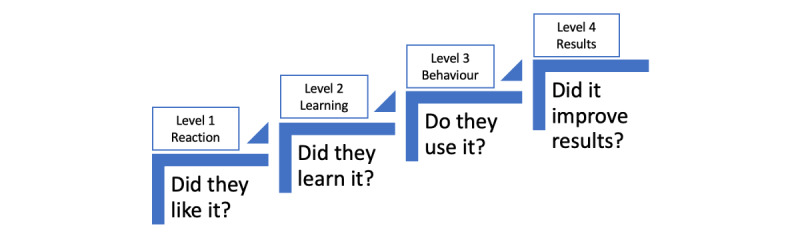
We developed and pretested the REaCH training program in July 2020 and created 8 key modules. The program was then taught remotely via Moodle and WhatsApp (Meta Platforms) to 12 tier 1 trainees and cascaded to 63 tier 2 trainees working in Tanzania's rural Ulanga District (August-September 2020). We evaluated the program using a survey (informed by Kirkpatrick's model of evaluation) to capture trainee satisfaction with REaCH, the knowledge gained, and perceived behavior change; qualitative interviews to explore training experiences and views of remote consulting; and documentary analysis of emails, WhatsApp texts, and training reports generated through the program. Quantitative data were analyzed using descriptive statistics. Qualitative data were analyzed thematically. Findings were triangulated and integrated during interpretation.
Of the 12 tier 1 trainees enrolled in the program, all completed the training; however, 2 (17%) encountered internet difficulties and failed to complete the evaluation. In addition, 1 (8%) opted out of the cascading process. Of the 63 tier 2 trainees, 61 (97%) completed the cascaded training. Of the 10 (83%) tier 1 trainees who completed the survey, 9 (90%) would recommend the program to others, reported receiving relevant skills and applying their learning to their daily work, demonstrating satisfaction, learning, and perceived behavior change. In qualitative interviews, tier 1 and 2 trainees identified several barriers to implementation of remote consulting, including lacking digital infrastructure, few resources, inflexible billing and record-keeping systems, and limited community awareness. The costs of data or airtime emerged as the greatest immediate barrier to supporting both the upscaling of REaCH training and subsequently the delivery of safe and trustworthy remote health care.
The REaCH training program is feasible, acceptable, and effective in changing trainees' behavior. However, government and organizational support is required to facilitate the expansion of the program and remote consulting in Tanzania and other low-resource settings.
尽管在新冠疫情期间远程咨询加速发展,但许多医疗保健专业人员在没有接受过为患者提供远程会诊培训的情况下开展工作。在资源匮乏的国家,这一挑战尤为严峻,因为此前电话在医疗保健领域并未得到广泛应用。
随着新冠疫情的出现,我们设计了一个针对初级卫生保健远程咨询(REaCH)的模块化在线培训项目。为了优化知识和技能的推广,我们采用了培训培训师的方法,培训卫生工作者(一级),以便他们将培训传授给当地的其他人(二级)。我们旨在确定REaCH培训对坦桑尼亚农村地区的卫生工作者来说是否可接受且可行,以支持他们在疫情期间提供医疗服务。
我们在2020年7月开发并预测试了REaCH培训项目,并创建了8个关键模块。然后通过Moodle和WhatsApp(Meta平台)将该项目远程传授给12名一级学员,并推广到在坦桑尼亚农村乌兰加区工作的63名二级学员(2020年8月至9月)。我们使用一项调查(基于柯克帕特里克评估模型)来评估该项目,以了解学员对REaCH的满意度、获得的知识以及感知到的行为变化;进行定性访谈以探讨培训经历和对远程咨询的看法;并对通过该项目生成的电子邮件、WhatsApp文本和培训报告进行文献分析。定量数据采用描述性统计进行分析。定性数据采用主题分析法进行分析。在解释过程中对研究结果进行三角互证和整合。
在参加该项目的12名一级学员中,所有人都完成了培训;然而,有2人(17%)遇到网络问题,未能完成评估。此外,有1人(8%)选择退出推广过程。在63名二级学员中,有61人(97%)完成了推广培训。在完成调查的10名(83%)一级学员中,有9人(90%)会向其他人推荐该项目,报告称获得了相关技能并将所学应用于日常工作,表明他们感到满意、学到了知识并感知到行为发生了变化。在定性访谈中,一级和二级学员指出了远程咨询实施的几个障碍,包括缺乏数字基础设施、资源稀缺、计费和记录系统不灵活以及社区意识有限。数据或通话时间成本成为支持REaCH培训推广以及随后提供安全可靠的远程医疗服务的最大直接障碍。
REaCH培训项目在改变学员行为方面是可行、可接受且有效的。然而,需要政府和组织的支持,以促进该项目在坦桑尼亚和其他资源匮乏地区的扩展以及远程咨询的开展。