Faculty of Biology, Technion - Israel Institute of Technology, Technion City, Haifa 3200003, Israel; The Wistar Institute of Anatomy and Biology, Program in Molecular and Cellular Oncogenesis, 3601 Spruce Street, Philadelphia, PA 19104, USA.
Faculty of Biology, Technion - Israel Institute of Technology, Technion City, Haifa 3200003, Israel.
Cell Metab. 2022 May 3;34(5):775-782.e9. doi: 10.1016/j.cmet.2022.04.006.
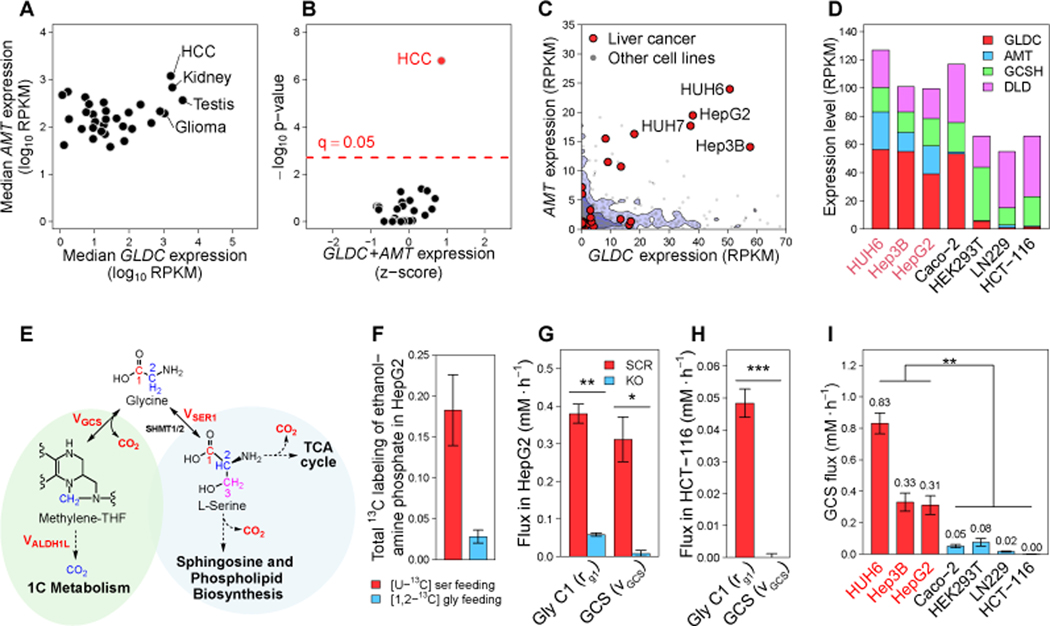
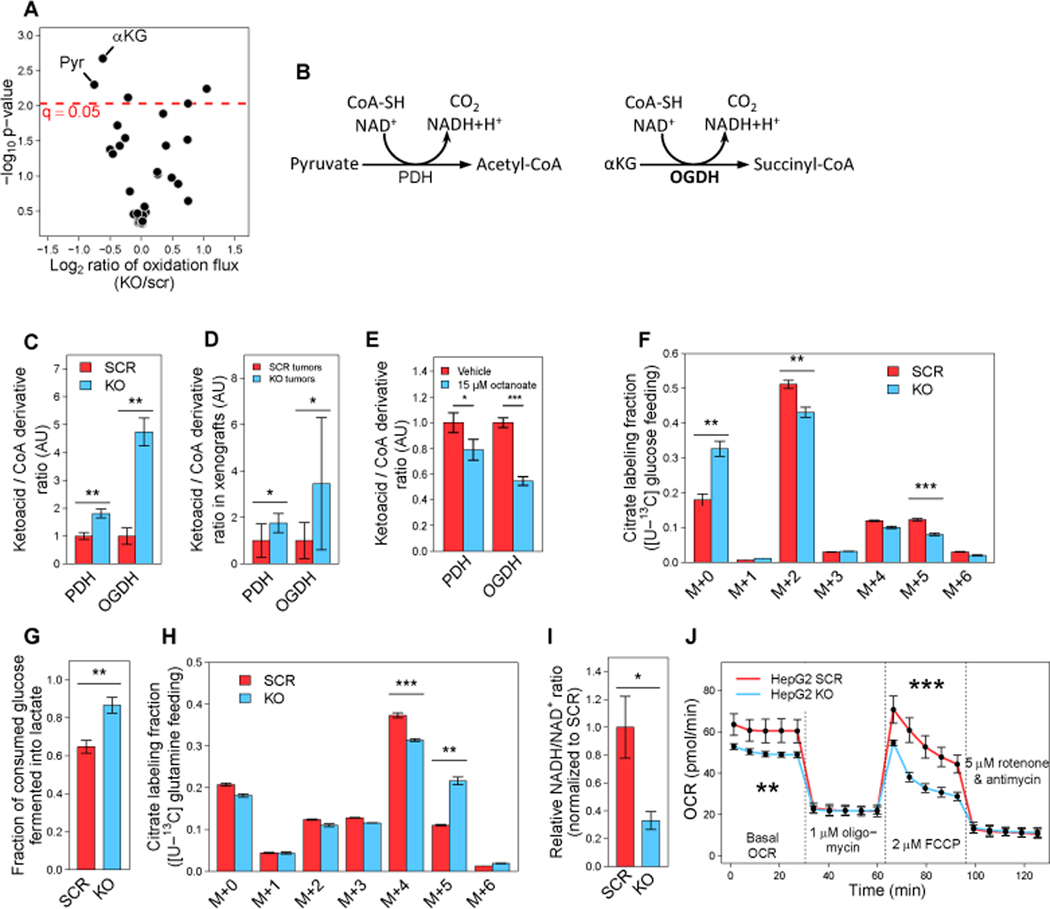
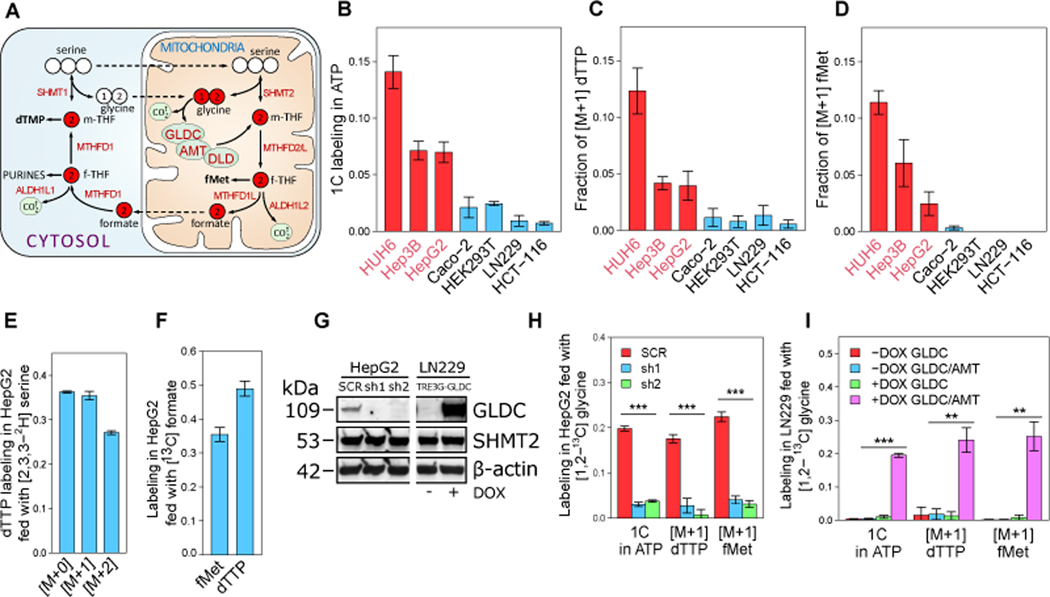
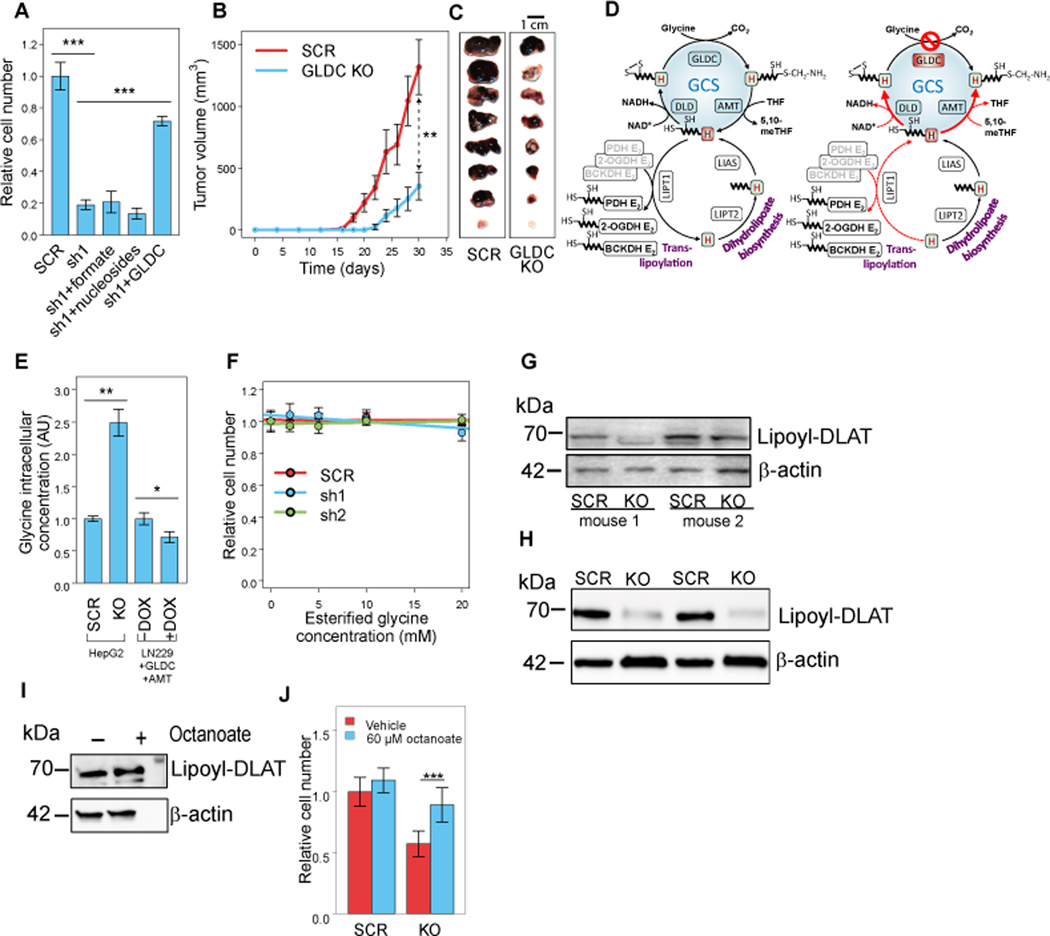
The folic acid cycle mediates the transfer of one-carbon (1C) units to support nucleotide biosynthesis. While the importance of serine as a mitochondrial and cytosolic donor of folate-mediated 1C units in cancer cells has been thoroughly investigated, a potential role of glycine oxidation remains unclear. We developed an approach for quantifying mitochondrial glycine cleavage system (GCS) flux by combining stable and radioactive isotope tracing with computational flux decomposition. We find high GCS flux in hepatocellular carcinoma (HCC), supporting nucleotide biosynthesis. Surprisingly, other than supplying 1C units, we found that GCS is important for maintaining protein lipoylation and mitochondrial activity. Genetic silencing of glycine decarboxylase inhibits the lipoylation and activity of pyruvate dehydrogenase and impairs tumor growth, suggesting a novel drug target for HCC. Considering the physiological role of liver glycine cleavage, our results support the notion that tissue of origin plays an important role in tumor-specific metabolic rewiring.
叶酸循环介导一碳(1C)单位的转移,以支持核苷酸的生物合成。虽然丝氨酸作为肿瘤细胞中叶酸介导的 1C 单位的线粒体和细胞质供体的重要性已经得到了充分的研究,但甘氨酸氧化的潜在作用仍不清楚。我们开发了一种通过结合稳定和放射性同位素示踪与计算通量分解来定量线粒体甘氨酸裂解系统(GCS)通量的方法。我们发现肝癌(HCC)中 GCS 通量很高,支持核苷酸的生物合成。令人惊讶的是,除了提供 1C 单位外,我们还发现 GCS 对于维持蛋白质的脂酰化和线粒体活性很重要。甘氨酸脱羧酶的基因沉默抑制了丙酮酸脱氢酶的脂酰化和活性,并损害了肿瘤的生长,这表明 HCC 有一个新的药物靶点。考虑到肝脏甘氨酸裂解的生理作用,我们的结果支持这样一种观点,即组织起源在肿瘤特异性代谢重编程中起着重要作用。