Oshida Sotaro, Akamatsu Yosuke, Matsumoto Yoshiyasu, Suzuki Taro, Sasaki Takuto, Kondo Yuki, Fujiwara Shunrou, Kashimura Hiroshi, Kubo Yoshitaka, Ogasawara Kuniaki
Department of Neurosurgery, Iwate Prefectural Ofunato Hospital, Ofunato.
Department of Neurosurgery, Iwate Prefectural Chubu Hospital, Kitakami.
Surg Neurol Int. 2022 Mar 31;13:117. doi: 10.25259/SNI_1144_2021. eCollection 2022.
Although neurological adverse events have been reported after receiving coronavirus disease 2019 (COVID-19) vaccines, associations between COVID-19 vaccination and aneurysmal subarachnoid hemorrhage (SAH) have rarely been discussed. We report here the incidence and details of three patients who presented with intracranial aneurysm rupture shortly after receiving messenger ribonucleic acid (mRNA) COVID-19 vaccines.
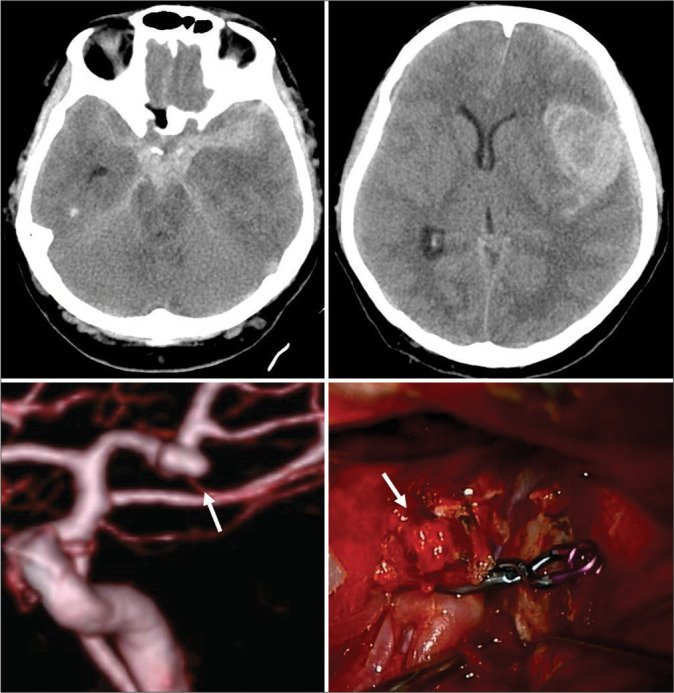
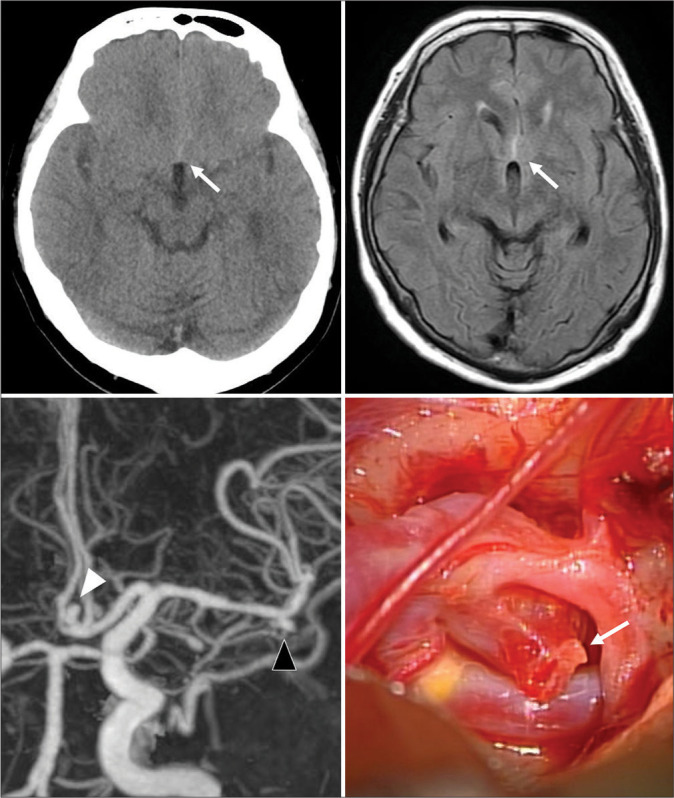
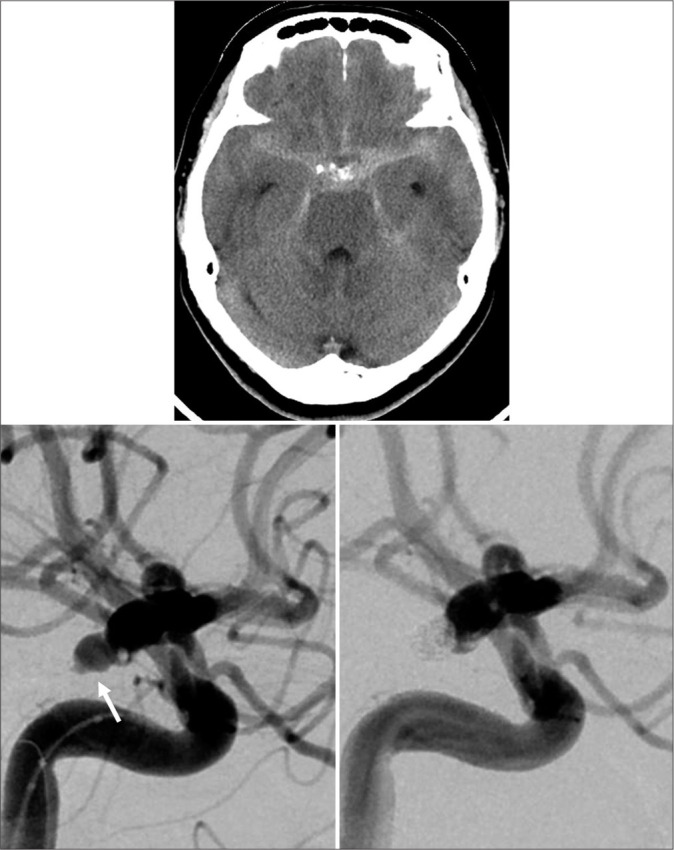
We retrospectively reviewed the medical records of individuals who received a first and/ or second dose of mRNA COVID-19 vaccine between March 6, 2021, and June 14, 2021, in a rural district in Japan, and identified the occurrences of aneurysmal SAH within 3 days after mRNA vaccination. We assessed incidence rates (IRs) for aneurysmal SAH within 3 days after vaccination and spontaneous SAH for March 6-June 14, 2021, and for the March 6-June 14 intervals of a 5-year reference period of 2013-2017. We assessed the incidence rate ratio (IRR) of aneurysmal SAH within 3 days after vaccination and spontaneous SAH compared to the crude incidence in the reference period (2013-2017). Among 34,475 individuals vaccinated during the study period, three women presented with aneurysmal SAH (IR: 1058.7/100,000 person-years), compared with 83 SAHs during the reference period (IR: 20.7/100,000 persons-years). IRR was 0.026 (95% confidence interval [CI] 0.0087-0.12; < 0.001). A total of 28 spontaneous SAHs were verified from the Iwate Stroke Registry database during the same period in 2021 (IR: 34.9/100,000 person-years), and comparison with the reference period showed an IRR of 0.78 (95%CI 0.53-1.18; = 0.204). All three cases developed SAH within 3 days (range, 0-3 days) of the first or second dose of BNT162b2 mRNA COVID-19 vaccine by Pfizer/BioNTech. The median age at the time of SAH onset was 63.7 years (range, 44- 75 years). Observed locations of ruptured aneurysms in patients were the bifurcations of the middle cerebral artery, internal carotid-posterior communicating artery, and anterior communicating artery, respectively. Favorable outcomes (modified Rankin scale scores, 0-2) were obtained following microsurgical clipping or intra-aneurysm coiling.
Although the advantages of COVID-19 vaccination appear to outweigh the risks, pharmacovigilance must be maintained to monitor potentially fatal adverse events and identify possible associations.
尽管在接种2019冠状病毒病(COVID-19)疫苗后有神经不良事件的报告,但COVID-19疫苗接种与动脉瘤性蛛网膜下腔出血(SAH)之间的关联很少被讨论。我们在此报告3例在接种信使核糖核酸(mRNA)COVID-19疫苗后不久出现颅内动脉瘤破裂的患者的发病率及详细情况。
我们回顾性分析了2021年3月6日至2021年6月14日期间在日本一个农村地区接种第一剂和/或第二剂mRNA COVID-19疫苗的个体的病历,确定了mRNA疫苗接种后3天内动脉瘤性SAH的发生情况。我们评估了2021年3月6日至6月14日接种疫苗后3天内动脉瘤性SAH以及自发性SAH的发病率,以及2013 - 2017年5年参考期内3月6日至6月14日期间的发病率。我们评估了接种疫苗后3天内动脉瘤性SAH与自发性SAH的发病率比值(IRR)与参考期(2013 - 2017年)的粗发病率相比情况。在研究期间接种疫苗的34475人中,3名女性出现动脉瘤性SAH(发病率:1058.7/100,000人年),而参考期内有83例SAH(发病率:20.7/100,000人年)。IRR为0.026(95%置信区间[CI]0.0087 - 0.12;<0.001)。2021年同期从岩手县卒中登记数据库中共核实到28例自发性SAH(发病率:34.9/100,000人年),与参考期比较显示IRR为0.78(95%CI 0.53 - 1.18;P = 0.204)。所有3例均在接种辉瑞/生物新技术公司的第一剂或第二剂BNT162b2 mRNA COVID-19疫苗后3天内(范围0 - 3天)发生SAH。SAH发病时的中位年龄为63.7岁(范围44 - 75岁)。患者动脉瘤破裂的观察位置分别为大脑中动脉分叉处、颈内动脉 - 后交通动脉以及前交通动脉。经显微手术夹闭或动脉瘤内栓塞后获得了良好的预后(改良Rankin量表评分,0 - 2)。
尽管COVID-19疫苗接种的益处似乎大于风险,但必须保持药物警戒以监测潜在的致命不良事件并确定可能的关联。