Mayoral Isabel, Bevilacqua Elisa, Gómez Gorka, Hmadcha Abdelkrim, González-Loscertales Ignacio, Reina Esther, Sotelo Julio, Domínguez Antonia, Pérez-Alcántara Pedro, Smani Younes, González-Puertas Patricia, Mendez Ana, Uribe Sergio, Smani Tarik, Ordoñez Antonio, Valverde Israel
Cardiovascular Pathophysiology Group, Institute of Biomedicine of Seville- IBiS, University of Seville /HUVR/CSIC, Seville, Spain.
Advanced Therapies and Regenerative Medicine Research Group.General Hospital, Alicante Institute for Health and Biomedical Research (ISABIAL), Alicante, Spain.
Mater Today Bio. 2022 Apr 14;14:100252. doi: 10.1016/j.mtbio.2022.100252. eCollection 2022 Mar.
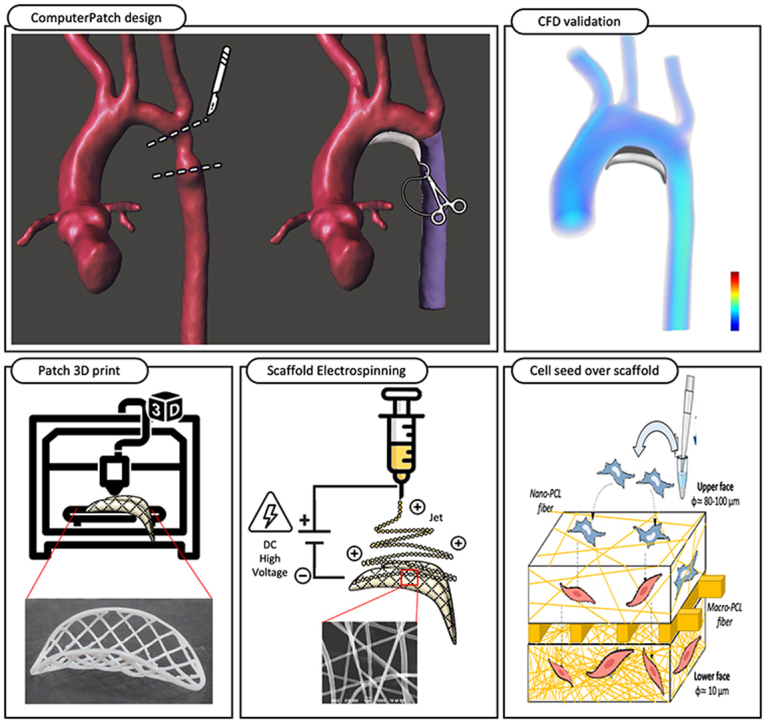
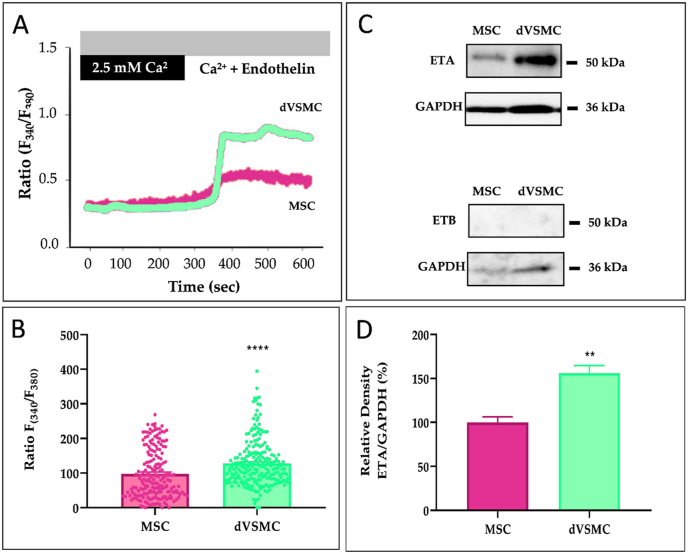
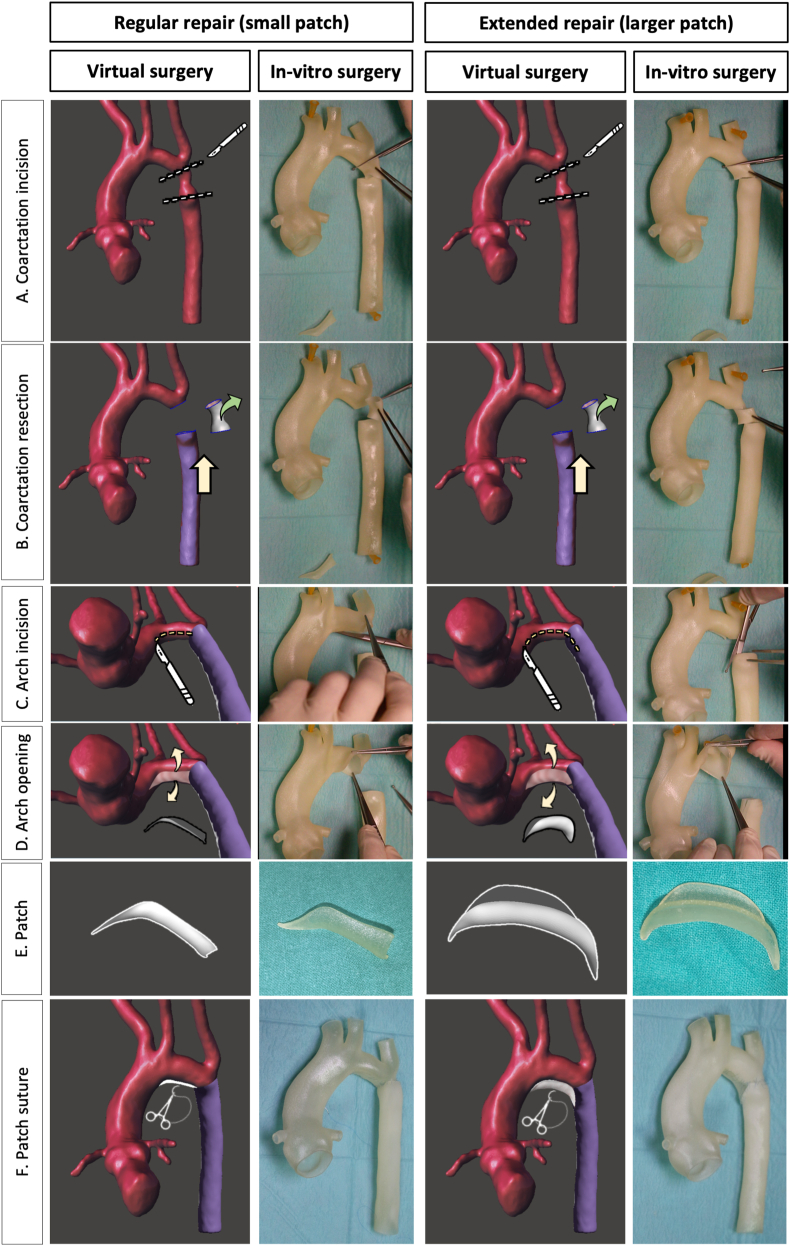
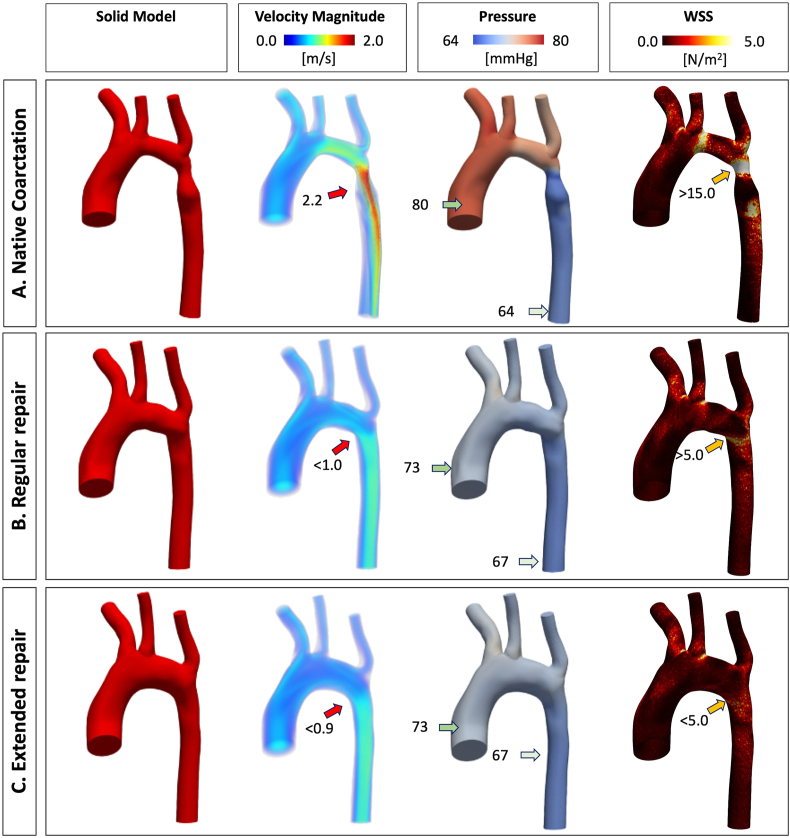
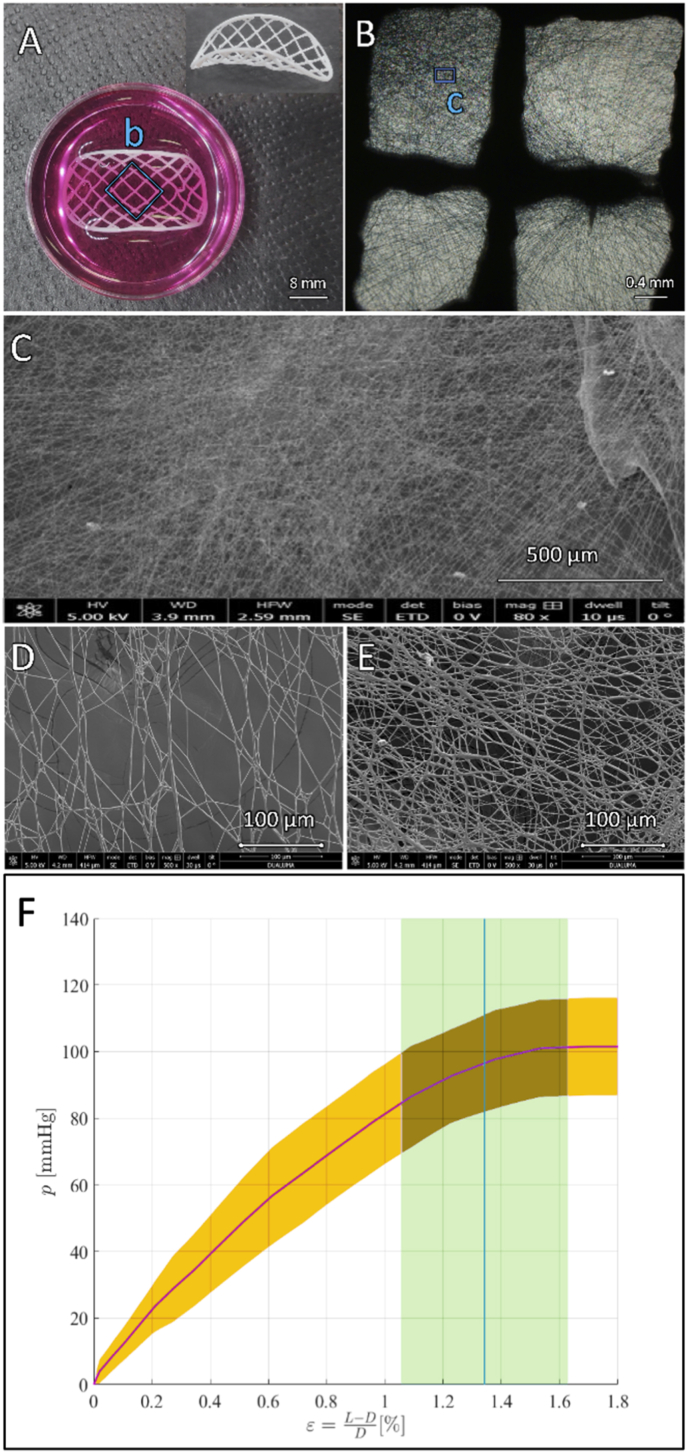
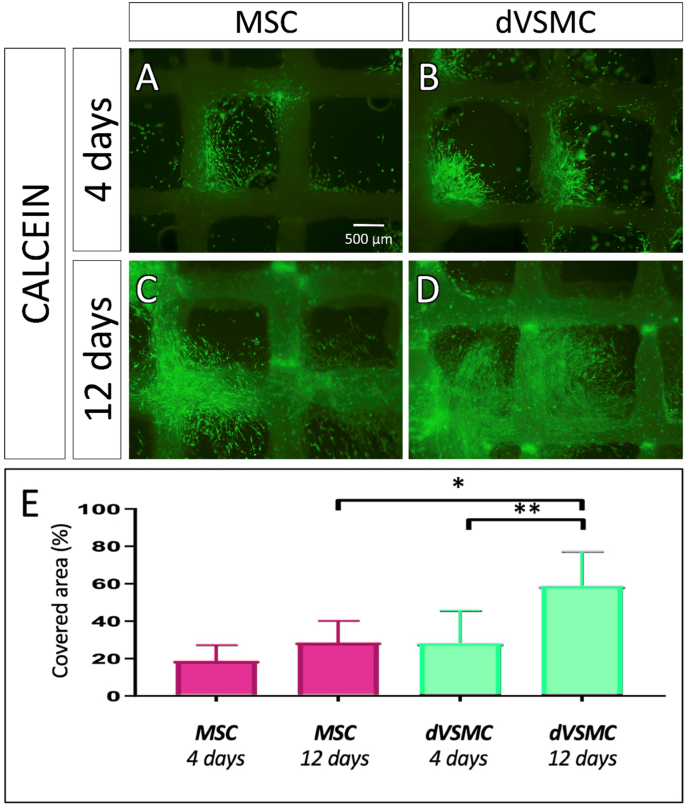
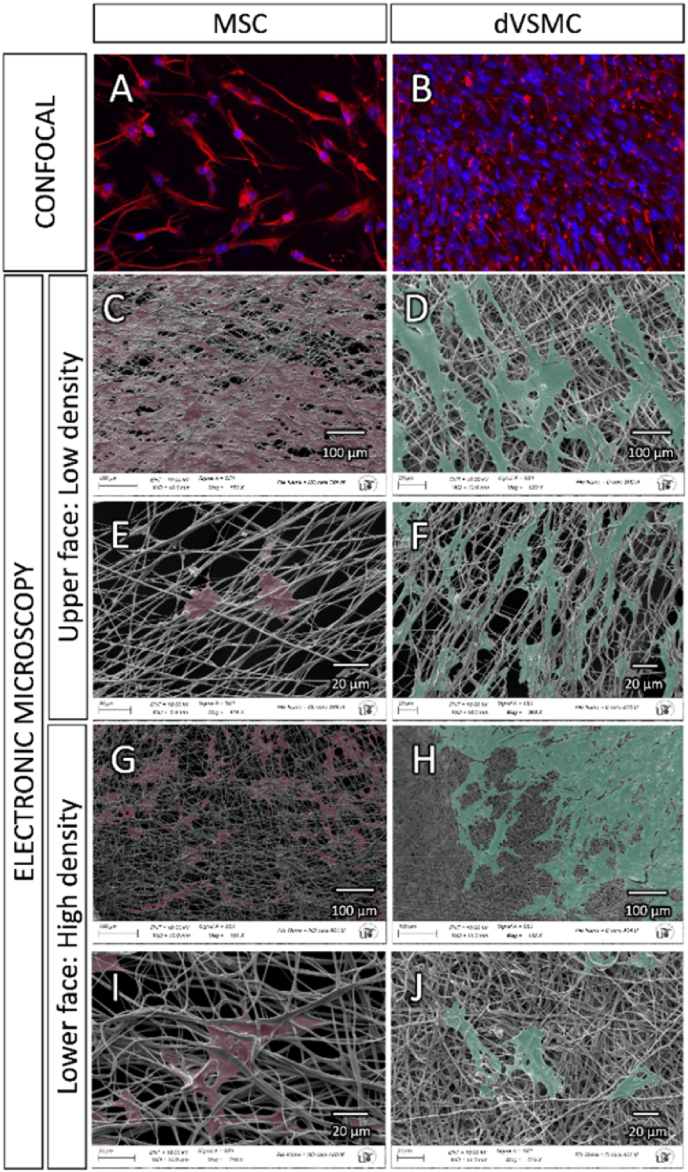
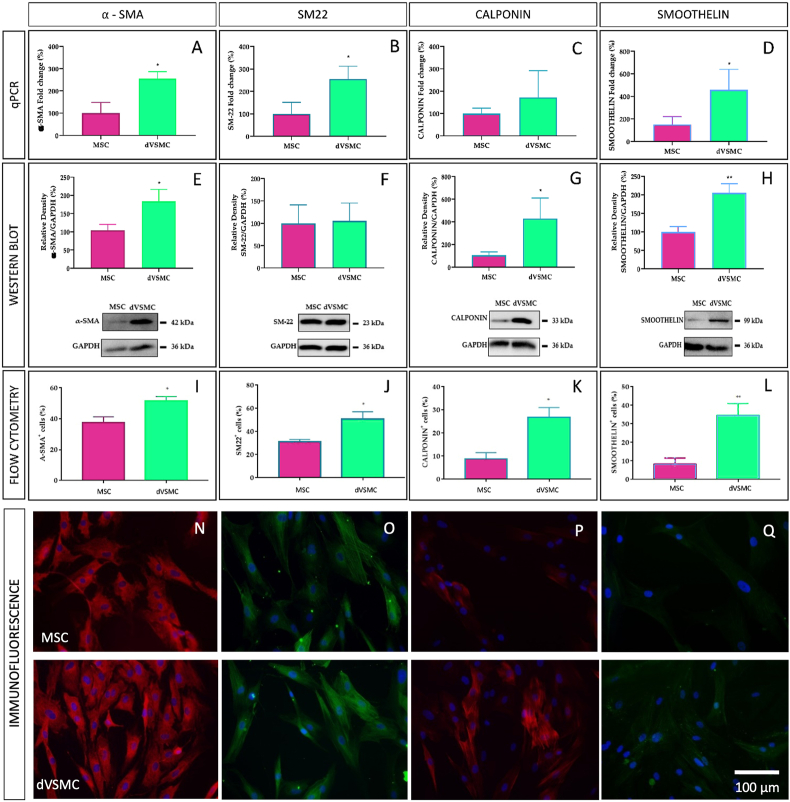
Three-dimensional (3D) engineered cardiovascular tissues have shown great promise to replace damaged structures. Specifically, tissue engineering vascular grafts (TEVG) have the potential to replace biological and synthetic grafts. We aimed to design an in-vitro patient-specific patch based on a hybrid 3D print combined with vascular smooth muscle cells (VSMC) differentiation. Based on the medical images of a 2 months-old girl with aortic arch hypoplasia and using computational modelling, we evaluated the most hemodynamically efficient aortic patch surgical repair. Using the designed 3D patch geometry, the scaffold was printed using a hybrid fused deposition modelling (FDM) and electrospinning techniques. The scaffold was seeded with multipotent mesenchymal stem cells (MSC) for later maturation to derived VSMC (dVSMC). The graft showed adequate resistance to physiological aortic pressure (burst pressure 101 ± 15 mmHg) and a porosity gradient ranging from 80 to 10 μm allowing cells to infiltrate through the entire thickness of the patch. The bio-scaffolds showed good cell viability at days 4 and 12 and adequate functional vasoactive response to endothelin-1. In summary, we have shown that our method of generating patient-specific patch shows adequate hemodynamic profile, mechanical properties, dVSMC infiltration, viability and functionality. This innovative 3D biotechnology has the potential for broad application in regenerative medicine and potentially in heart disease prevention.
三维(3D)工程化心血管组织已显示出替代受损结构的巨大潜力。具体而言,组织工程血管移植物(TEVG)有潜力替代生物和合成移植物。我们旨在基于混合3D打印结合血管平滑肌细胞(VSMC)分化设计一种体外患者特异性补片。基于一名患有主动脉弓发育不全的2个月大女孩的医学图像,并使用计算模型,我们评估了血流动力学效率最高的主动脉补片手术修复方法。利用设计好的3D补片几何形状,使用混合熔融沉积建模(FDM)和静电纺丝技术打印支架。将多能间充质干细胞(MSC)接种到支架上,以便随后成熟为衍生血管平滑肌细胞(dVSMC)。该移植物对生理主动脉压力显示出足够的抵抗力(爆破压力101±15 mmHg),孔隙率梯度范围为80至10μm,使细胞能够渗透到补片的整个厚度。生物支架在第4天和第12天显示出良好的细胞活力,并对内皮素-