Zheng Zhi, Chen Xiaojing, Cai Xiaoyun, Lin Hui, Xu Junfen, Cheng Xiaodong
Zhejiang Provincial Key Laboratory of Precision Diagnosis and Therapy for Major Gynecological Diseases, Women's Hospital, Zhejiang University School of Medicine, 310006, Hangzhou, Zhejiang, China.
Department of Obstetrics and Gynecology, Wenzhou People's Hospital, 325000, Wenzhou, Zhejiang, China.
Cell Death Discov. 2022 May 5;8(1):250. doi: 10.1038/s41420-022-01049-7.
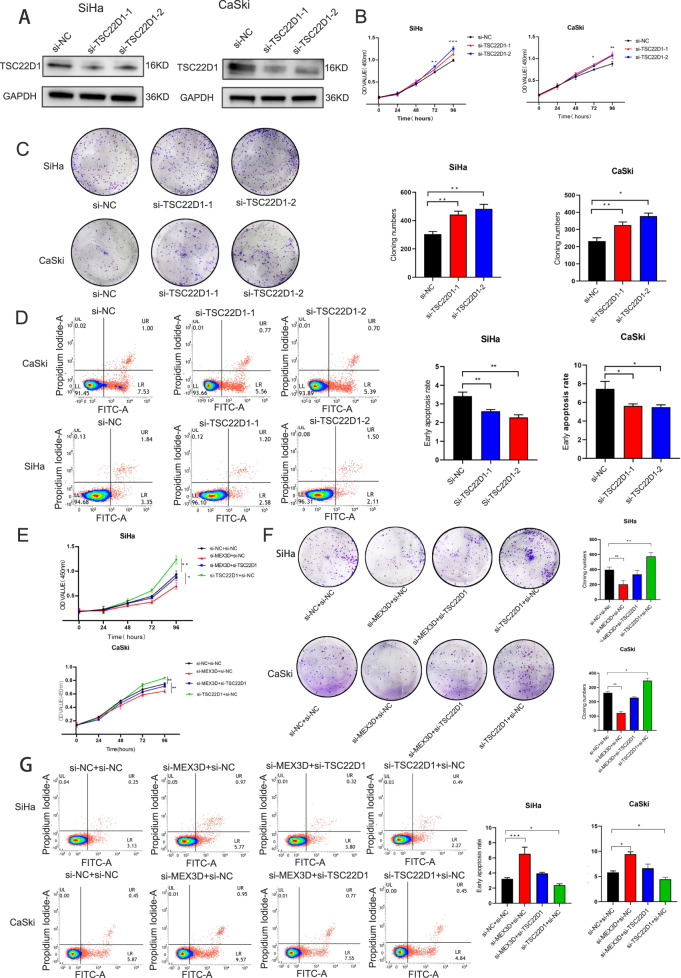
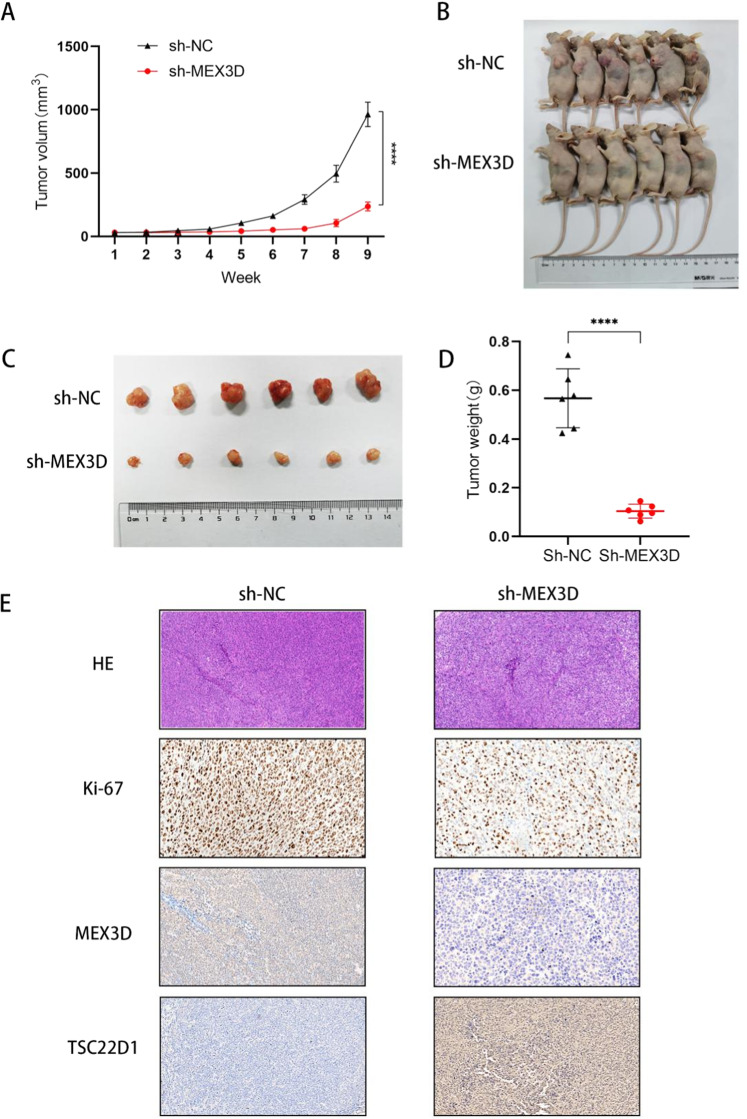
RNA-binding proteins (RBPs) have been related to cancer development. Their functions in cervical cancer, however, are virtually unknown. One of these proteins, Mex-3 RNA-binding family member D (MEX3D), has been recently found to exhibit oncogenic properties in a variety of cancer types. In this present study, the functional roles and the regulatory mechanisms underlying MEX3D were examined in cervical cancer. The detection of MEX3D mRNA expression levels in cervical tissues was performed using reverse transcription-quantitative PCR. For functional analysis, for detecting apoptosis and cell proliferation in cervical cancer cells, the Cell Counting Kit-8, colony formation, and flow cytometry were utilized (SiHa and CaSki). The potential mechanisms of MEX3D were assessed and elucidated utilizing western blot analysis, RNA pull-down, RNA immunoprecipitation, and mRNA stability assays. For verification of MEX3D role in vivo, mouse xenograft models were established. When compared to normal cervical tissues, MEX3D expression was observed to be higher in cervical cancer tissues. MEX3D expression was increased in human papillomavirus (HPV) 16 positive cervical cancer tissues and positively regulated by HPV16 E7. When MEX3D expression was knocked down in cervical cancer cells, cell proliferation was decreased, colony formation was inhibited, and apoptosis was promoted. Furthermore, in a mouse xenograft model, knocking down MEX3D expression reduced cervical cancer tumor growth. In addition, MEX3D acted as an RBP to reduce TSC22 domain family protein 1 (TSC22D1) mRNA stability by directly binding to TSC22D1 mRNA. The findings revealed that MEX3D is upregulated by HPV16 E7 and has a crucial oncogenic in cervical cancer development via sponging TSC22D1 for destabilizing its mRNA levels. According to the findings of this study, MEX3D may be a potential therapeutic target for treating cervical cancer patients.
RNA结合蛋白(RBPs)与癌症发展有关。然而,它们在宫颈癌中的功能几乎未知。这些蛋白之一,Mex-3 RNA结合家族成员D(MEX3D),最近被发现在多种癌症类型中具有致癌特性。在本研究中,研究了MEX3D在宫颈癌中的功能作用及其调控机制。使用逆转录定量PCR检测宫颈组织中MEX3D mRNA的表达水平。为了进行功能分析,利用细胞计数试剂盒-8、集落形成和流式细胞术检测宫颈癌细胞中的凋亡和细胞增殖(SiHa和CaSki细胞系)。利用蛋白质免疫印迹分析、RNA下拉、RNA免疫沉淀和mRNA稳定性测定评估并阐明了MEX3D的潜在机制。为了验证MEX3D在体内的作用,建立了小鼠异种移植模型。与正常宫颈组织相比,宫颈癌组织中MEX3D的表达更高。人乳头瘤病毒(HPV)16阳性宫颈癌组织中MEX3D表达增加,并受HPV16 E7的正向调控。当宫颈癌细胞中MEX3D表达被敲低时,细胞增殖减少,集落形成受到抑制,凋亡增加。此外,在小鼠异种移植模型中,敲低MEX3D表达可减少宫颈癌肿瘤生长。此外,MEX3D作为一种RNA结合蛋白,通过直接结合TSC22D1 mRNA降低TSC22结构域家族蛋白1(TSC22D1)mRNA的稳定性。研究结果表明,MEX3D被HPV16 E7上调,通过结合TSC22D1使其mRNA水平不稳定,在宫颈癌发展中起关键致癌作用。根据本研究结果,MEX3D可能是治疗宫颈癌患者的潜在治疗靶点。