Department of Industrial Management, Faculty of Management and Accounting, University of Tehran, Jalal Al-Ahmad and Charman intersection - next to Tarbiat Modares University, Tehran, 3718117469, Iran.
Department of Industrial Management, Faculty of Management, University of Hormozgan, Bandar-Abbas, KM 9 of Minab Road, Bandar-Abbas, 3995, Iran.
Environ Sci Pollut Res Int. 2022 Sep;29(44):66979-67001. doi: 10.1007/s11356-022-20214-0. Epub 2022 May 5.
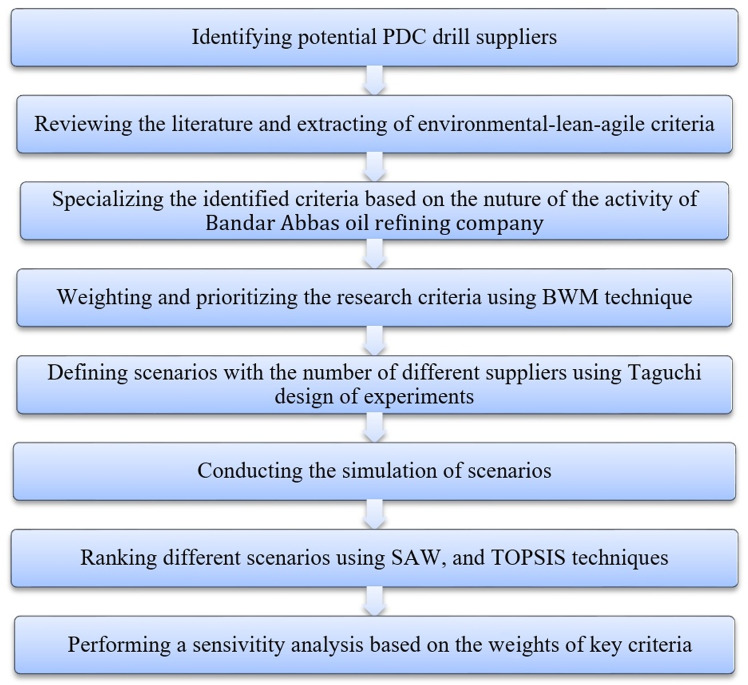
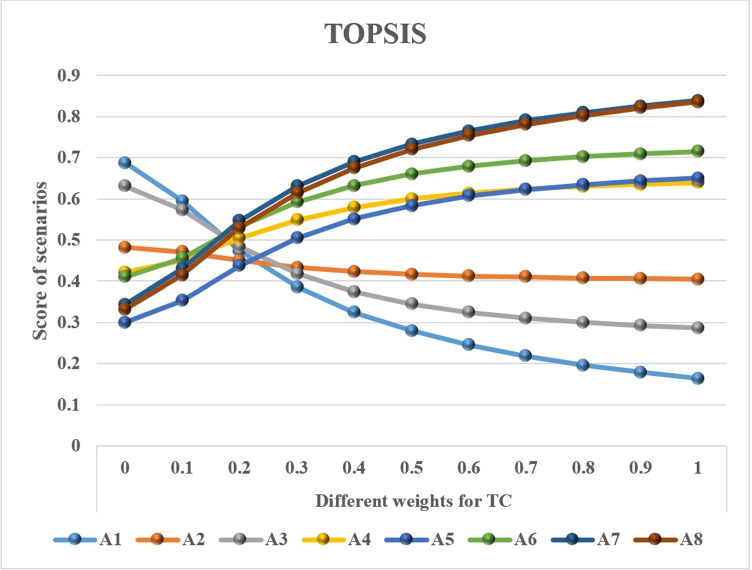
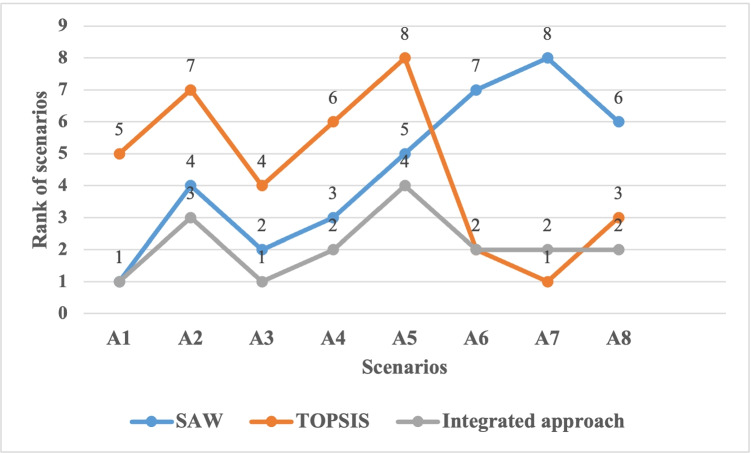
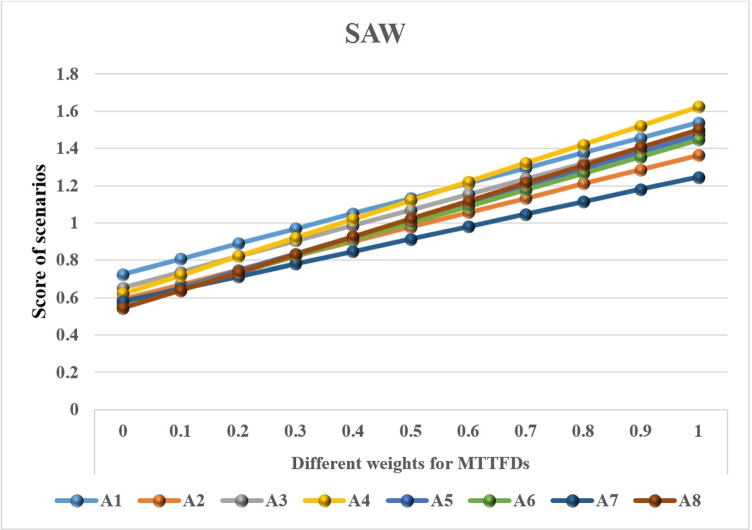
Global supply chains are increasingly becoming complex by having numerous suppliers around the world. To manage this complexity, organizations must identify the optimum number of suppliers. There have been many examples in the literature that used different approaches to solve this problem. Despite the importance of this issue, less attention has been paid to it and managers of the companies do not know how, and based on which approach and criteria, they should determine the optimal number of suppliers which leads to lower cost and higher reliability of the production line. Therefore, in this study, a hybrid methodology is proposed to expose the process of this problem which helps managers to learn how they can determine the optimal number of suppliers. We address this gap by developing an integrated approach based on multi-criteria decision-making (MCDM) comprising best-worst method (BWM), simple additive weighting (SAW), and technique for order preference by similarity to ideal solution (TOPSIS), and simulation to determine the optimal number of suppliers. This study utilizes a comprehensive approach based on leagile and environmentally sustainable criteria to determine the optimal number of suppliers. To examine the efficiency of the proposed approach, an empirical case study is conducted in an Iranian oil company. The final results represent that the scenario with a 1-1-1 arrangement (one supplier for each type of equipment) is the best possible scenario to determine the optimal number of leagile-sustainable suppliers. To examine the reliability and robustness of the obtained results, a sensitivity analysis based on the three most important criteria is conducted. Finally, discussions on the findings as well as theoretical and managerial implications are presented.
全球供应链通过在世界各地拥有众多供应商而变得越来越复杂。为了管理这种复杂性,组织必须确定最佳的供应商数量。文献中有许多例子使用不同的方法来解决这个问题。尽管这个问题很重要,但对它的关注较少,而且公司的经理们不知道应该如何以及基于哪种方法和标准来确定最佳的供应商数量,这会导致生产成本降低和生产线可靠性提高。因此,在本研究中,提出了一种混合方法来揭示这个问题的解决过程,帮助管理人员了解如何确定最佳的供应商数量。我们通过开发一种基于多准则决策的综合方法来解决这个差距,该方法包括最佳最差方法(BWM)、简单加和加权(SAW)和逼近理想解排序法(TOPSIS),以及模拟来确定最佳的供应商数量。本研究利用基于敏捷和环境可持续性标准的综合方法来确定最佳的供应商数量。为了检验所提出方法的效率,在一家伊朗石油公司进行了实证案例研究。最终结果表明,1-1-1 安排(每种设备一个供应商)的方案是确定敏捷可持续供应商最佳数量的最佳方案。为了检验所得结果的可靠性和稳健性,基于三个最重要的标准进行了敏感性分析。最后,对研究结果进行了讨论,并提出了理论和管理方面的意义。