R&D Center, Enterobiome Inc., 814 Siksa-dong, Ilsandong-gu, Goyang-si, 10326, Korea.
Institute of Bioscience and Biotechnology, Kangwon National University, Chuncheon, Korea.
Sci Rep. 2022 May 5;12(1):7324. doi: 10.1038/s41598-022-11048-4.
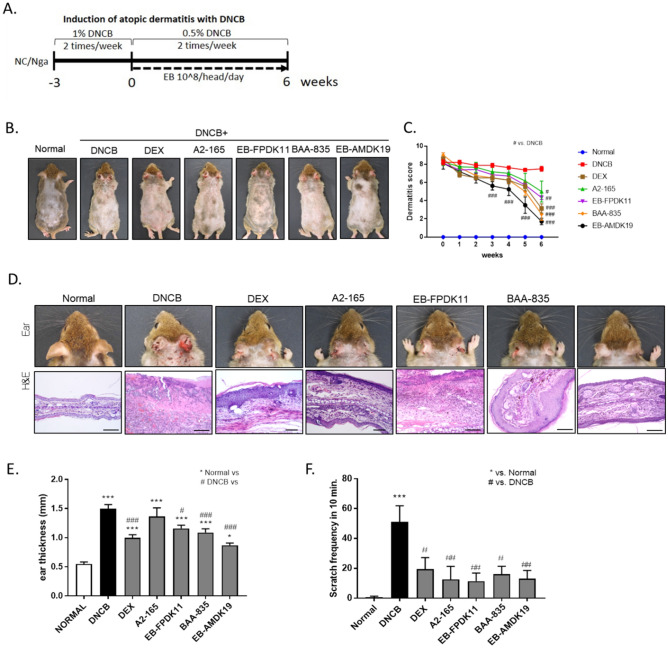
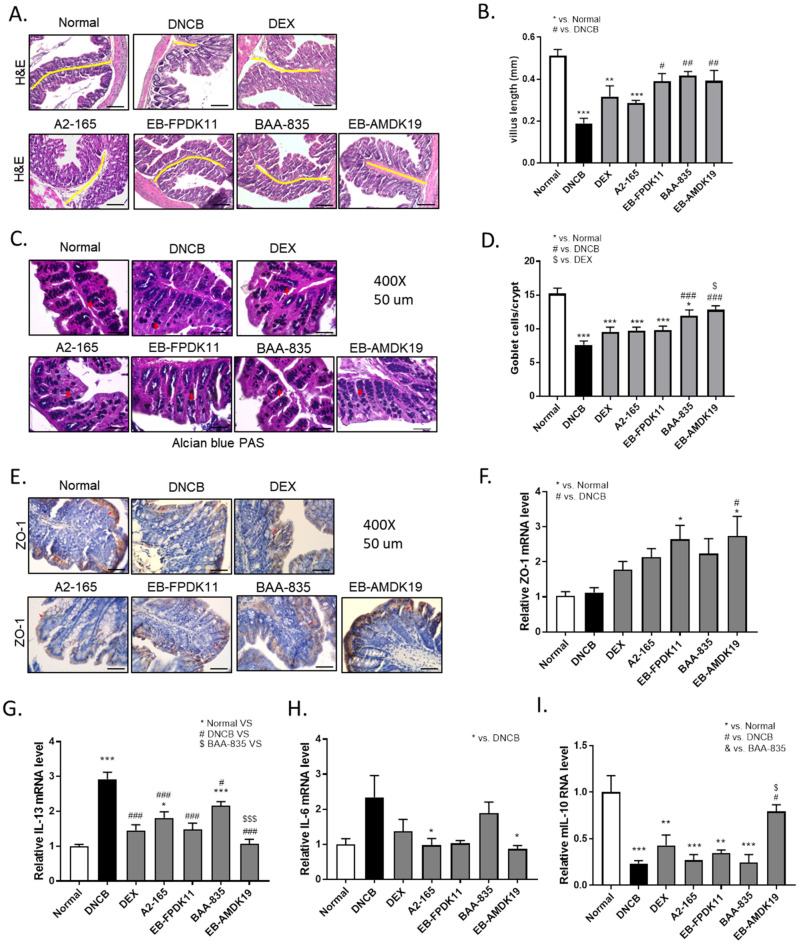
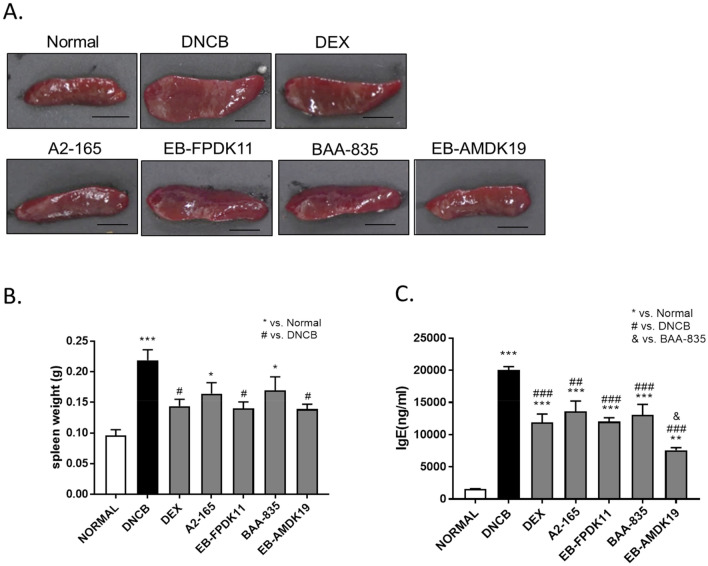
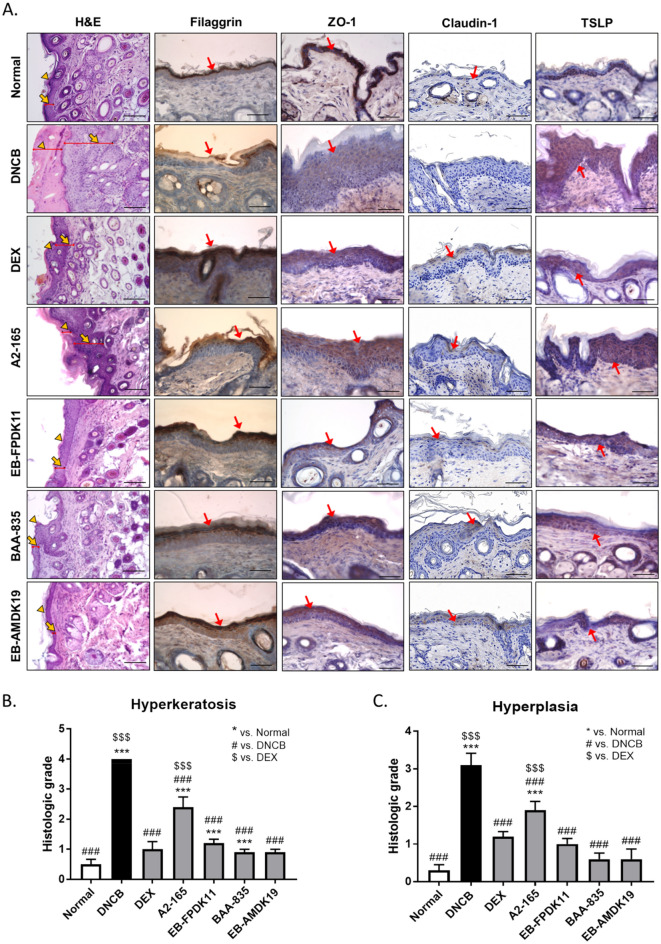
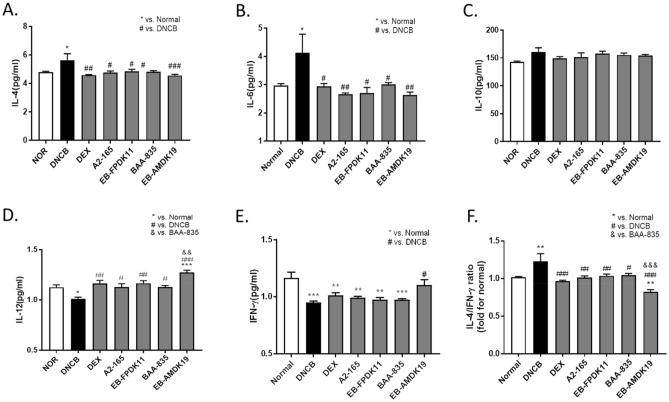
Atopic dermatitis (AD) is a common inflammatory skin disease, and its pathogenesis is closely associated with microbial homeostasis in the gut, namely the gut-skin axis. Particularly, recent metagenomics studies revealed that the abundance of two major bacterial species in the gut, Faecalibacterium prausnitzii and Akkermansia muciniphila, may play a critical role in the pathogenesis of AD, but the effect of these species in AD has not yet been elucidated. To evaluate the potential beneficial effect of F. prausnitzii or A. muciniphila in AD, we conducted an animal model study where F. prausnitzii EB-FPDK11 or A. muciniphila EB-AMDK19, isolated from humans, was orally administered to 2,5-dinitrochlorobenzene (DNCB)-induced AD models using NC/Nga mice at a daily dose of 10 CFUs/mouse for six weeks. As a result, the administration of each strain of F. prausnitzii and A. muciniphila improved AD-related markers, such as dermatitis score, scratching behavior, and serum immunoglobulin E level. Also, the F. prausnitzii and A. muciniphila treatments decreased the level of thymic stromal lymphopoietin (TSLP), triggering the production of T helper (Th) 2 cytokines, and improved the imbalance between the Th1 and Th2 immune responses induced by DNCB. Meanwhile, the oral administration of the bacteria enhanced the production of filaggrin in the skin and ZO-1 in the gut barrier, leading to the recovery of functions. Taken together, our findings suggest that F. prausnitzii EB-FPDK11 and A. muciniphila EB-AMDK19 have a therapeutic potential in AD, which should be verified in humans.
特应性皮炎(AD)是一种常见的炎症性皮肤病,其发病机制与肠道微生物稳态密切相关,即肠道-皮肤轴。特别是,最近的宏基因组学研究表明,肠道中两种主要细菌物种——Faecalibacterium prausnitzii 和 Akkermansia muciniphila 的丰度可能在 AD 的发病机制中发挥关键作用,但这些物种在 AD 中的作用尚未阐明。为了评估 F. prausnitzii 或 A. muciniphila 在 AD 中的潜在有益作用,我们进行了一项动物模型研究,其中来自人类的 F. prausnitzii EB-FPDK11 或 A. muciniphila EB-AMDK19 通过口服给予 2,5-二硝基氯苯(DNCB)诱导的 AD 模型 NC/Nga 小鼠,每日剂量为 10 CFU/只,持续 6 周。结果,每种 F. prausnitzii 和 A. muciniphila 菌株的给药均改善了 AD 相关标志物,如皮炎评分、抓挠行为和血清免疫球蛋白 E 水平。此外,F. prausnitzii 和 A. muciniphila 治疗降低了胸腺基质淋巴细胞生成素(TSLP)的水平,触发了 Th2 细胞因子的产生,并改善了 DNCB 诱导的 Th1 和 Th2 免疫反应的失衡。同时,细菌的口服给药增强了皮肤中丝聚蛋白的产生和肠道屏障中的 ZO-1,导致功能恢复。总之,我们的研究结果表明,F. prausnitzii EB-FPDK11 和 A. muciniphila EB-AMDK19 在 AD 中具有治疗潜力,这有待在人类中进一步验证。