Department of Molecular Genetics and Microbiology, Duke University School of Medicine, Durham, North Carolina, USA.
Program in Computational Biology and Bioinformatics, Duke University, Durham, North Carolina, USA.
mBio. 2020 Aug 11;11(4):e00914-20. doi: 10.1128/mBio.00914-20.
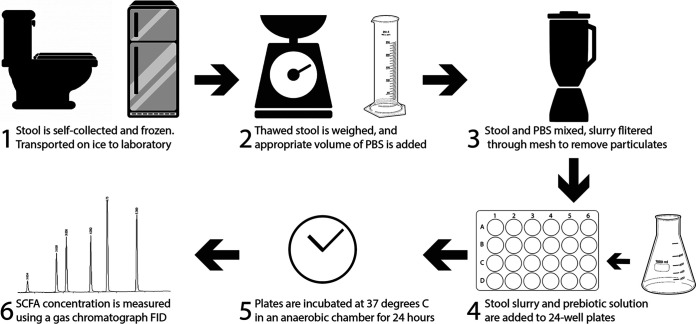
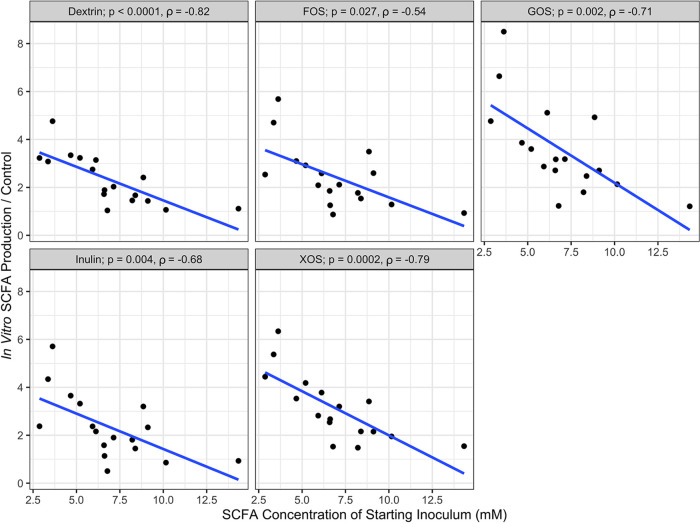
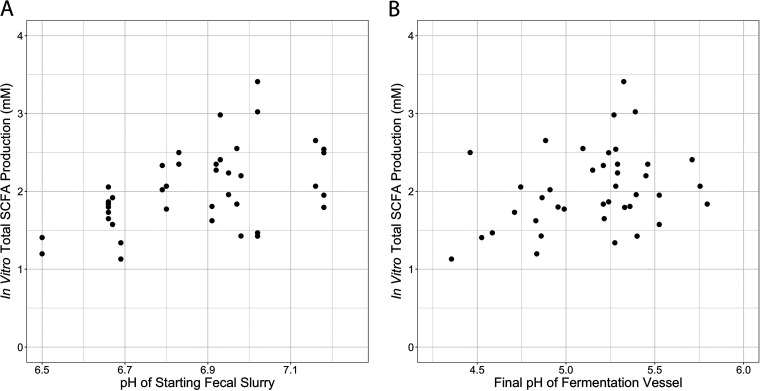
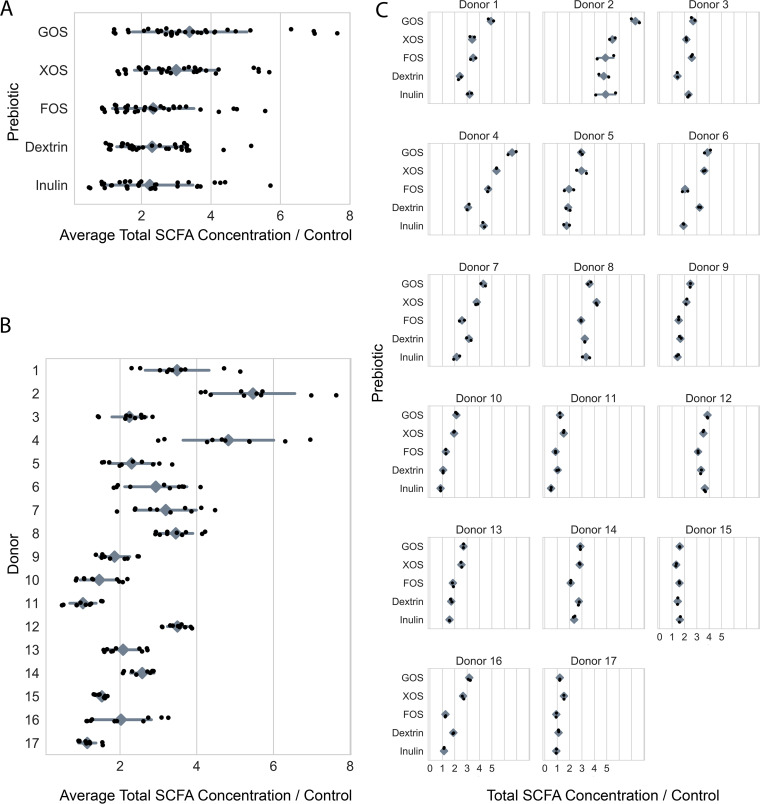
Pediatric obesity remains a public health burden and continues to increase in prevalence. The gut microbiota plays a causal role in obesity and is a promising therapeutic target. Specifically, the microbial production of short-chain fatty acids (SCFA) from the fermentation of otherwise indigestible dietary carbohydrates may protect against pediatric obesity and metabolic syndrome. Still, it has not been demonstrated that therapies involving microbiota-targeting carbohydrates, known as prebiotics, will enhance gut bacterial SCFA production in children and adolescents with obesity (age, 10 to 18 years old). Here, we used an system to examine the SCFA production by fecal microbiota from 17 children with obesity when exposed to five different commercially available over-the-counter (OTC) prebiotic supplements. We found microbiota from all 17 patients actively metabolized most prebiotics. Still, supplements varied in their acidogenic potential. Significant interdonor variation also existed in SCFA production, which 16S rRNA sequencing supported as being associated with differences in the host microbiota composition. Last, we found that neither fecal SCFA concentration, microbiota SCFA production capacity, nor markers of obesity positively correlated with one another. Together, these findings suggest the hypothesis that OTC prebiotic supplements may be unequal in their ability to stimulate SCFA production in children and adolescents with obesity and that the most acidogenic prebiotic may differ across individuals. Pediatric obesity remains a major public health problem in the United States, where 17% of children and adolescents are obese, and rates of pediatric "severe obesity" are increasing. Children and adolescents with obesity face higher health risks, and noninvasive therapies for pediatric obesity often have limited success. The human gut microbiome has been implicated in adult obesity, and microbiota-directed therapies can aid weight loss in adults with obesity. However, less is known about the microbiome in pediatric obesity, and microbiota-directed therapies are understudied in children and adolescents. Our research has two important findings: (i) dietary prebiotics (fiber) result in the microbiota from adolescents with obesity producing more SCFA, and (ii) the effectiveness of each prebiotic is donor dependent. Together, these findings suggest that prebiotic supplements could help children and adolescents with obesity, but that these therapies may not be "one size fits all."
儿科肥胖仍然是一个公共卫生负担,其患病率持续上升。肠道微生物群在肥胖中起因果作用,是有前途的治疗靶点。具体来说,微生物从原本不可消化的膳食纤维中发酵产生的短链脂肪酸 (SCFA) 可能有助于预防儿科肥胖和代谢综合征。尽管如此,目前还没有证明涉及靶向微生物的碳水化合物治疗(称为益生元)将增强肥胖儿童和青少年(年龄 10 至 18 岁)肠道细菌产生 SCFA。在这里,我们使用 17 名肥胖儿童的粪便微生物组来研究当暴露于五种不同市售非处方 (OTC) 益生元补充剂时 SCFA 的产生。我们发现所有 17 名患者的微生物组都积极代谢了大多数益生元。尽管如此,补充剂的产酸潜力也存在差异。SCFA 产生也存在显著的供体间变异,16S rRNA 测序支持这一变异与宿主微生物组组成的差异有关。最后,我们发现粪便 SCFA 浓度、微生物组 SCFA 产生能力和肥胖标志物彼此之间均没有正相关。总之,这些发现表明了一个假设,即 OTC 益生元补充剂在刺激肥胖儿童和青少年 SCFA 产生的能力方面可能存在差异,并且最酸化的益生元可能因个体而异。儿科肥胖仍然是美国的一个主要公共卫生问题,美国有 17%的儿童和青少年肥胖,儿科“重度肥胖”的发病率正在上升。肥胖儿童和青少年面临更高的健康风险,非侵入性的儿科肥胖治疗方法往往效果有限。人类肠道微生物群与成人肥胖有关,微生物群导向的治疗方法可以帮助肥胖成年人减肥。然而,人们对儿科肥胖的微生物群了解较少,并且在儿童和青少年中对微生物群导向的治疗方法研究较少。我们的研究有两个重要发现:(i) 饮食中的益生元(膳食纤维)导致肥胖青少年的微生物组产生更多的 SCFA,(ii) 每种益生元的效果都是供体依赖性的。总之,这些发现表明益生元补充剂可能对肥胖儿童和青少年有帮助,但这些疗法可能并不“一刀切”。