Fernandes Raquel A, Sampaio Maria J, Faria Joaquim L, Silva Cláudia G
Laboratory of Separation and Reaction Engineering - Laboratory of Catalysis and Materials (LSRE-LCM), Faculdade de Engenharia, Universidade do Porto Rua Dr Roberto Frias s/n 4200-465 Porto Portugal
RSC Adv. 2020 May 21;10(33):19431-19442. doi: 10.1039/d0ra02746d. eCollection 2020 May 20.
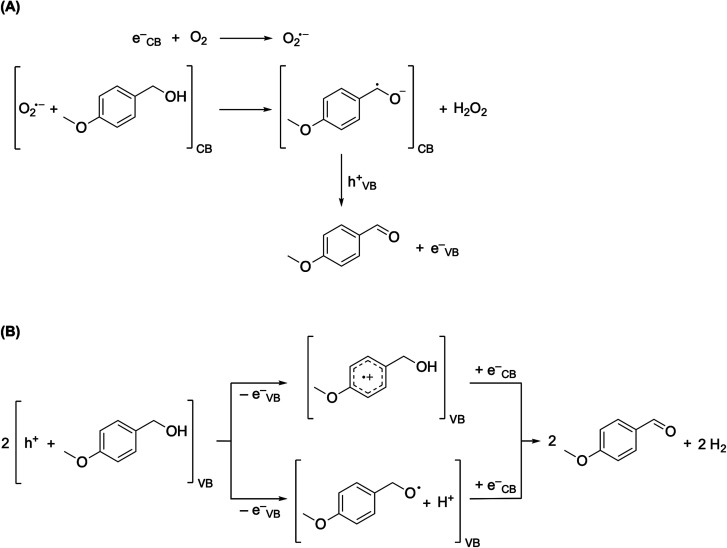
Graphite-like carbon nitride (GCN)-based materials were developed the hard-templating route, using dicyandiamide as the GCN precursor and silica templates. That resulted in urchin-like GCN (GCN-UL), 3D ordered macroporous GCN (GCN-OM) and mesoporous GCN (GCN-MP). The introduction of silica templates during GCN synthesis produced physical defects on its surface, as confirmed by SEM analysis, increasing their specific surface area. A high amount of nitrogen vacancies is present in modified catalysts (revealed by XPS measurements), which can be related to an increase in the reactive sites available to catalyse redox reactions. The textural and morphological modifications induced in GCN an enhanced light absorption capacity and reduced electron/hole recombination rate, contributing to its improved photocatalytic performance. In the photocatalytic conversion of -anisyl alcohol to -anisaldehyde in deoxygenated aqueous solutions under UV-LED irradiation, the GCN-UL was the best photocatalyst reaching 60% yield at 64% conversion for -anisaldehyde production after 240 min of reaction. Under oxygenated conditions (air), the process efficiency was increased to 79% yield at 92% conversion only after 90 min reaction. The GCN-based photocatalyst kept its performance when using visible-LED radiation under air atmosphere. Trapping of photogenerated holes and radicals by selective scavengers showed that under deoxygenated conditions, holes played the primary role in the -anisaldehyde synthesis. Under oxygenated conditions, the process is governed by the effect of reactive oxygen species, namely superoxide radicals, with a significant contribution from holes.
基于石墨相氮化碳(GCN)的材料是通过硬模板法制备的,使用双氰胺作为GCN前驱体和二氧化硅模板。这导致了海胆状GCN(GCN-UL)、三维有序大孔GCN(GCN-OM)和介孔GCN(GCN-MP)的产生。如扫描电子显微镜(SEM)分析所证实的,在GCN合成过程中引入二氧化硅模板会在其表面产生物理缺陷,从而增加其比表面积。改性催化剂中存在大量氮空位(X射线光电子能谱(XPS)测量结果表明),这可能与催化氧化还原反应的活性位点增加有关。GCN中诱导的结构和形态修饰增强了光吸收能力并降低了电子/空穴复合率,有助于其光催化性能的提高。在紫外发光二极管(UV-LED)照射下的脱氧水溶液中,将对甲氧基苯甲醇光催化转化为对甲氧基苯甲醛的过程中,GCN-UL是最佳光催化剂,反应240分钟后,对甲氧基苯甲醛的转化率为64%时,产率达到60%。在有氧条件(空气)下,仅反应90分钟后,该过程的效率就提高到了转化率为92%时产率为79%。在空气气氛下使用可见光LED辐射时,基于GCN的光催化剂保持了其性能。选择性清除剂对光生空穴和自由基的捕获表明,在脱氧条件下,空穴在对甲氧基苯甲醛的合成中起主要作用。在有氧条件下,该过程受活性氧物种(即超氧自由基)的影响,空穴也有显著贡献。