Cao Jianliang, Qin Cong, Wang Yan, Zhang Huoli, Sun Guang, Zhang Zhanying
Henan Key Laboratory of Coal Green Conversion, School of Chemistry and Chemical Engineering, Henan Polytechnic University, Jiaozuo 454000, China.
State Key Laboratory Cultivation Base for Gas Geology and Gas Control (Henan Polytechnic University), Jiaozuo 454000, China.
Materials (Basel). 2017 May 31;10(6):604. doi: 10.3390/ma10060604.
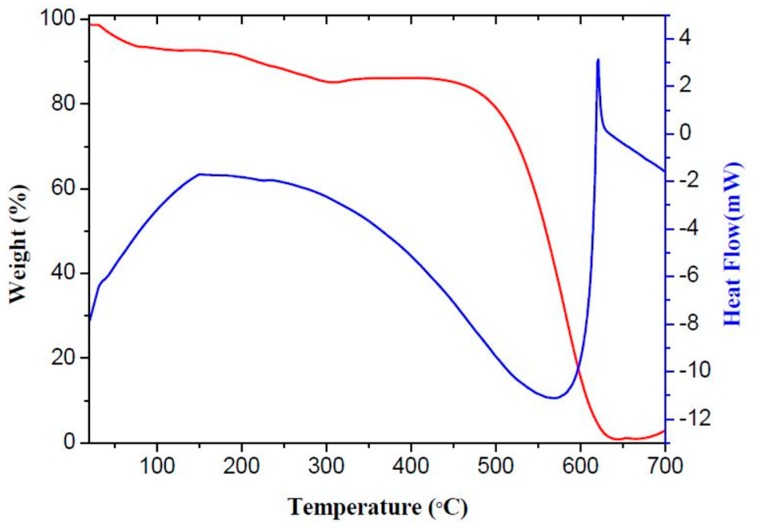
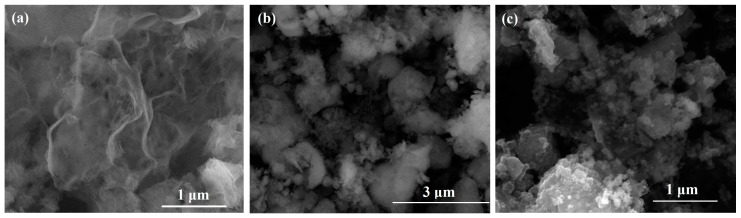
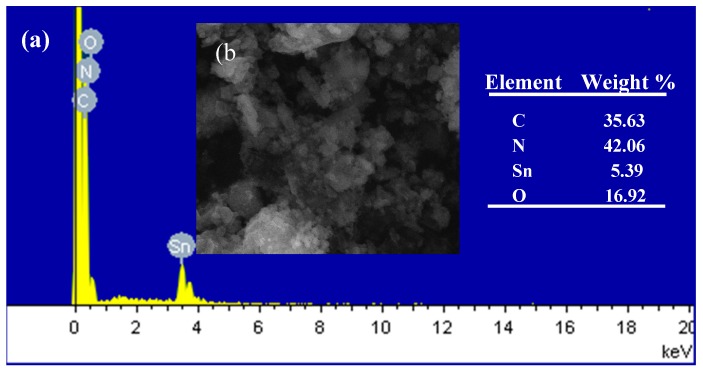
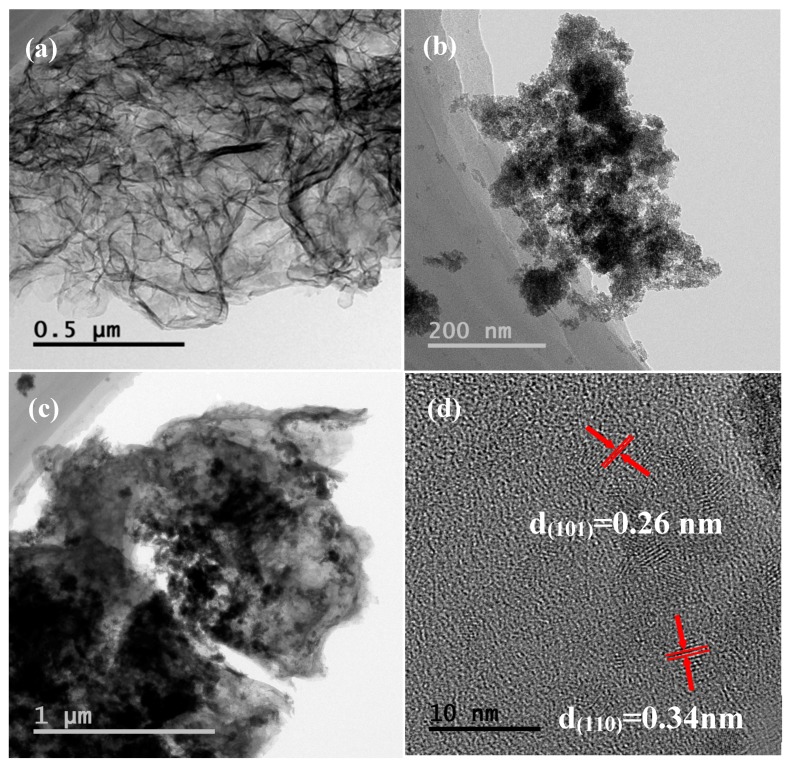
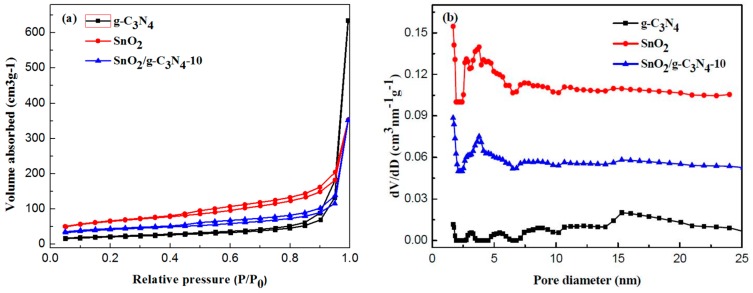
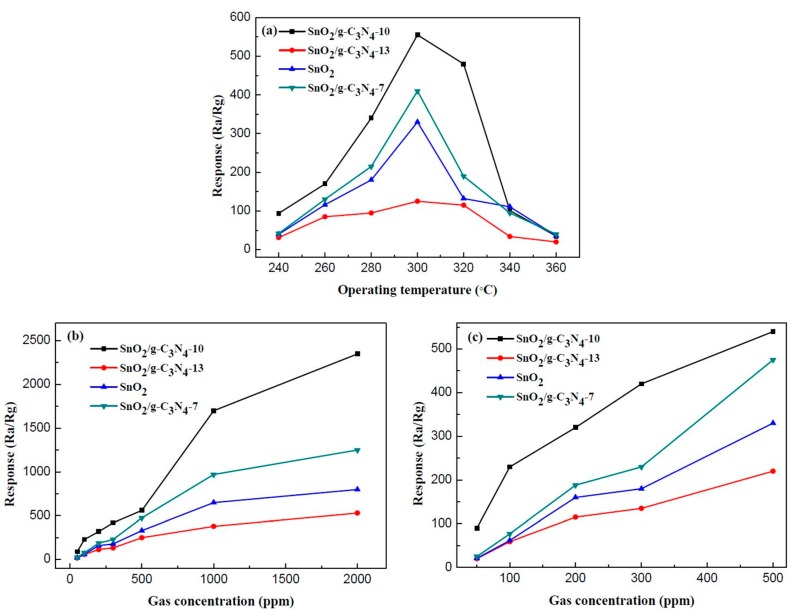
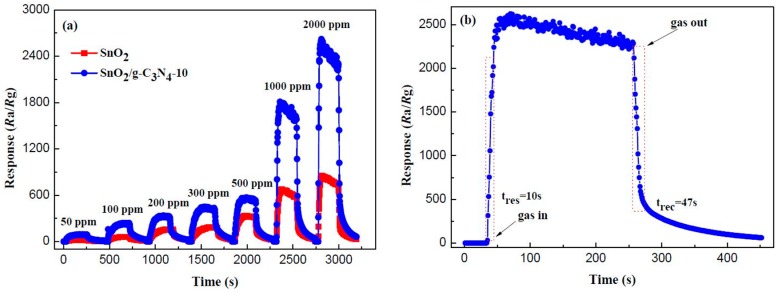
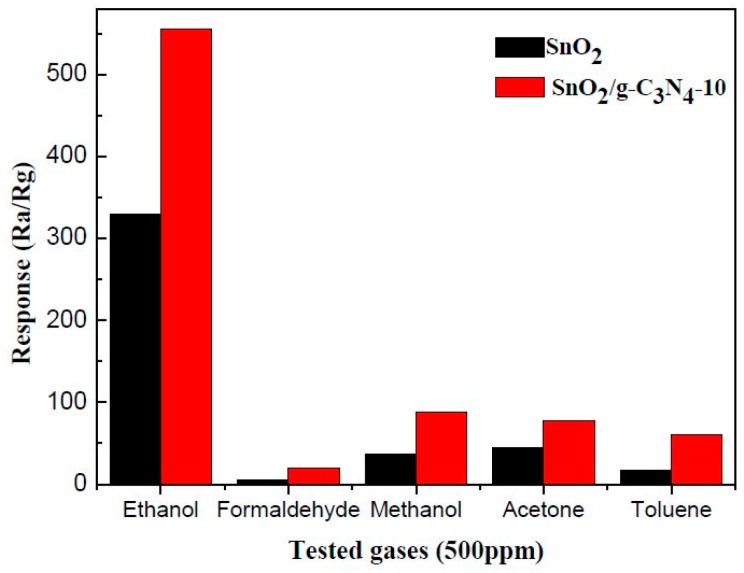
SnO₂/graphitic carbon nitride (g-C₃N₄) composites were synthesized via a facile solid-state method by using SnCl₄·5H₂O and urea as the precursor. The structure and morphology of the as-synthesized composites were characterized by the techniques of X-ray diffraction (XRD), field-emission scanning electron microscopy (FESEM), transmission electron microscopy (TEM), energy dispersive spectrometer (EDS), thermogravimetry-differential thermal analysis (TG-DTA), X-ray photoelectron spectroscopy (XPS), and N₂ sorption. The results indicated that the composites possessed a two-dimensional (2-D) structure, and the SnO₂ nanoparticles were highly dispersed on the surface of the g-C₃N₄ nanosheets. The gas-sensing performance of the samples to ethanol was tested, and the SnO₂/g-C₃N₄ nanocomposite-based sensor exhibited admirable properties. The response value (Ra/Rg) of the SnO₂/g-C₃N₄ nanocomposite with 10 wt % 2-D g-C₃N₄ content-based sensor to 500 ppm of ethanol was 550 at 300 °C. However, the response value of pure SnO₂ was only 320. The high surface area of SnO₂/g-C₃N₄-10 (140 m²·g) and the interaction between 2-D g-C₃N₄ and SnO₂ could strongly affect the gas-sensing property.
通过使用四氯化锡·五水合物(SnCl₄·5H₂O)和尿素作为前驱体,采用简便的固态法合成了二氧化锡/石墨相氮化碳(g-C₃N₄)复合材料。采用X射线衍射(XRD)、场发射扫描电子显微镜(FESEM)、透射电子显微镜(TEM)、能量色散谱仪(EDS)、热重-差热分析(TG-DTA)、X射线光电子能谱(XPS)和N₂吸附等技术对合成的复合材料的结构和形貌进行了表征。结果表明,该复合材料具有二维(2-D)结构,且二氧化锡纳米颗粒高度分散在g-C₃N₄纳米片的表面。测试了样品对乙醇气敏性能,基于二氧化锡/g-C₃N₄纳米复合材料的传感器表现出优异的性能。基于10 wt%二维g-C₃N₄含量的二氧化锡/g-C₃N₄纳米复合材料传感器在300℃下对500 ppm乙醇的响应值(Ra/Rg)为550。然而,纯二氧化锡的响应值仅为320。二氧化锡/g-C₃N₄-10(140 m²·g)的高比表面积以及二维g-C₃N₄与二氧化锡之间的相互作用会强烈影响气敏性能。