Zhu Mo, Hao Ying, Ma Xun, Feng Lin, Zhai Yuanxin, Ding Yaping, Cheng Guosheng
Department of Chemistry, Shanghai University Shanghai 200444 P. R. China.
CAS Key Laboratory of Nano-Bio Interface, Suzhou Institute of Nano-Tech and Nano-Bionics, Chinese Academy of Sciences Jiangsu 215123 P. R. China
RSC Adv. 2019 Apr 23;9(22):12667-12674. doi: 10.1039/c9ra00800d. eCollection 2019 Apr 17.
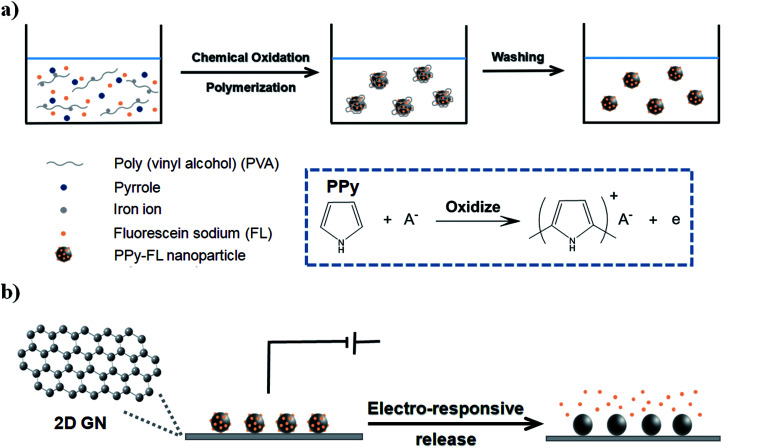
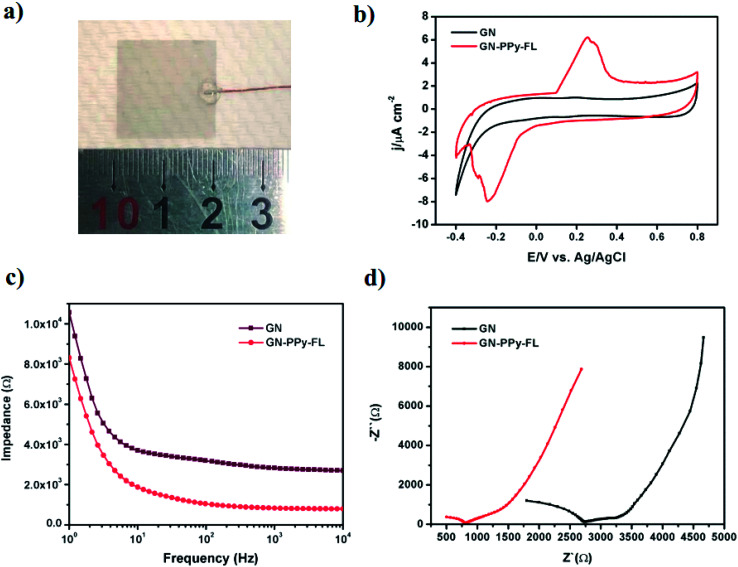
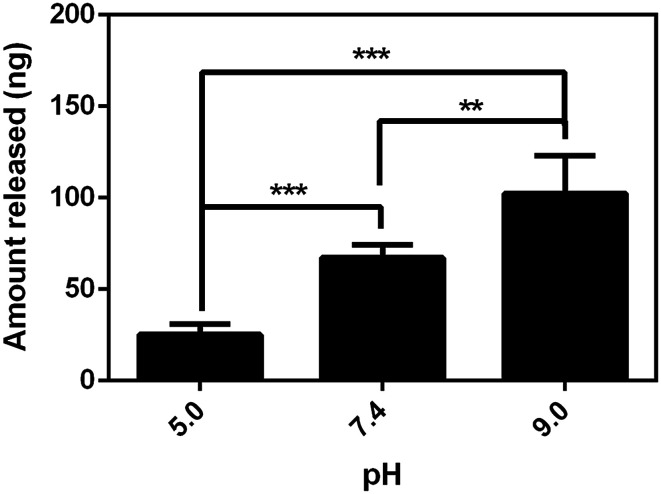
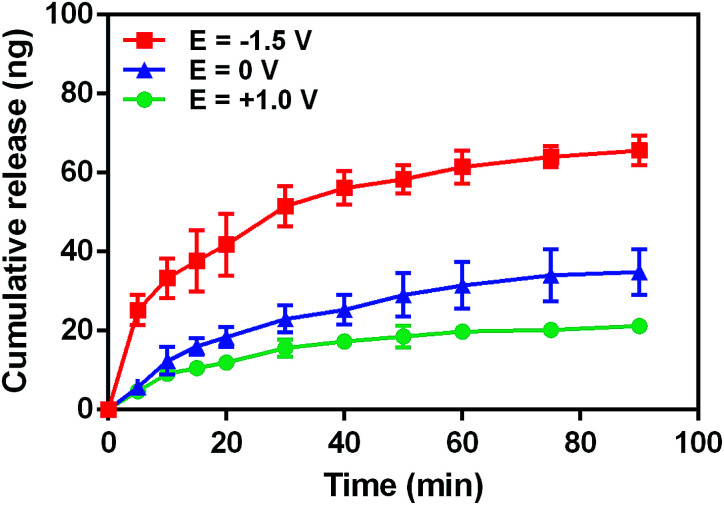
A new class of stimuli responsive drug delivery systems is emerging to establish new paradigms for enhancing therapeutic efficacy. To date, most electro-responsive systems rely on noble metal electrodes that likely cause the limitations for implantation applications. Herein, a graphene/polypyrrole composite electrode (GN-PPy-FL) was fabricated based on two-dimensional (2D) graphene (GN) film and conductive and biocompatible polypyrrole (PPy) nanoparticles loaded with a negative drug model of fluorescein sodium (FL) chemical oxidation polymerization. The conductive composite electrode was utilized as a drug carrier to realize the electrically controlled release of the FL. The release rate from conductive nanoparticles can be controlled by the applied voltages. The study provides a multi-stimuli responsive drug release system, demonstrating the potential applications of the controlled release of various drugs, peptides or proteins.
一类新型的刺激响应型药物递送系统正在兴起,以建立提高治疗效果的新范例。迄今为止,大多数电响应系统依赖于贵金属电极,这可能会给植入应用带来限制。在此,基于二维(2D)石墨烯(GN)薄膜以及负载有荧光素钠(FL)阴性药物模型的导电且生物相容的聚吡咯(PPy)纳米颗粒,通过化学氧化聚合制备了一种石墨烯/聚吡咯复合电极(GN-PPy-FL)。该导电复合电极被用作药物载体,以实现FL的电控释放。导电纳米颗粒的释放速率可通过施加的电压来控制。该研究提供了一种多刺激响应型药物释放系统,展示了各种药物、肽或蛋白质控释的潜在应用。