Wang Shaowei, Tian Xuezhang, Zhou Yaru, Xie Jun, Gao Ming, Zhong Yunhong, Zhang Chuchu, Yu Keying, Bai Lei, Qin Qingsong, Zhong Bo, Lin Dandan, Feng Pinghui, Lan Ke, Zhang Junjie
State Key Laboratory of Oral & Maxillofacial Reconstruction and Regeneration, Key Laboratory of Oral Biomedicine Ministry of Education, Hubei Key Laboratory of Stomatology, School & Hospital of Stomatology, State Key Laboratory of Virology, Medical Research Institute, Wuhan University, Wuhan, China.
Frontier Science Center for Immunology and Metabolism, Wuhan University, Wuhan, China.
PLoS Pathog. 2024 Jan 12;20(1):e1011943. doi: 10.1371/journal.ppat.1011943. eCollection 2024 Jan.
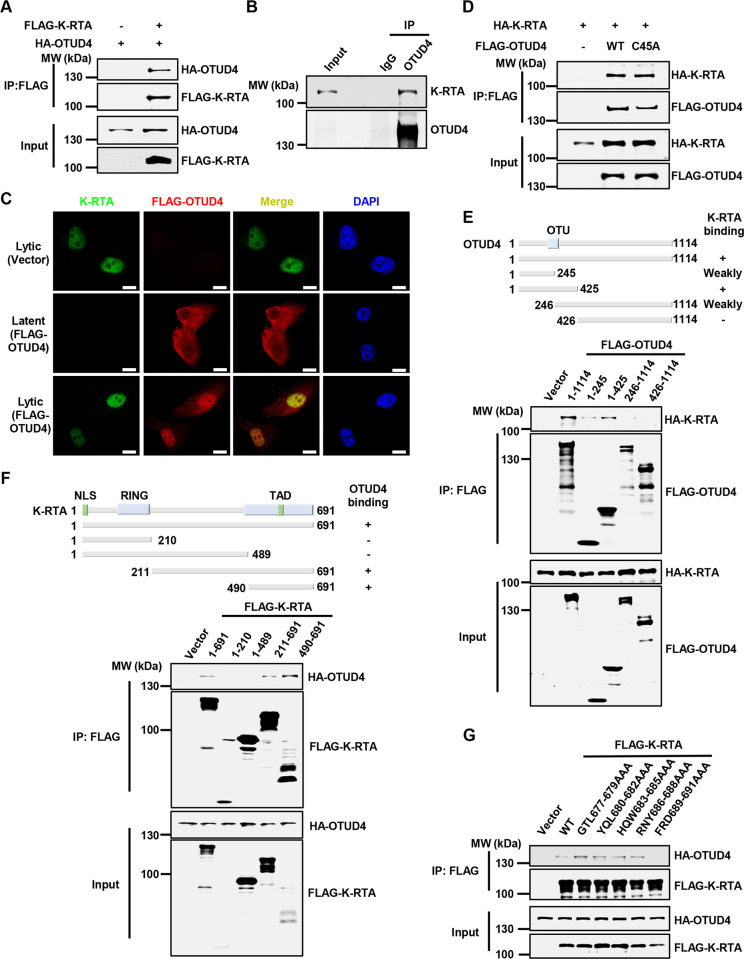
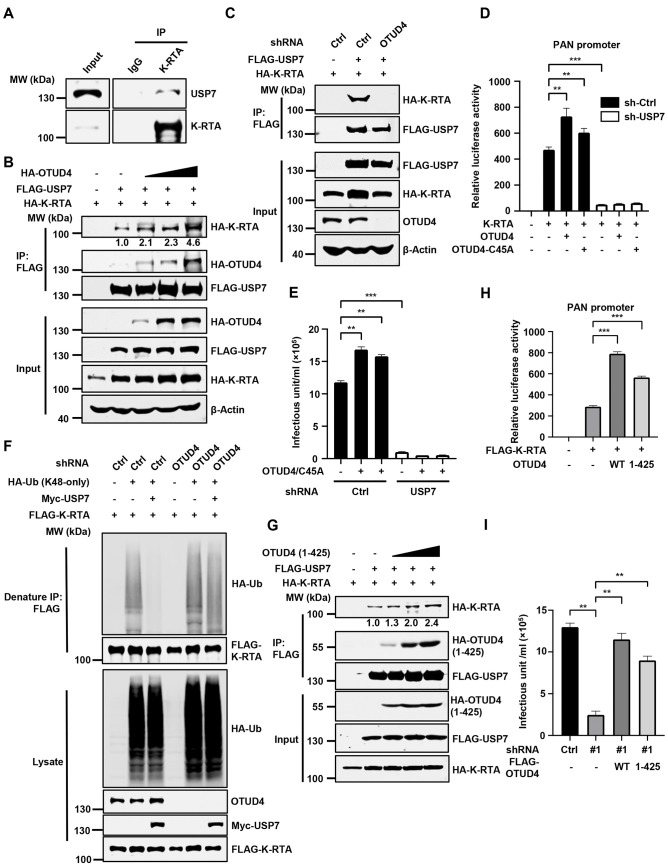
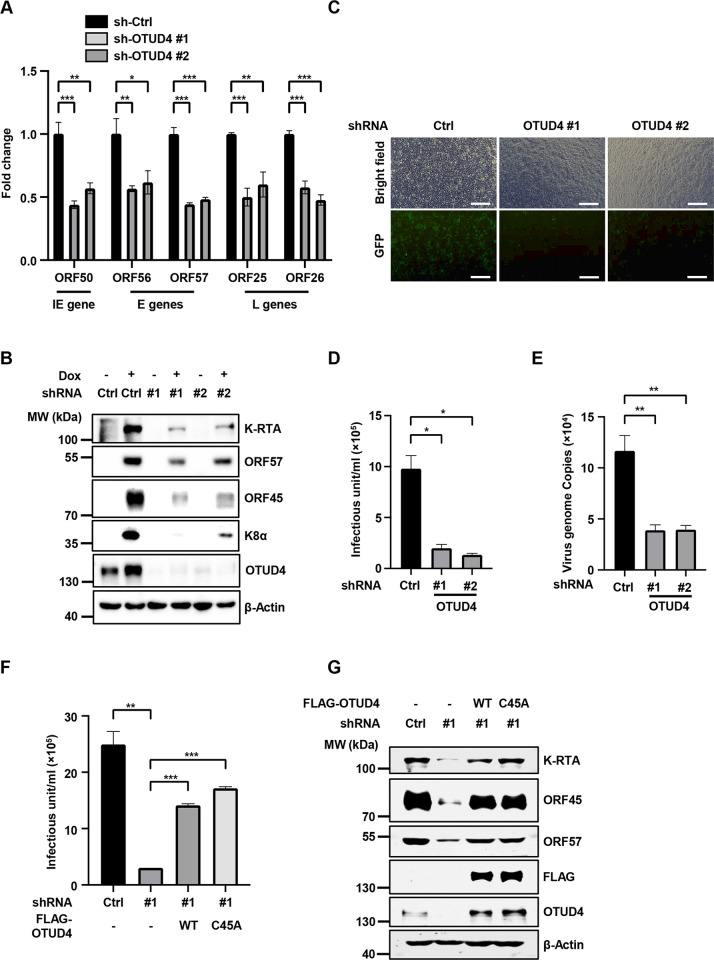
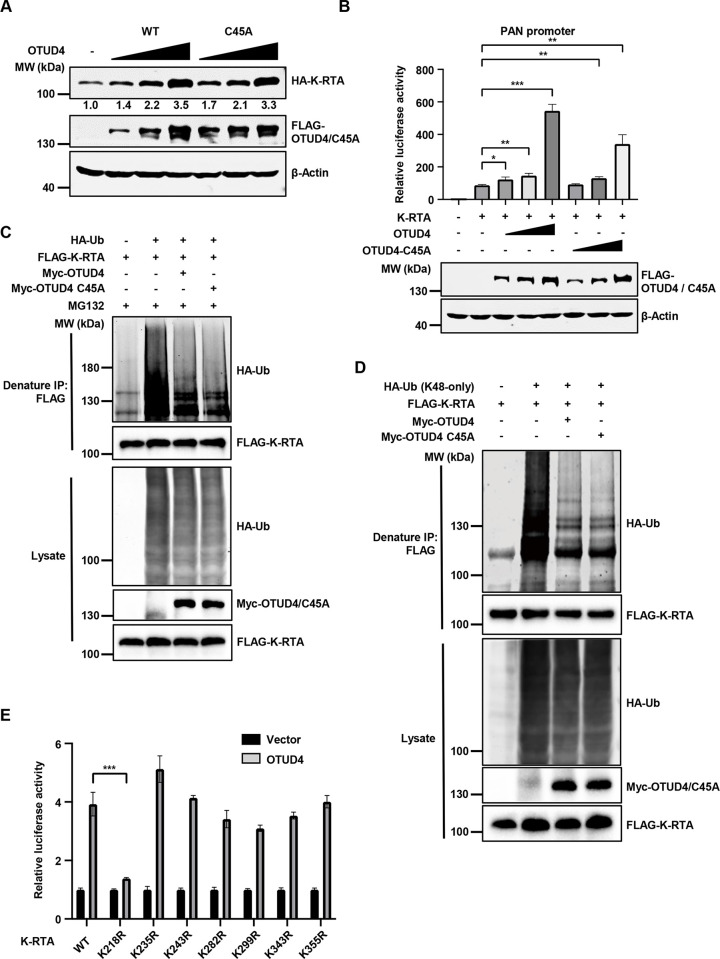
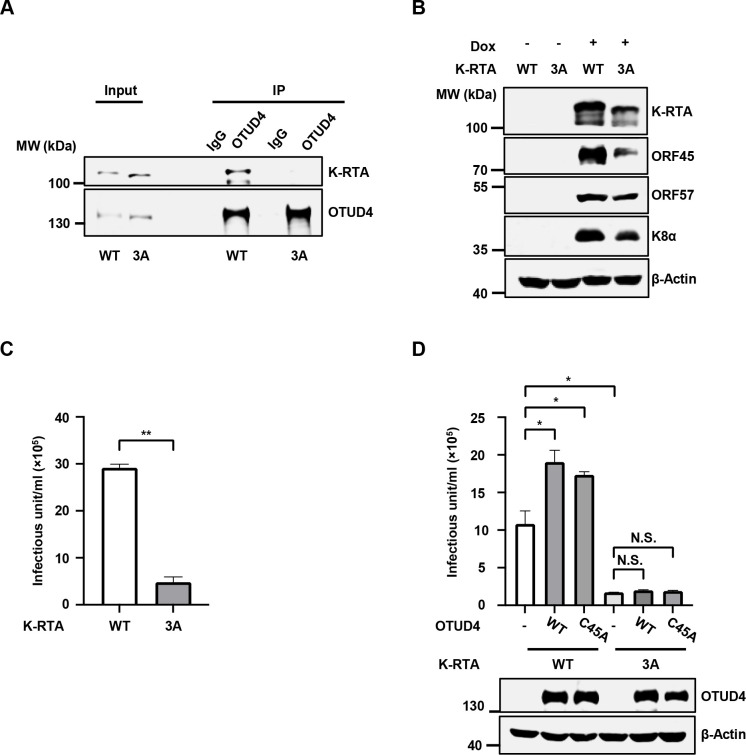
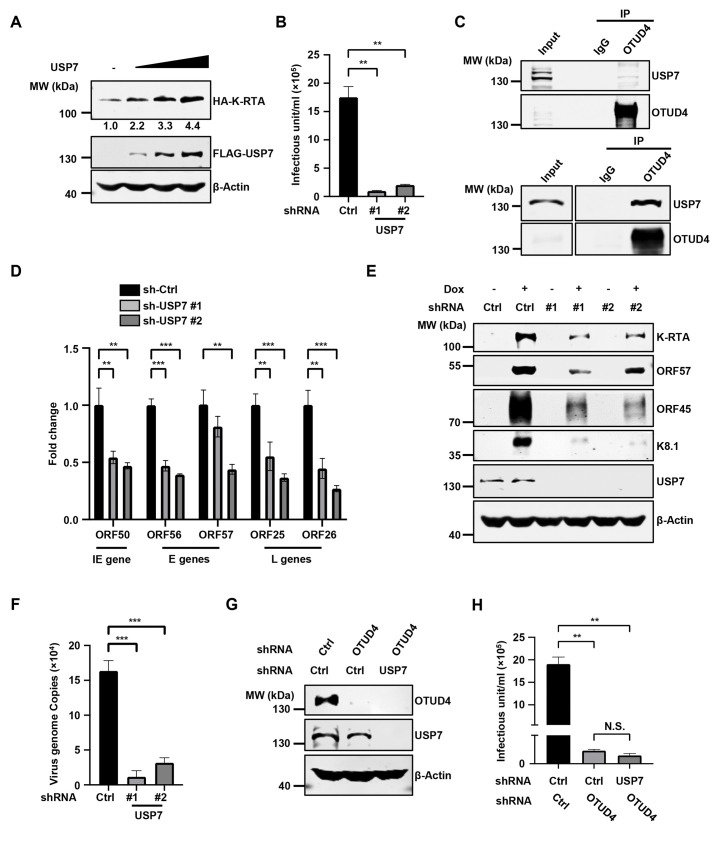
Deubiquitinases (DUBs) remove ubiquitin from substrates and play crucial roles in diverse biological processes. However, our understanding of deubiquitination in viral replication remains limited. Employing an oncogenic human herpesvirus Kaposi's sarcoma-associated herpesvirus (KSHV) to probe the role of protein deubiquitination, we found that Ovarian tumor family deubiquitinase 4 (OTUD4) promotes KSHV reactivation. OTUD4 interacts with the replication and transcription activator (K-RTA), a key transcription factor that controls KSHV reactivation, and enhances K-RTA stability by promoting its deubiquitination. Notably, the DUB activity of OTUD4 is not required for K-RTA stabilization; instead, OTUD4 functions as an adaptor protein to recruit another DUB, USP7, to deubiquitinate K-RTA and facilitate KSHV lytic reactivation. Our study has revealed a novel mechanism whereby KSHV hijacks OTUD4-USP7 deubiquitinases to promote lytic reactivation, which could be potentially harnessed for the development of new antiviral therapies.
去泛素化酶(DUBs)从底物上去除泛素,并在多种生物学过程中发挥关键作用。然而,我们对病毒复制过程中去泛素化的了解仍然有限。利用致癌性人类疱疹病毒卡波西肉瘤相关疱疹病毒(KSHV)来探究蛋白质去泛素化的作用,我们发现卵巢肿瘤家族去泛素化酶4(OTUD4)促进KSHV重新激活。OTUD4与复制和转录激活因子(K-RTA)相互作用,K-RTA是控制KSHV重新激活的关键转录因子,OTUD4通过促进K-RTA的去泛素化来增强其稳定性。值得注意的是,OTUD4的DUB活性对于K-RTA的稳定并非必需;相反,OTUD4作为衔接蛋白招募另一种DUB即USP7,使K-RTA去泛素化并促进KSHV裂解性重新激活。我们的研究揭示了一种新机制,即KSHV利用OTUD4-USP7去泛素化酶促进裂解性重新激活,这可能为开发新的抗病毒疗法提供潜在途径。