Jo Sung-Hyun, Song Won-Suk, Park Han-Gyu, Lee Jae-Seung, Jeon Hyo-Jin, Lee Yeon-Hee, Kim Wooseong, Joo Hwang-Soo, Yang Yung-Hun, Kim Jae-Seok, Kim Yun-Gon
Department of Chemical Engineering, College of Engineering, Soongsil University 369 Sangdo-Ro Seoul 06978 Republic of Korea
School of Chemical and Biological Engineering, Seoul National University Seoul 08826 Republic of Korea.
RSC Adv. 2020 Jul 27;10(46):27864-27873. doi: 10.1039/d0ra05407k. eCollection 2020 Jul 21.
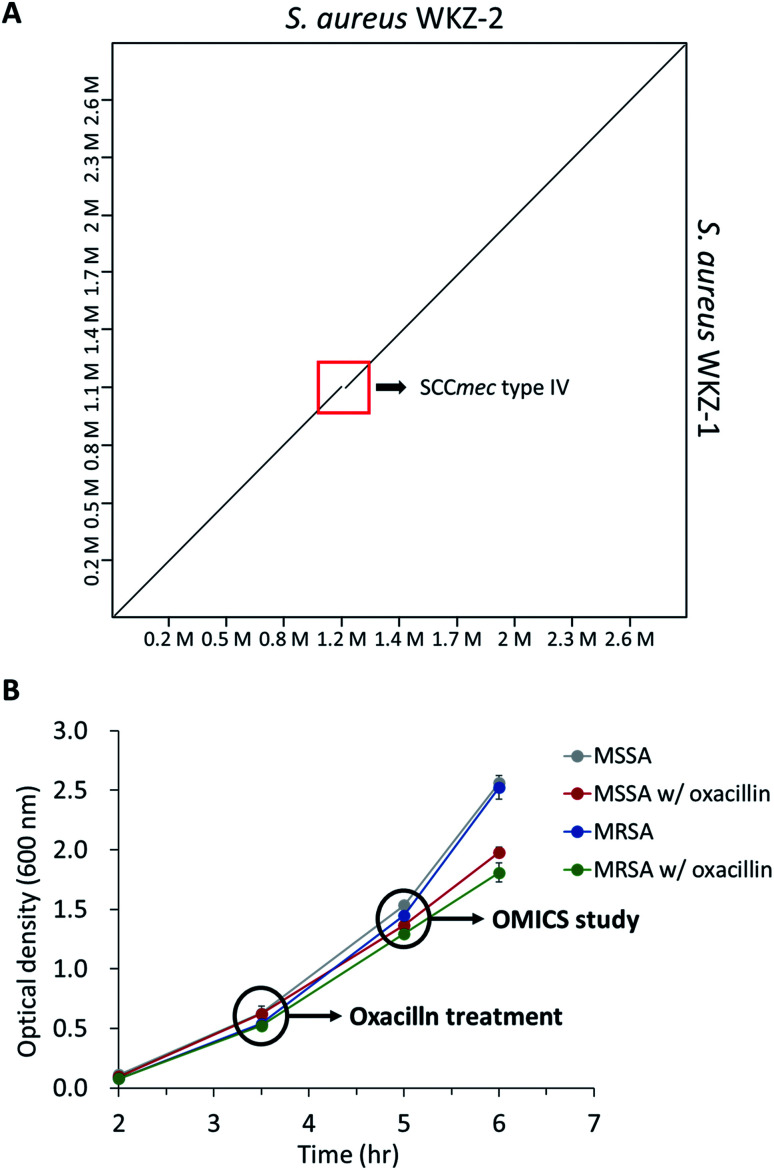
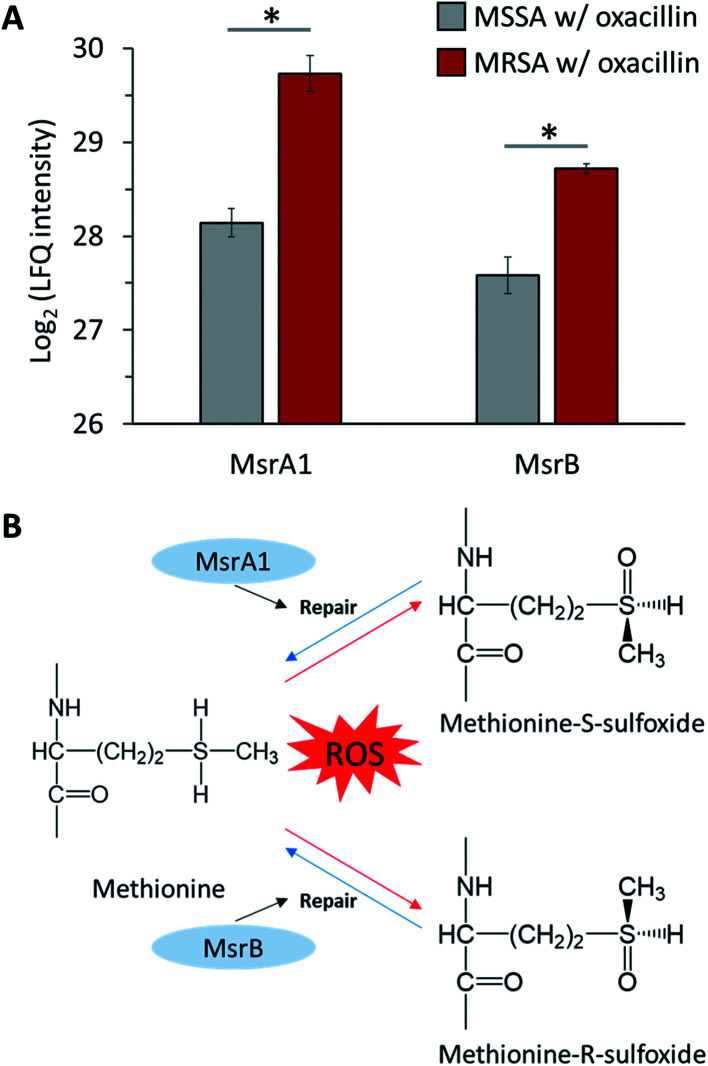
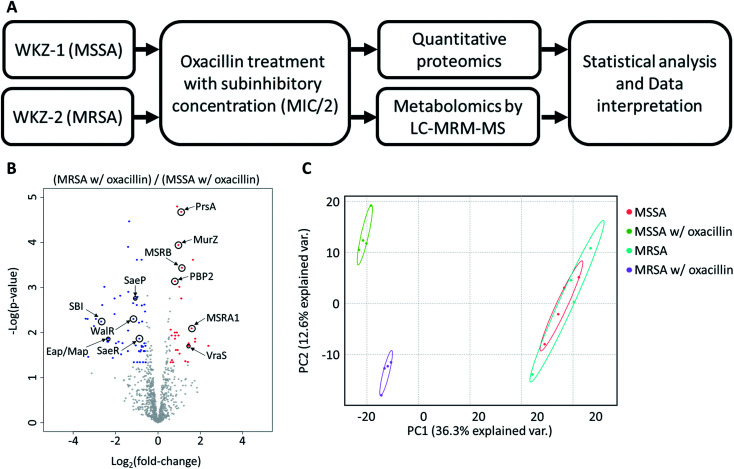
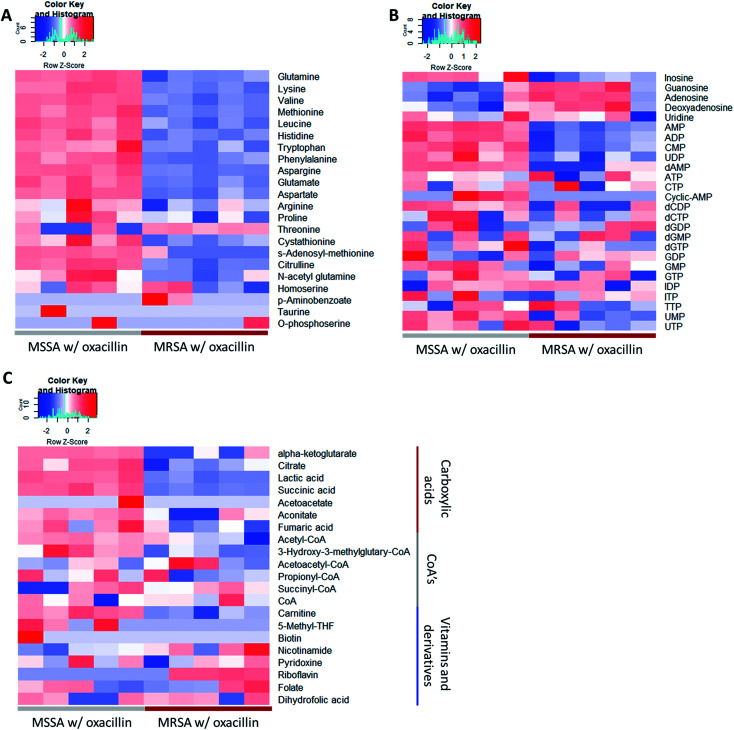
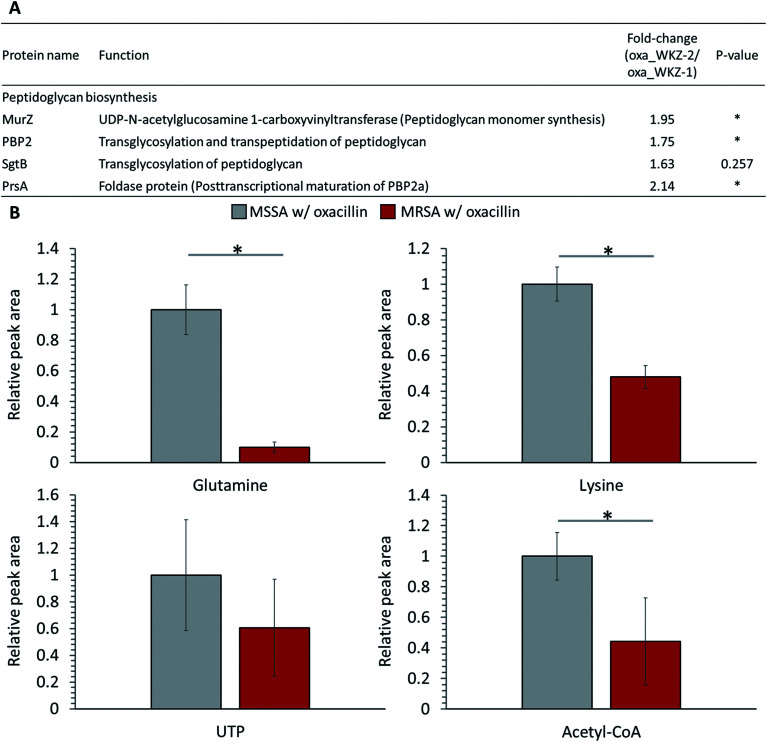
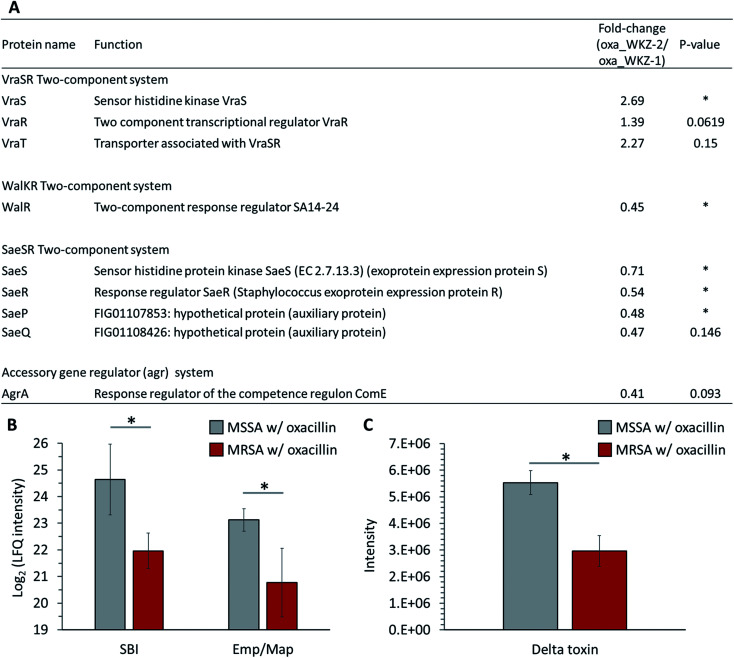
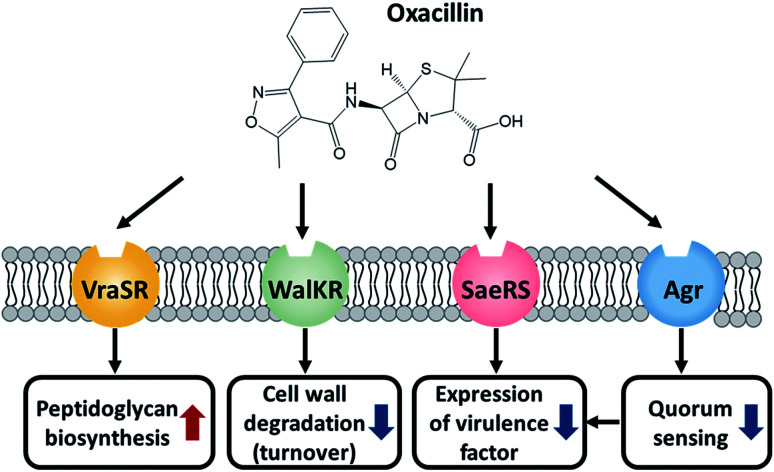
As demands for new antibiotics and strategies to control methicillin-resistant (MRSA) increase, there have been efforts to obtain more accurate and abundant information about the mechanism of the bacterial responses to antibiotics. However, most of the previous studies have investigated responses to antibiotics without considering the genetic differences between MRSA and methicillin-susceptible (MSSA). Here, we initially applied a multi-omics approach into the clinical isolates (, WKZ-1 (MSSA) and WKZ-2 (MRSA)) that are isogenic except for the mobile genetic element called staphylococcal cassette chromosome (SCC) type IV to explore the response to β-lactam antibiotics (oxacillin). First, the isogenic pair showed a similar metabolism without oxacillin treatment. The quantitative proteomics demonstrated that proteins involved in peptidoglycan biosynthesis (MurZ, PBP2, SgtB, PrsA), two-component systems (VrsSR, WalR, SaeSR, AgrA), oxidative stress (MsrA1, MsrB), and stringent response (RelQ) were differentially regulated after the oxacillin treatment of the isogenic isolates. In addition, targeted metabolic profiling showed that metabolites belonging to the building blocks (lysine, glutamine, acetyl-CoA, UTP) of peptidoglycan biosynthesis machinery were specifically decreased in the oxacillin-treated MRSA. These results indicate that the difference in metabolism of this isogenic pair with oxacillin treatment could be caused only by SCC type IV. Understanding and investigating the antibiotic response at the molecular level can, therefore, provide insight into drug resistance mechanisms and new opportunities for antibiotics development.
随着对新型抗生素以及控制耐甲氧西林金黄色葡萄球菌(MRSA)策略的需求不断增加,人们一直在努力获取关于细菌对抗生素反应机制的更准确和丰富的信息。然而,以前的大多数研究在调查抗生素反应时并未考虑MRSA和甲氧西林敏感金黄色葡萄球菌(MSSA)之间的基因差异。在此,我们首先将多组学方法应用于临床分离株(WKZ - 1(MSSA)和WKZ - 2(MRSA)),这两种分离株除了名为IV型葡萄球菌盒式染色体(SCC)的移动遗传元件外是同基因的,以探索对β - 内酰胺抗生素(苯唑西林)的反应。首先,在未用苯唑西林处理时,这对同基因菌株显示出相似的代谢。定量蛋白质组学表明,在对同基因分离株进行苯唑西林处理后,参与肽聚糖生物合成的蛋白质(MurZ、PBP2、SgtB、PrsA)、双组分系统(VrsSR、WalR、SaeSR、AgrA)、氧化应激(MsrA1、MsrB)和应急反应(RelQ)受到差异调节。此外,靶向代谢谱分析表明,在经苯唑西林处理的MRSA中,属于肽聚糖生物合成机制组成部分(赖氨酸、谷氨酰胺、乙酰辅酶A、尿苷三磷酸)的代谢物特异性减少。这些结果表明,经苯唑西林处理后,这对同基因菌株代谢的差异可能仅由IV型SCC引起。因此,在分子水平上理解和研究抗生素反应可以为耐药机制提供见解,并为抗生素开发提供新的机会。