Park Ji-Hyeon, Song Won-Suk, Lee Jeongchan, Jo Sung-Hyun, Lee Jae-Seung, Jeon Hyo-Jin, Kwon Ji-Eun, Kim Ye-Rim, Baek Ji-Hyun, Kim Min-Gyu, Yang Yung-Hun, Kim Byung-Gee, Kim Yun-Gon
Department of Chemical Engineering, Soongsil University, Seoul, South Korea.
School of Chemical and Biological Engineering, Seoul National University, Seoul, South Korea.
Front Bioeng Biotechnol. 2022 Jan 18;10:825399. doi: 10.3389/fbioe.2022.825399. eCollection 2022.
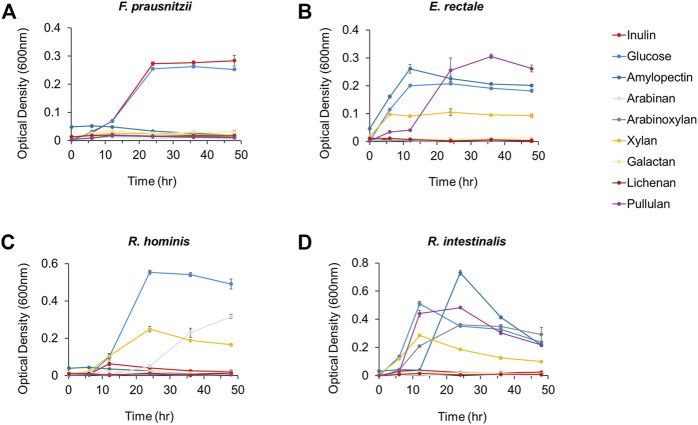
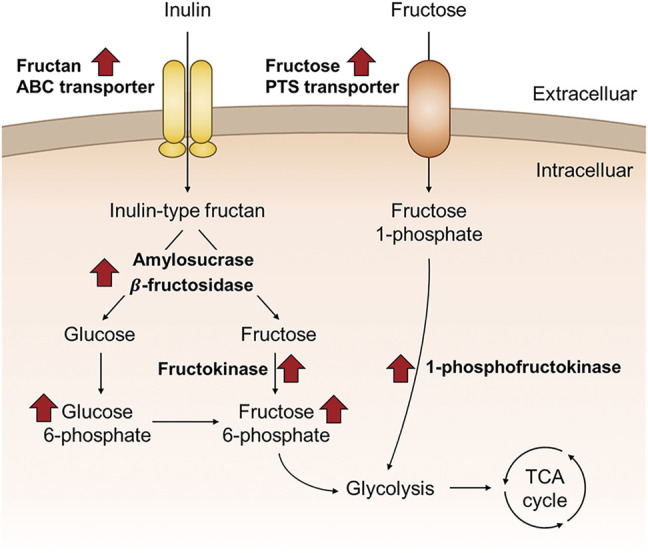
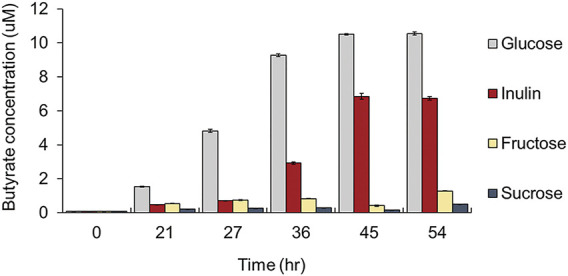
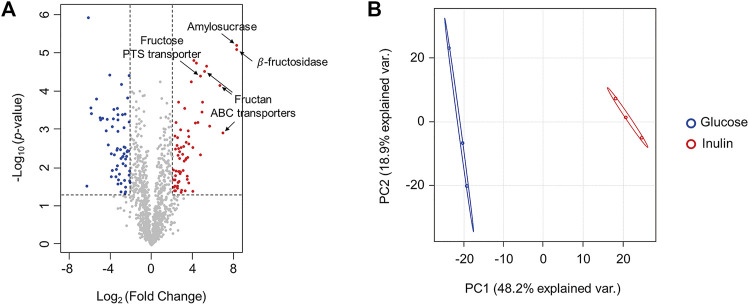
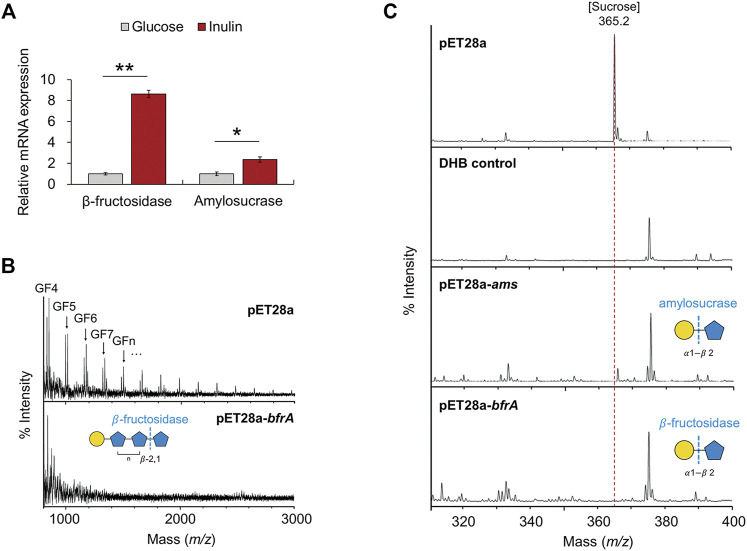
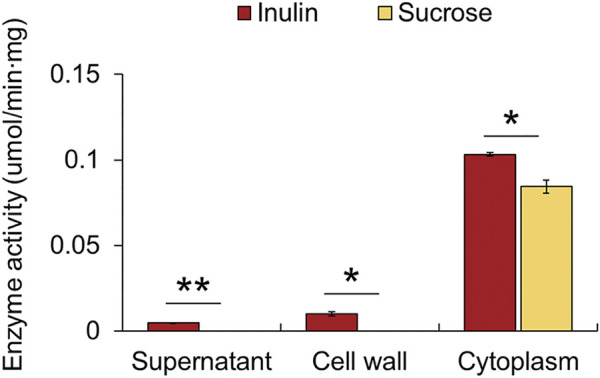
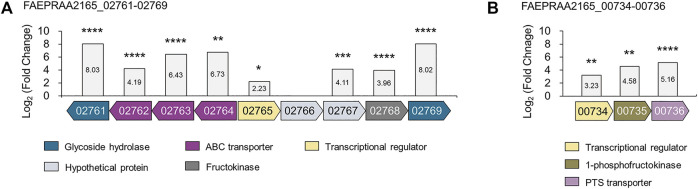
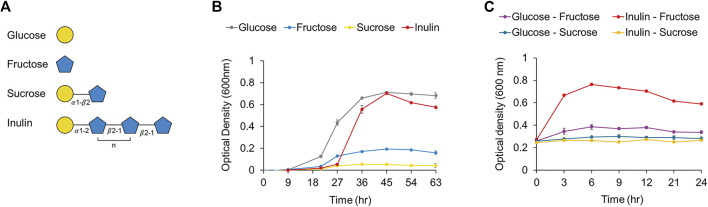
, a major commensal bacterium in the human gut, is well known for its anti-inflammatory effects, which improve host intestinal health. Although several studies have reported that inulin, a well-known prebiotic, increases the abundance of in the intestine, the mechanism underlying this effect remains unclear. In this study, we applied liquid chromatography tandem mass spectrometry (LC-MS/MS)-based multiomics approaches to identify biological and enzymatic mechanisms of involved in the selective digestion of inulin. First, to determine the preference for dietary carbohydrates, we compared the growth of in several carbon sources and observed selective growth in inulin. In addition, an LC-MS/MS-based intracellular proteomic and metabolic profiling was performed to determine the quantitative changes in specific proteins and metabolites of when grown on inulin. Interestingly, proteomic analysis revealed that the putative proteins involved in inulin-type fructan utilization by , particularly β-fructosidase and amylosucrase were upregulated in the presence of inulin. To investigate the function of these proteins, we overexpressed and genes encoding β-fructosidase and amylosucrase, respectively, in and observed their ability to degrade fructan. In addition, the enzyme activity assay demonstrated that intracellular fructan hydrolases degrade the inulin-type fructans taken up by fructan ATP-binding cassette transporters. Furthermore, we showed that the fructose uptake activity of was enhanced by the fructose phosphotransferase system transporter when inulin was used as a carbon source. Intracellular metabolomic analysis indicated that could use fructose, the product of inulin-type fructan degradation, as an energy source for inulin utilization. Taken together, this study provided molecular insights regarding the metabolism of for inulin, which stimulates the growth and activity of the beneficial bacterium in the intestine.
作为人类肠道中的一种主要共生细菌,以其抗炎作用而闻名,这种作用可改善宿主肠道健康。尽管多项研究报告称,著名的益生元菊粉可增加肠道中[具体细菌名称未给出]的丰度,但其作用机制仍不清楚。在本研究中,我们应用基于液相色谱串联质谱(LC-MS/MS)的多组学方法来确定[具体细菌名称未给出]参与菊粉选择性消化的生物学和酶促机制。首先,为了确定对膳食碳水化合物的偏好,我们比较了[具体细菌名称未给出]在几种碳源中的生长情况,并观察到其在菊粉中的选择性生长。此外,还进行了基于LC-MS/MS的细胞内蛋白质组学和代谢谱分析,以确定[具体细菌名称未给出]在以菊粉为生长底物时特定蛋白质和代谢物的定量变化。有趣的是,蛋白质组学分析表明,[具体细菌名称未给出]中参与菊粉型果聚糖利用的假定蛋白质,特别是β-果糖苷酶和淀粉蔗糖酶,在菊粉存在时上调。为了研究这些蛋白质的功能,我们分别在[具体细菌名称未给出]中过表达编码β-果糖苷酶和淀粉蔗糖酶的[具体基因名称未给出]基因,并观察它们降解果聚糖的能力。此外,酶活性测定表明,细胞内果聚糖水解酶可降解由果聚糖ATP结合盒转运蛋白摄取的菊粉型果聚糖。此外,我们还表明,当以菊粉为碳源时,果糖磷酸转移酶系统转运蛋白可增强[具体细菌名称未给出]的果糖摄取活性。细胞内代谢组学分析表明,[具体细菌名称未给出]可以利用菊粉型果聚糖降解产物果糖作为菊粉利用的能量来源。综上所述,本研究提供了关于[具体细菌名称未给出]对菊粉代谢的分子见解,菊粉可刺激肠道中有益细菌的生长和活性。