Mahgoub Samar M, Shehata Mohamed R, Abo El-Ela Fatma L, Farghali Ahmed, Zaher Amal, Mahmoud Rehab K
Department of Environmental Science and Industrial Development, Faculty of Postgraduate Studies for Advanced Sciences, Beni-Suef University 62511 Beni-Suef Egypt.
Chemistry Department, Faculty of Science, Cairo University Giza Egypt.
RSC Adv. 2020 Jul 23;10(46):27633-27651. doi: 10.1039/d0ra04898d. eCollection 2020 Jul 21.
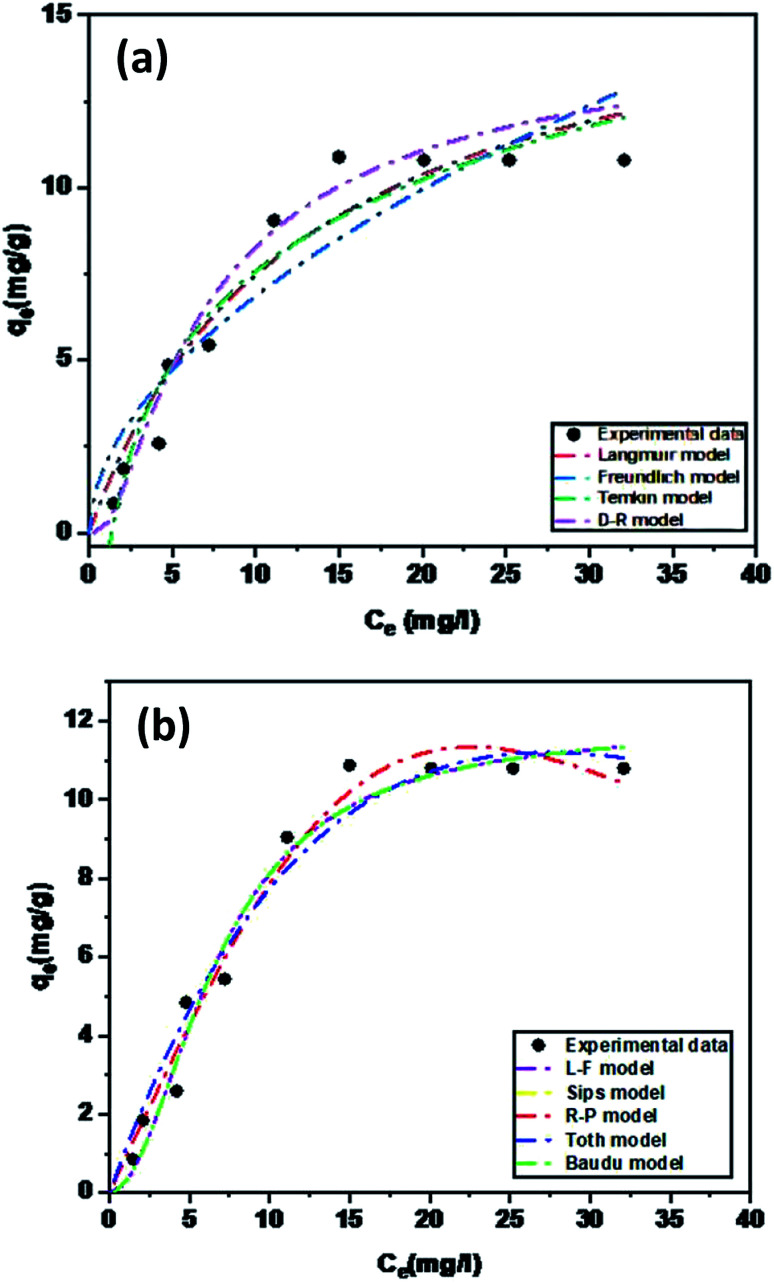
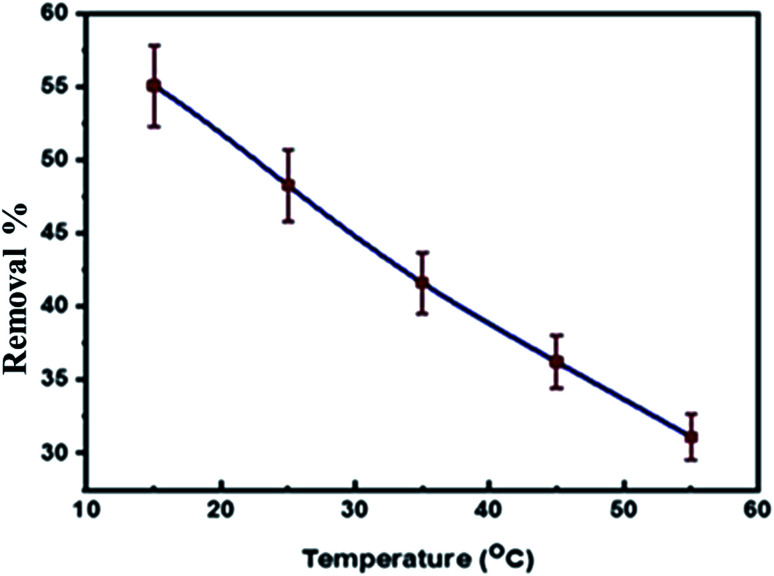
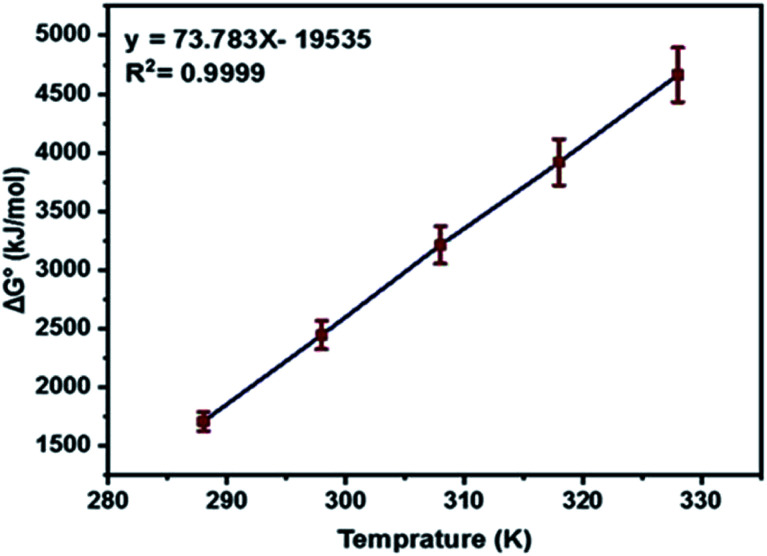
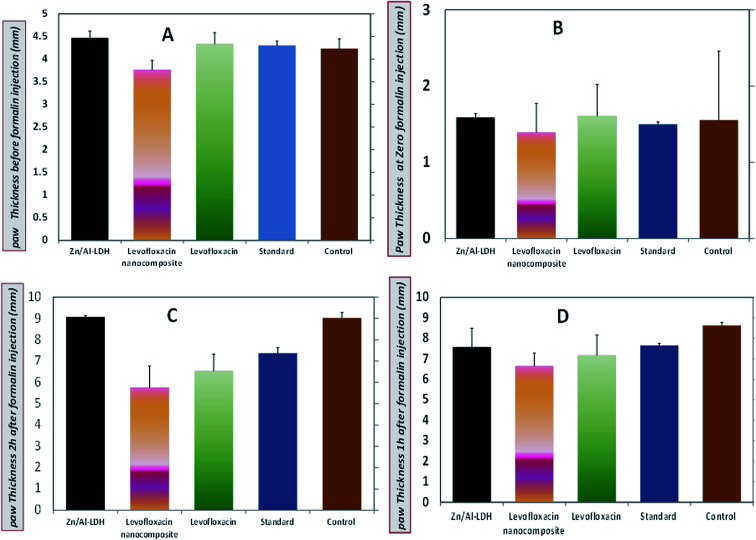
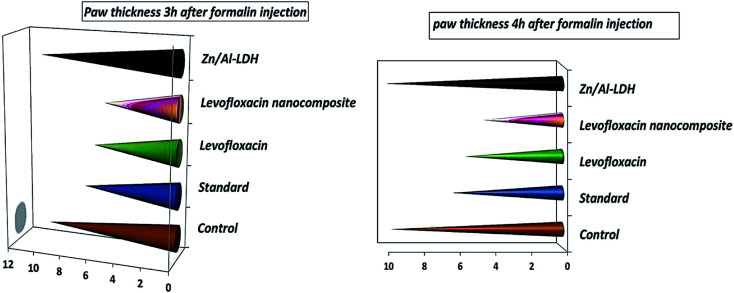
Inorganic nano-layered double hydroxide (LDH) materials are used in the catalytic field, and have demonstrated great applicability in the pharmacological fields. In the current study, we report Zn-Al LDH as an adsorbent for levofloxacin (levo). The physical and chemical properties of the prepared material before and after adsorption were monitored using X-ray diffraction, Fourier-transform infrared (FT-IR) spectroscopic analysis, energy dispersive X-ray spectroscopy (EDX), Brunauer-Emmett-Teller (BET) surface area measurements, high-resolution transmission electron microscopy (HRTEM), and field emission scanning electron microscopy (FESEM). Density functional theory (DFT) calculations for levo and its protonated species were studied at the B3LYP/6-311G (d,p) level of theory. The removal percentage of levo was 73.5%. The adsorption isotherm was investigated using nine different models at pH 9, where the obtained correlation coefficients ( ) using the Redlich-Peterson and Toth models were 0.977. The thermodynamic parameters Δ°, Δ° and Δ° were estimated and discussed in detail. Also, to support the adsorption research field, the applicability of the formed waste after the adsorption of levo onto Zn-Al LDH was investigated for medical purposes. The toxicity of levo in both normal and nanocomposite form was studied. Neither toxicological symptoms nor harmless effects were exhibited throughout the study. The oral anti-inflammatory activity, tested using 6% formalin to produce edema in the footpad, was manifested as a significant increase of 37% in the anti-inflammatory effect of the Zn-Al LDH/levo nanocomposite compared to levo in its normal form.
无机纳米层状双氢氧化物(LDH)材料应用于催化领域,并已在药理领域展现出巨大的适用性。在本研究中,我们报道了锌铝LDH作为左氧氟沙星(levo)的吸附剂。使用X射线衍射、傅里叶变换红外(FT - IR)光谱分析、能量色散X射线光谱(EDX)、布鲁诺尔 - 埃米特 - 泰勒(BET)表面积测量、高分辨率透射电子显微镜(HRTEM)和场发射扫描电子显微镜(FESEM)监测吸附前后制备材料的物理和化学性质。在B3LYP/6 - 311G(d,p)理论水平上研究了levo及其质子化物种的密度泛函理论(DFT)计算。levo的去除率为73.5%。在pH 9条件下使用九种不同模型研究吸附等温线,其中使用雷德利希 - 彼得森和托特模型获得的相关系数( )为0.977。详细估算并讨论了热力学参数Δ°、Δ°和Δ°。此外,为支持吸附研究领域,研究了levo吸附到锌铝LDH上后形成的废料在医学上的适用性。研究了正常形式和纳米复合材料形式的levo的毒性。在整个研究过程中既未表现出毒理学症状也未出现无害影响。使用6%福尔马林使足垫产生水肿来测试口服抗炎活性,结果表明与正常形式的levo相比,锌铝LDH/levo纳米复合材料的抗炎效果显著提高了37%。