Nelson Amy R
Department of Physiology and Cell Biology, College of Medicine, University of South Alabama, Mobile, AL, United States.
Front Aging Neurosci. 2022 Apr 18;14:858429. doi: 10.3389/fnagi.2022.858429. eCollection 2022.
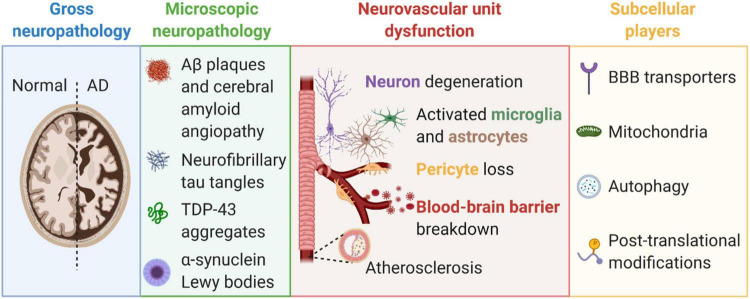
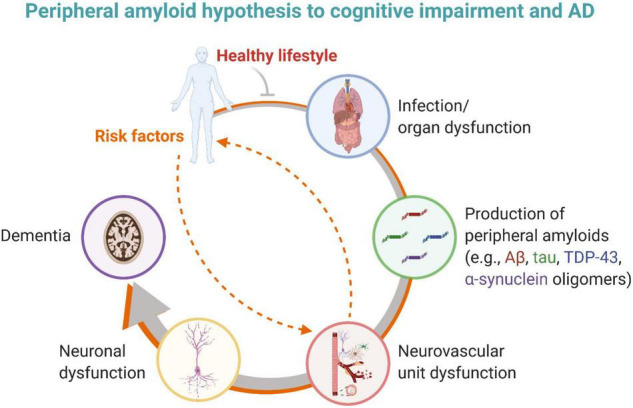
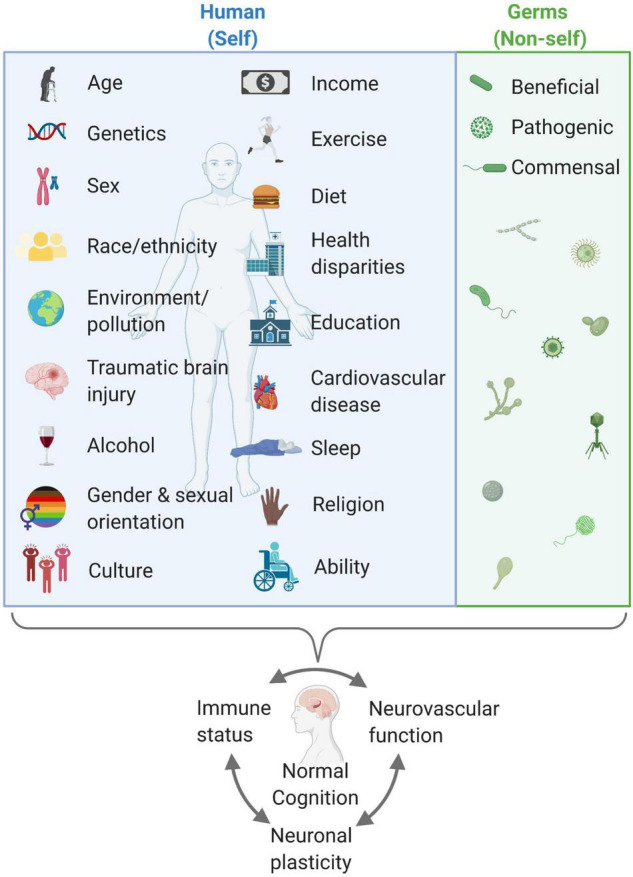
Alzheimer's disease (AD) is the most common form of dementia. It was first described more than a century ago, and scientists are acquiring new data and learning novel information about the disease every day. Although there are nuances and details continuously being unraveled, many key players were identified in the early 1900's by Dr. Oskar Fischer and Dr. Alois Alzheimer, including amyloid-beta (Aβ), tau, vascular abnormalities, gliosis, and a possible role of infections. More recently, there has been growing interest in and appreciation for neurovascular unit dysfunction that occurs early in mild cognitive impairment (MCI) before and independent of Aβ and tau brain accumulation. In the last decade, evidence that Aβ and tau oligomers are antimicrobial peptides generated in response to infection has expanded our knowledge and challenged preconceived notions. The concept that pathogenic germs cause infections generating an innate immune response (e.g., Aβ and tau produced by peripheral organs) that is associated with incident dementia is worthwhile considering in the context of sporadic AD with an unknown root cause. Therefore, the peripheral amyloid hypothesis to cognitive impairment and AD is proposed and remains to be vetted by future research. Meanwhile, humans remain complex variable organisms with individual risk factors that define their immune status, neurovascular function, and neuronal plasticity. In this focused review, the idea that infections and organ dysfunction contribute to Alzheimer's disease, through the generation of peripheral amyloids and/or neurovascular unit dysfunction will be explored and discussed. Ultimately, many questions remain to be answered and critical areas of future exploration are highlighted.
阿尔茨海默病(AD)是最常见的痴呆形式。它在一个多世纪前首次被描述,科学家们每天都在获取关于这种疾病的新数据并了解新信息。尽管仍有细微差别和细节不断被揭示,但早在20世纪初,奥斯卡·费舍尔博士和阿洛伊斯·阿尔茨海默博士就确定了许多关键因素,包括β-淀粉样蛋白(Aβ)、tau蛋白、血管异常、胶质细胞增生以及感染可能发挥的作用。最近,人们对轻度认知障碍(MCI)早期在Aβ和tau蛋白在脑内蓄积之前且与之无关时发生的神经血管单元功能障碍越来越感兴趣并给予更多关注。在过去十年中,有证据表明Aβ和tau寡聚体是针对感染产生的抗菌肽,这拓展了我们的知识并挑战了先入之见。在散发性AD病因不明的背景下,致病微生物引发感染从而产生与新发痴呆相关的先天性免疫反应(例如外周器官产生的Aβ和tau蛋白)这一概念值得考虑。因此,提出了认知障碍和AD的外周淀粉样蛋白假说,有待未来研究进行验证。与此同时,人类仍然是复杂多变的生物体,具有决定其免疫状态、神经血管功能和神经元可塑性的个体风险因素。在这篇重点综述中,将探讨和讨论感染及器官功能障碍通过产生外周淀粉样蛋白和/或神经血管单元功能障碍导致阿尔茨海默病的观点。最终,许多问题仍有待解答,并突出了未来探索的关键领域。