Antoniou Tony, McCormack Daniel, Tadrous Mina, Juurlink David N, Gomes Tara
Department of Family and Community Medicine, Unity Health Toronto, Toronto, ON, Canada.
Li Ka Shing Knowledge Institute, Unity Health Toronto, Toronto, ON, Canada.
Front Pharmacol. 2022 Apr 20;13:861953. doi: 10.3389/fphar.2022.861953. eCollection 2022.
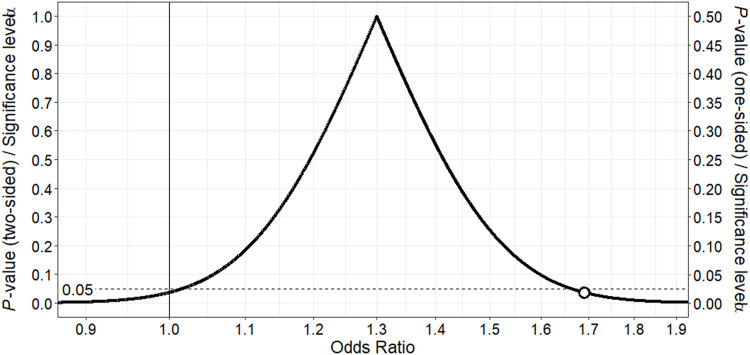
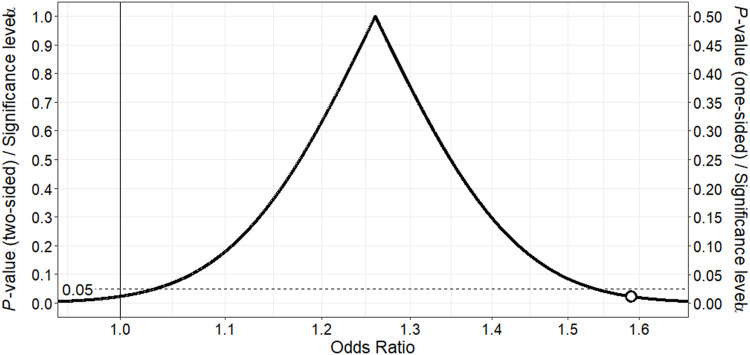
Methadone is associated with ventricular dysrhythmias and sudden death. Serotonin reuptake inhibitors (SRIs) may increase the risk of these events either by inhibiting metabolism of methadone's proarrhythmic (S)-enantiomer, additive QT interval prolongation, or both. We sought to determine whether certain SRIs were associated with a higher risk of methadone-related ventricular dysrhythmias or sudden death. We conducted a nested case-control study of Ontario residents receiving methadone between April 1, 1996 and December 31, 2017. Cases, defined as patients who died of sudden cardiac death or were hospitalized with a ventricular dysrhythmia while on methadone, were matched with up to four controls who also received methadone on age, sex, and a disease risk score. We determined the odds ratio (OR) and -value functions for the association between methadone-related cardiotoxicity and treatment with SRIs known to inhibit metabolism of (S)-methadone (paroxetine, fluvoxamine, sertraline) or prolong the QT interval (citalopram and escitalopram). Patients who were not treated with an SRI served as the reference group. During the study period, we identified 626 cases and 2,299 matched controls. Following multivariable adjustment, we found that recent use of sertraline, fluvoxamine or paroxetine (adjusted OR 1.30; 95% confidence intervals [CI] 0.90-1.86) and citalopram and escitalopram (adjusted OR 1.26; 95% CI 0.97-1.63) were associated with small increases in the risk methadone-related cardiac toxicity, an assertion supported by the corresponding -value functions. Certain SRIs may be associated with a small increase in cardiac toxicity in methadone-treated patients.
美沙酮与室性心律失常和猝死有关。5-羟色胺再摄取抑制剂(SRIs)可能通过抑制美沙酮促心律失常(S)-对映体的代谢、相加性QT间期延长或两者兼而有之,增加这些事件的风险。我们试图确定某些SRIs是否与美沙酮相关的室性心律失常或猝死风险较高有关。我们对1996年4月1日至2017年12月31日期间在安大略省接受美沙酮治疗的居民进行了一项巢式病例对照研究。病例定义为在服用美沙酮期间死于心源性猝死或因室性心律失常住院的患者,与多达四名同样服用美沙酮的对照者按年龄、性别和疾病风险评分进行匹配。我们确定了美沙酮相关心脏毒性与已知抑制(S)-美沙酮代谢(帕罗西汀、氟伏沙明、舍曲林)或延长QT间期(西酞普兰和艾司西酞普兰)的SRIs治疗之间关联的比值比(OR)和P值函数。未接受SRIs治疗的患者作为参考组。在研究期间,我们确定了626例病例和2299例匹配对照。经过多变量调整后,我们发现近期使用舍曲林、氟伏沙明或帕罗西汀(调整后的OR为1.30;95%置信区间[CI]为0.90-1.86)以及西酞普兰和艾司西酞普兰(调整后的OR为1.26;95%CI为0.97-1.63)与美沙酮相关心脏毒性风险的小幅增加有关,相应的P值函数支持这一论断。某些SRIs可能与美沙酮治疗患者的心脏毒性小幅增加有关。