Chandra Kaushik Aman, Wang Yan-Jing, Wang Xiangeng, Kumar Ajay, Singh Satya P, Pan Cheng-Tang, Shiue Yow-Ling, Wei Dong-Qing
The State Key Laboratory of Microbial Metabolism, School of Life Sciences and Biotechnology, Shanghai Jiao Tong University Shanghai 200240 China
Institute of Biomedical Sciences, National Sun Yat-Sen University Kaohsiung City 804 Taiwan
RSC Adv. 2019 Jun 19;9(34):19261-19270. doi: 10.1039/c9ra01975h.
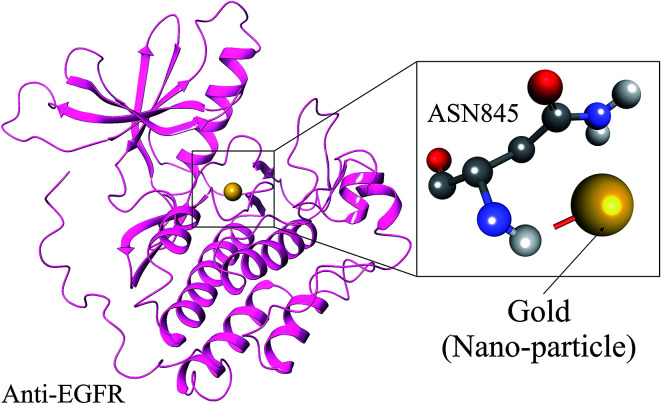
The epidermal growth factor receptor, also known as EGFR, is a tyrosine kinase receptor commonly found in epithelial tumors. As part of the first target for cancer treatment, EGFR has been the subject of intense research for more than 20 years; as a result, there are a number of anti-EGFR agents currently available. More recently, with our basic understanding of mechanisms related to receptor activation and function, both the secondary and primary forms of EGFR somatic mutations have led to the discovery of new anti-EGFR agents aimed at providing new insights into the clinical targeting of this receptor and possibly acting as an ideal model for developing strategies to target other types of receptors. In this study, we use genomic pattern to prove that is most frequently altered in GBM, glioma and astrocytoma; and analysed the prognostic potentiality of in glioma, which is a major type of brain tumor. Further we proposed a new screening technique for EGFR inhibitors by employing an optimized deep neural network approach. This method was applied to screen a nanoparticle (NP) library, and it was concluded that gold NPs (AuNPs) induced significant inhibition of EGFR compared with other selected NPs. These findings were further analyzed by molecular docking, systems biology, time course simulations and synthetic biology (biological circuits), revealing that anti-EGFR-iRGD and AuNP showed potential inhibition against tumors caused by EGFR.
表皮生长因子受体,也称为EGFR,是一种常见于上皮肿瘤中的酪氨酸激酶受体。作为癌症治疗的首个靶点之一,EGFR已经成为20多年来深入研究的对象;因此,目前有多种抗EGFR药物可供使用。最近,随着我们对受体激活和功能相关机制的基本了解,EGFR体细胞突变的二级和一级形式都促使人们发现了新的抗EGFR药物,旨在为该受体的临床靶向提供新的见解,并可能成为开发针对其他类型受体策略的理想模型。在本研究中,我们利用基因组模式证明[此处原文缺失具体基因名称]在胶质母细胞瘤、神经胶质瘤和星形细胞瘤中最常发生改变;并分析了[此处原文缺失具体基因名称]在神经胶质瘤(一种主要的脑肿瘤类型)中的预后潜力。此外,我们采用优化的深度神经网络方法提出了一种新的EGFR抑制剂筛选技术。该方法应用于筛选纳米颗粒(NP)文库,结果表明与其他选定的纳米颗粒相比,金纳米颗粒(AuNP)对EGFR具有显著的抑制作用。通过分子对接、系统生物学、时间进程模拟和合成生物学(生物电路)对这些发现进行了进一步分析,结果显示抗EGFR-iRGD和AuNP对由EGFR引起的肿瘤具有潜在的抑制作用。