Adams Seidu, Xiangjie Kong, Hailong Jiang, Guixin Qin, Sossah Fredrick Leo, Dongsheng Che
College of Animal Science and Technology, Jilin Agricultural University Changchun 130118 China
Jilin Provincial Key Lab of Animal Nutrition and Feed Science, Jilin Agricultural University Changchun 130118 China.
RSC Adv. 2019 May 2;9(24):13586-13599. doi: 10.1039/c9ra01251f. eCollection 2019 Apr 30.
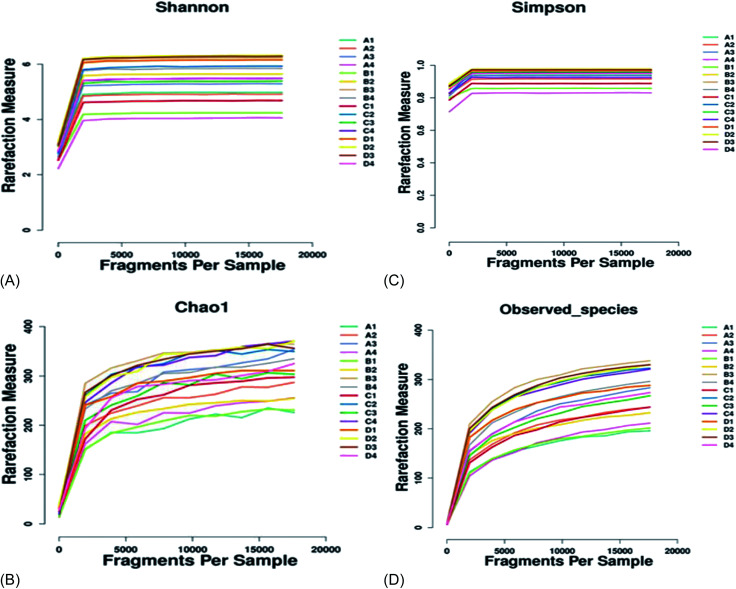
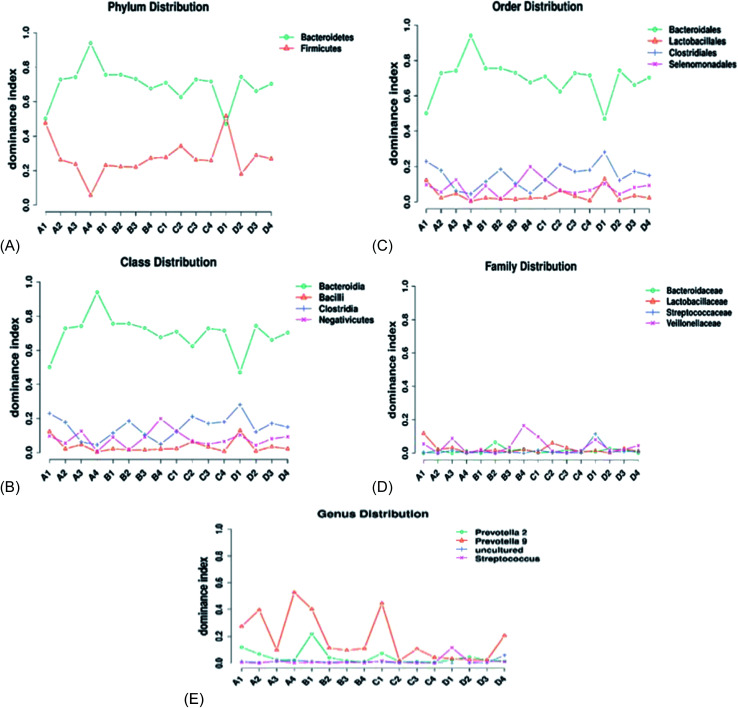
Dietary alfalfa fiber (AF) is conceived to modulate gut microbial richness and diversity to improve the health and growth of weaning piglets. The objective of this study was to evaluate the prebiotic effects of AF on diarrhea incidence, the production of short-chain fatty acids (SCFAs), and microbiota composition in weaning piglets. This study utilized 100 crossbred piglets (Duroc × Landrace × Yorkshire) with a body weight of 8.42 ± 1.88 kg randomly assigned to the following treatments: 0.00% AF meal (A), 6.00% of AF meal (B), 12.00% AF meal (C), and 18.00% AF meal (D). The cecum samples were used to determine microbial community composition and diversity through high-throughput 16S rDNA sequencing. The results of this study show that the lowest average daily gain (ADG) was observed in treatment D, and the highest ADG was recorded in treatment C. However there was no significant difference between the treatment groups and the control. The average daily feed intake (ADFI) was significantly higher in treatment C compared to the other treatments. The feed conversion ratio was high in the control group compared to the AF treated groups. The highest diarrhea incidence was observed in treatment A and the lowest diarrhea incidence was observed in treatment C and D. The highest acetate and propionate levels were observed in treatment B, but there was no significant difference between the treatment groups and the control. The supplementation of AF significantly increased the butyrate level in treatment D compared with treatments A and B but was not significantly different from treatment C. The Observed_species richness and Simpson diversity values of the cecum bacterial composition in the AF fed piglets were higher than the control. In addition, the Chao 1 richness and Shannon diversity increased with an increase in AF supplementation, reaching a plateau at treatment B and C, then decreasing at treatment D. The , , , , , , , , , , , , , , and others were relatively abundant in all treatments. The and were the dominant phyla, accounting for 98% of all reads. AF treatment decreased the phylum and increased the phylum compared with treatment A. Therefore, the dietary inclusion of AF may decrease diarrhea incidence, increase cecal bacterial composition and richness, and consequently improve the growth performance of weaning piglets.
日粮苜蓿纤维(AF)被认为可调节肠道微生物的丰富度和多样性,以改善断奶仔猪的健康和生长。本研究的目的是评估AF对断奶仔猪腹泻发生率、短链脂肪酸(SCFA)产生及微生物群组成的益生元效应。本研究使用了100头体重为8.42±1.88千克的杜洛克×长白×约克夏杂交仔猪,随机分为以下处理组:0.00% AF日粮(A组)、6.00% AF日粮(B组)、12.00% AF日粮(C组)和18.00% AF日粮(D组)。采集盲肠样本,通过高通量16S rDNA测序确定微生物群落组成和多样性。本研究结果表明,D组的平均日增重(ADG)最低,C组的ADG最高。然而,各处理组与对照组之间无显著差异。与其他处理组相比,C组的平均日采食量(ADFI)显著更高。与AF处理组相比,对照组的饲料转化率更高。A组的腹泻发生率最高,C组和D组的腹泻发生率最低。B组的乙酸盐和丙酸盐水平最高,但各处理组与对照组之间无显著差异。与A组和B组相比,D组补充AF显著提高了丁酸盐水平,但与C组无显著差异。AF喂养仔猪盲肠细菌组成的观察物种丰富度和辛普森多样性值高于对照组。此外,Chao 1丰富度和香农多样性随着AF添加量的增加而增加,在B组和C组达到平台期,然后在D组下降。在所有处理中, 、 、 、 、 相对丰富。 和 是优势菌门,占所有读数的98%。与A组相比,AF处理降低了 菌门,增加了 菌门。因此,日粮中添加AF可能会降低腹泻发生率,增加盲肠细菌组成和丰富度,从而改善断奶仔猪的生长性能。