Rozmysłowska-Wojciechowska A, Karwowska E, Poźniak S, Wojciechowski T, Chlubny L, Olszyna A, Ziemkowska W, Jastrzębska A M
Warsaw University of Technology, Faculty of Materials Science and Engineering Woloska 141 02-507 Warsaw Poland
Warsaw University of Technology, Faculty of Building Services, Hydro and Environmental Engineering Nowowiejska 20 00-653 Warsaw Poland
RSC Adv. 2019 Jan 30;9(8):4092-4105. doi: 10.1039/c8ra07633b.
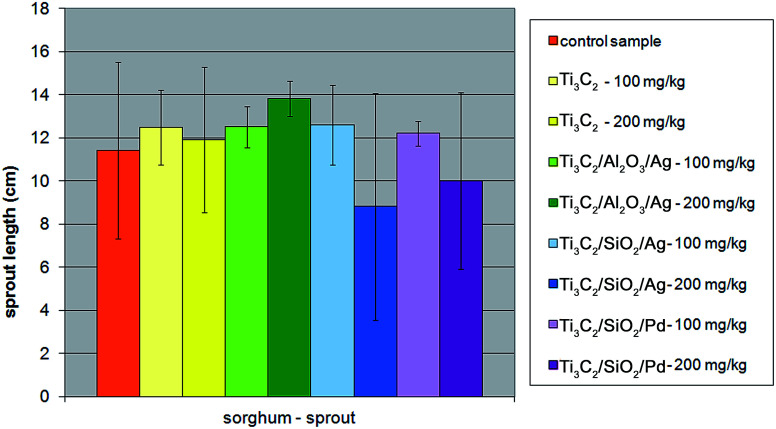
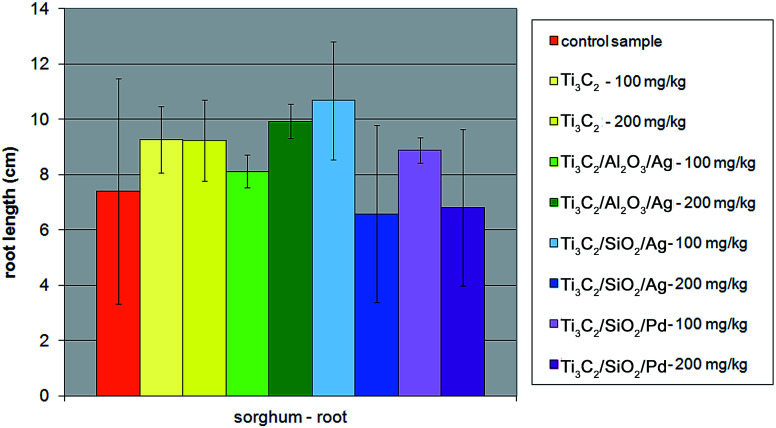
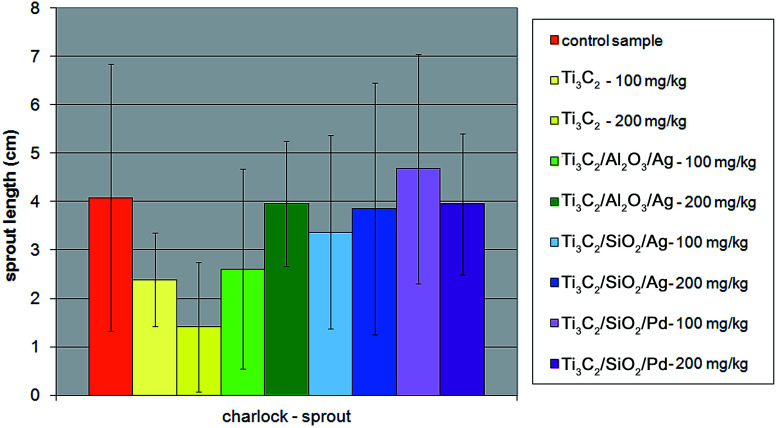
The number of investigations regarding the application of 2D nanosheets of MXenes in different technological areas is growing rapidly. Different surface modifications of MXenes have been introduced to date in order to tailor their properties. As a result, surface-modified MXenes could be released in the environment from filtration membranes, adsorbents, or photocatalysts. On the other hand, assessment of their environmental impact is practically unexplored. In the present study, we examined how modification of the antimicrobial TiC MXene with ceramic oxide and noble metal nanoparticles affects its toxic behavior. The expanded 2D sheets of the TiC MXene phase were modified with AlO/Ag, SiO/Ag, and SiO/Pd nanoparticles using the sol-gel method and extensively characterized. The obtained 2D nanocomposite structures were characterized by antibacterial properties. The ecotoxicological assays considered green algae () as well as two higher plants: sorghum () and charlock (). Our results revealed that obtained nanomaterials can cause both stimulating and inhibiting effects towards algae, and the ecotoxicity depended on the concentration and the type of modification. The study reveals the intriguing property of pristine TiC which highly stimulated green algae growth at low concentrations. It also shows that modification of pristine TiC MXene with different nanoparticles changes the ecotoxicological effects of the resulting nanocomposite 2D structures. We have also indicated nanocomposite structures that does not revealed the toxic effect on tested organisms the TiC MXene surface-modified with AlO/Ag was not phyto- and eco-toxic. This work helps with better understanding of the reactivity of surface-modified MXenes towards chosen organisms, giving more information concerning the potential impact of tested nanocomposites on the ecosystems.
关于二维MXene纳米片在不同技术领域应用的研究数量正在迅速增长。为了调整其性能,迄今为止已经引入了MXene的不同表面改性方法。因此,表面改性的MXene可能会从过滤膜、吸附剂或光催化剂中释放到环境中。另一方面,对其环境影响的评估实际上尚未得到探索。在本研究中,我们研究了用陶瓷氧化物和贵金属纳米颗粒对抗菌TiC MXene进行改性如何影响其毒性行为。使用溶胶-凝胶法用AlO/Ag、SiO/Ag和SiO/Pd纳米颗粒对TiC MXene相的扩展二维片材进行改性,并进行了广泛表征。所获得的二维纳米复合结构具有抗菌性能。生态毒理学试验考虑了绿藻()以及两种高等植物:高粱()和芥菜()。我们的结果表明,所获得的纳米材料对藻类可能产生刺激和抑制作用,生态毒性取决于改性的浓度和类型。该研究揭示了原始TiC在低浓度下能高度刺激绿藻生长的有趣特性。它还表明,用不同纳米颗粒对原始TiC MXene进行改性会改变所得二维纳米复合结构的生态毒理学效应。我们还指出了对受试生物没有显示出毒性作用的纳米复合结构——用AlO/Ag表面改性的TiC MXene对植物和生态无毒。这项工作有助于更好地理解表面改性的MXene对选定生物的反应性,提供更多关于受试纳米复合材料对生态系统潜在影响的信息。