Soi Vivek, Faber Mark D, Paul Ritika
Division of Nephrology and Hypertension, Henry Ford Hospital, Detroit, MI, USA.
Wayne State University School of Medicine, Detroit, MI, USA.
Int J Nephrol Renovasc Dis. 2022 Apr 29;15:161-172. doi: 10.2147/IJNRD.S286947. eCollection 2022.
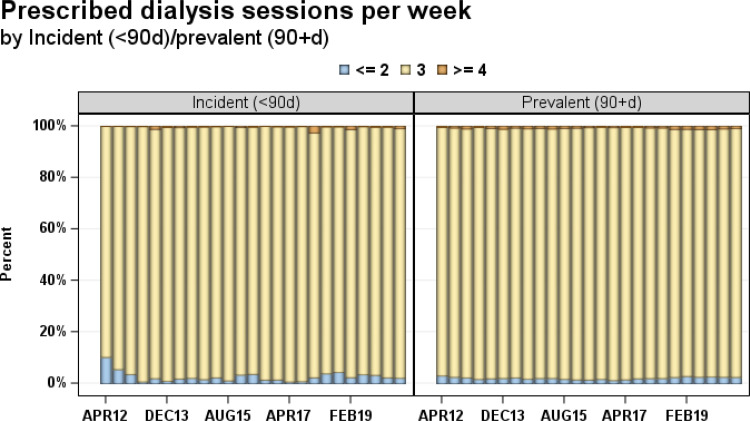
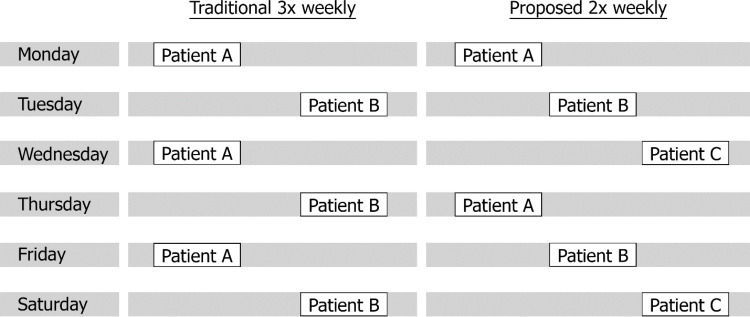
Traditionally, patients that develop progressive chronic kidney disease in need of kidney replacement therapy are prescribed thrice weekly in-center hemodialysis sessions at the beginning of therapy. This empiric prescription is based on historic trials that were comprised of mostly prevalent patients. Incremental hemodialysis is the process of performing <3 sessions of dialysis per week or limiting dialysis dose by duration at the initial onset of treatment to provide a more gradual transition, mimicking the progressive nature of kidney disease. Adding clearance contributions from residual kidney function is the standard of care with peritoneal dialysis but has not routinely been employed with hemodialysis. Accounting for residual kidney function accompanied by improvement in adjuvant pharmacotherapy, such as newer potassium binding agents and dietary modification, can augment dialytic clearances and allow for an incremental approach. Utilizing incremental dialysis has been associated with both preserving residual kidney function as well as improving patient quality of life. Barriers to this approach include concerns regarding patient acceptance of dialysis prescription changes, adherence to therapy, and provider factors that would require a restructuring of the current thrice weekly hemodialysis rubric. Candidacy for incremental therapy has shown the best outcomes when urea clearances exceed 3 mL/min and urine volumes are >500 mL/day, although these measures have been deemed conservative. A significant amount of retrospective and registry data has been supportive of initiating incremental hemodialysis and several pilot studies have shown the feasibility of implementing such an approach. Larger, randomized control trials are needed to fully evaluate safety and efficacy to allow for more widespread acceptance of this patient-centered approach to chronic kidney disease.
传统上,需要肾脏替代治疗的进行性慢性肾脏病患者在治疗开始时会被安排每周三次的中心血液透析治疗。这种经验性的治疗方案是基于历史试验制定的,这些试验的参与者大多是慢性肾脏病患者。增量血液透析是指在治疗初期每周进行少于3次的透析治疗,或通过控制透析时间来限制透析剂量,以实现更渐进的过渡,模拟肾脏疾病的进展特性。将残余肾功能的清除作用计算在内是腹膜透析的治疗标准,但在血液透析中尚未常规应用。考虑到残余肾功能,并辅以药物治疗的改进,如使用新型钾结合剂和调整饮食,可以增加透析清除率,并采用增量治疗方法。采用增量透析与保留残余肾功能以及改善患者生活质量相关。这种方法的障碍包括患者对透析治疗方案改变的接受度、治疗依从性,以及提供者因素,这些都需要对当前每周三次的血液透析方案进行调整。当尿素清除率超过3 mL/分钟且尿量>500 mL/天时,增量治疗的效果最佳,尽管这些指标被认为较为保守。大量的回顾性研究和登记数据支持启动增量血液透析,一些试点研究也表明了实施这种方法的可行性。需要开展更大规模的随机对照试验,以全面评估其安全性和有效性,从而使这种以患者为中心的慢性肾脏病治疗方法得到更广泛的接受。