
使用钛酸钡和孟加拉玫瑰红复合纳米颗粒的二次谐波增强近红外激发光动力疗法
SHG-enhanced NIR-excited photodynamic therapy using composite nanoparticles of barium titanate and rose Bengal.
作者信息
Sun Xianhe, Ji Zhang, He Sailing
机构信息
State Key Laboratory of Modern Optical Instrumentations, Centre for Optical and Electromagnetic Research, Zhejiang University Hangzhou 310058 China.
Department of Electromagnetic Engineering, School of Electrical Engineering, Royal Institute of Technology SE-100 44 Stockholm Sweden
出版信息
RSC Adv. 2019 Mar 11;9(14):8056-8064. doi: 10.1039/c9ra00432g. eCollection 2019 Mar 6.
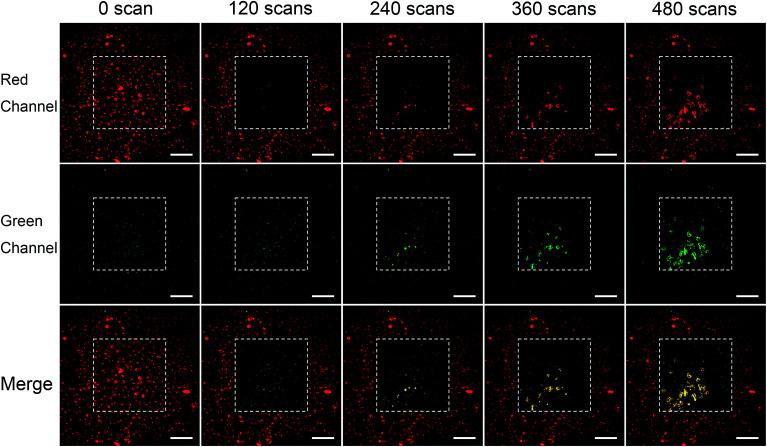
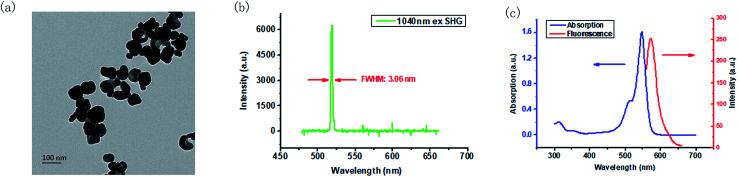
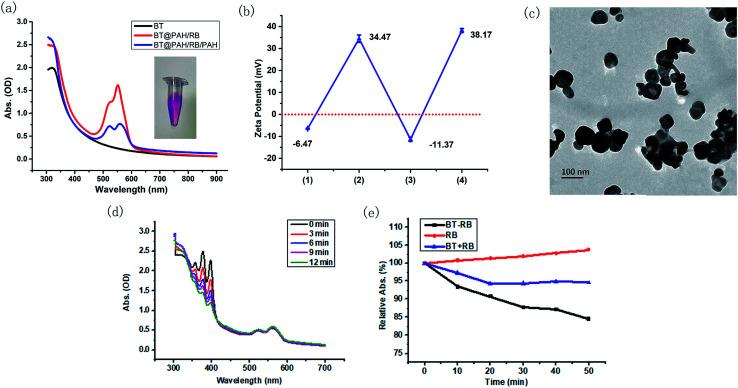
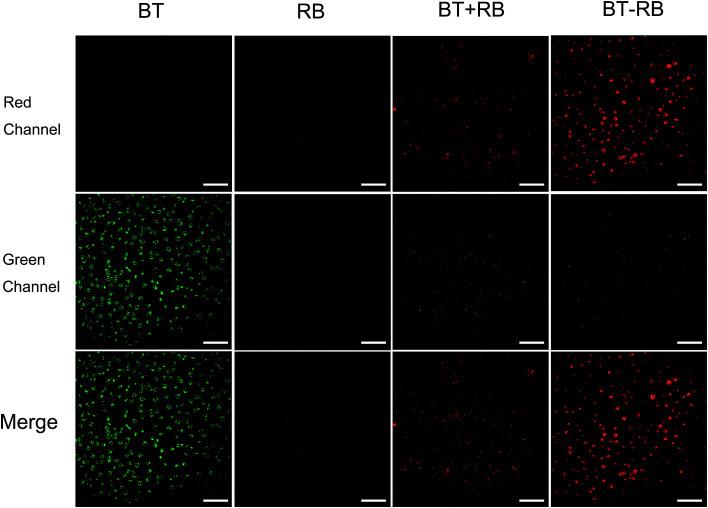
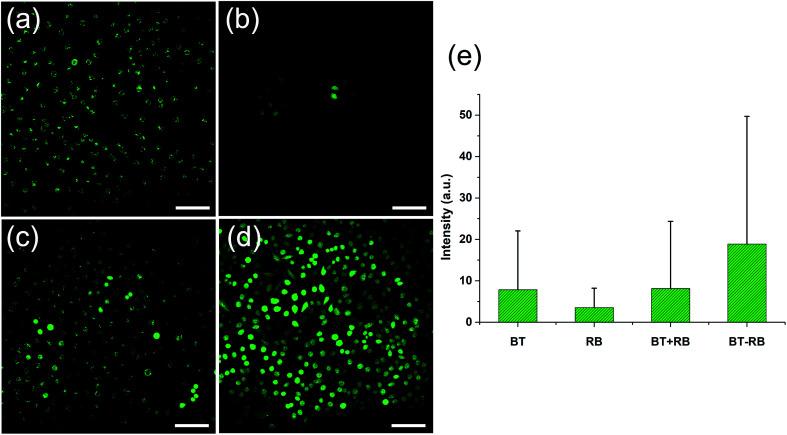
Near infrared (NIR) light excited photodynamic therapy (PDT) has been considered as a possible way to increase the therapy depth. Besides the traditional two-photon excited PDT and upconversion PDT by rare-earth ion materials, SHG has drawn much attention recently to act as an additional choice to achieve NIR light excited PDT. Herein, by using the electrostatic absorption method, barium titanate and rose Bengal composite nanoparticles (BT@PAH/RB/PAH, BT-RB) were synthesized. Compared with rose Bengal (RB) molecules and a mixture of barium titanate nanoparticles and RB (BT + RB), BT-RB nanoparticles were shown to be able to produce more reactive oxygen species (ROS) and . Afterwards, the SHG-enhanced localized PDT was applied on Hela cells, in which BT-RB nanoparticles showed a better performance than BT + RB. Our work has shown that the SHG-enhanced PDT has good prospects and the close combination of harmonic nanoparticles and photosensitizers may facilitate the development of novel reagents for NIR light excited PDT.
近红外(NIR)光激发光动力疗法(PDT)被认为是增加治疗深度的一种可能方法。除了传统的双光子激发PDT和稀土离子材料的上转换PDT外,二次谐波产生(SHG)最近作为实现近红外光激发PDT的一种额外选择而备受关注。在此,通过静电吸附法合成了钛酸钡与孟加拉玫瑰红复合纳米颗粒(BT@PAH/RB/PAH,BT-RB)。与孟加拉玫瑰红(RB)分子以及钛酸钡纳米颗粒与RB的混合物(BT + RB)相比,BT-RB纳米颗粒能够产生更多的活性氧(ROS)。之后,将SHG增强的局部PDT应用于Hela细胞,其中BT-RB纳米颗粒表现出比BT + RB更好的性能。我们的工作表明,SHG增强的PDT具有良好的前景,谐波纳米颗粒与光敏剂的紧密结合可能有助于开发用于近红外光激发PDT的新型试剂。
 Zotero 插件