Hoogstraat Marlous, Lips Esther H, Mayayo-Peralta Isabel, Mulder Lennart, Kristel Petra, van der Heijden Ingrid, Annunziato Stefano, van Seijen Maartje, Nederlof Petra M, Sonke Gabe S, Zwart Wilbert, Wesseling Jelle, Wessels Lodewyk F A
Division of Oncogenomics, Oncode Institute, The Netherlands Cancer Institute, Amsterdam, The Netherlands.
Division of Molecular Carcinogenesis, Oncode Institute, The Netherlands Cancer Institute, Amsterdam, The Netherlands.
NPJ Breast Cancer. 2022 May 6;8(1):60. doi: 10.1038/s41523-022-00428-8.
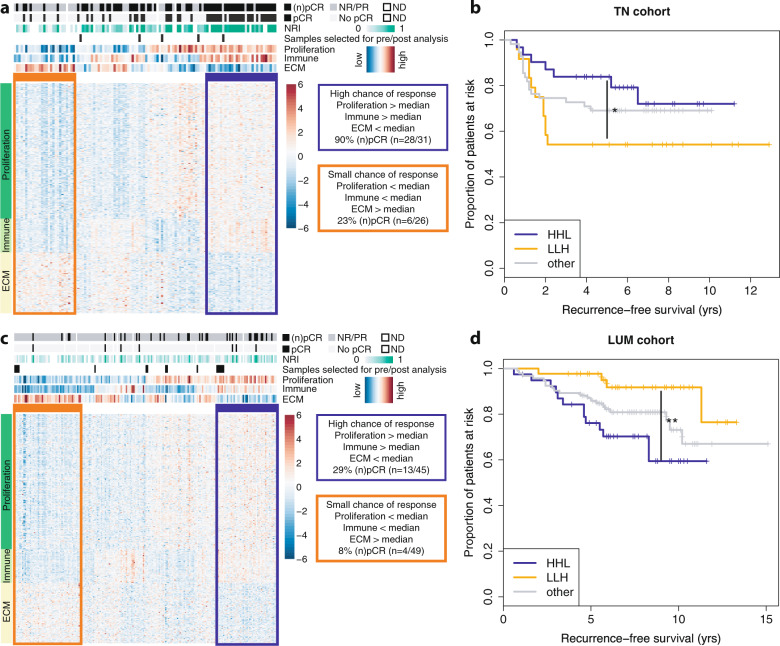
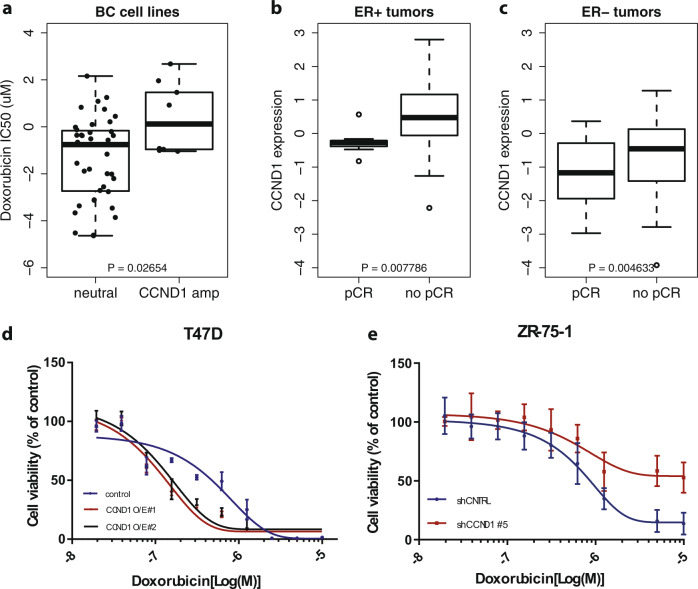
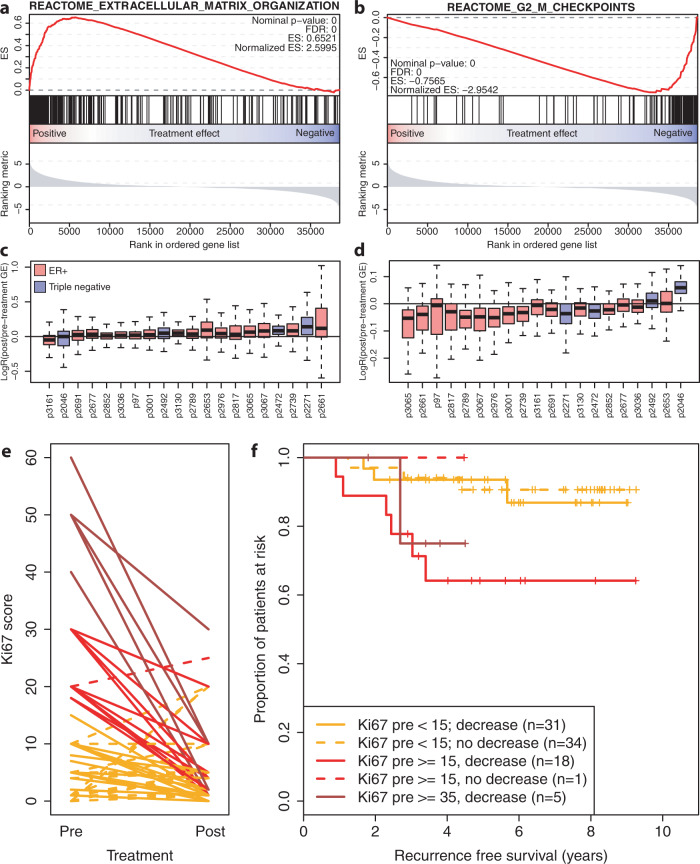
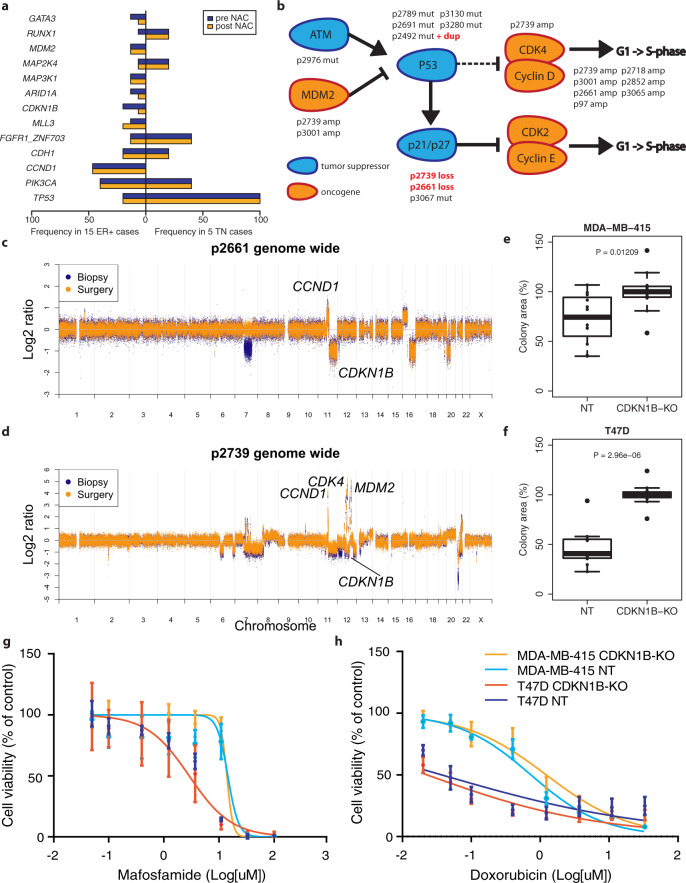
When locally advanced breast cancer is treated with neoadjuvant chemotherapy, the recurrence risk is significantly higher if no complete pathologic response is achieved. Identification of the underlying resistance mechanisms is essential to select treatments with maximal efficacy and minimal toxicity. Here we employed gene expression profiles derived from 317 HER2-negative treatment-naïve breast cancer biopsies of patients who underwent neoadjuvant chemotherapy, deep whole exome, and RNA-sequencing profiles of 22 matched pre- and post-treatment tumors, and treatment outcome data to identify biomarkers of response and resistance mechanisms. Molecular profiling of treatment-naïve breast cancer samples revealed that expression levels of proliferation, immune response, and extracellular matrix (ECM) organization combined predict response to chemotherapy. Triple negative patients with high proliferation, high immune response and low ECM expression had a significantly better treatment response and survival benefit (HR 0.29, 95% CI 0.10-0.85; p = 0.02), while in ER+ patients the opposite was seen (HR 4.73, 95% CI 1.51-14.8; p = 0.008). The characterization of paired pre-and post-treatment samples revealed that aberrations of known cancer genes were either only present in the pre-treatment sample (CDKN1B) or in the post-treatment sample (TP53, APC, CTNNB1). Proliferation-associated genes were frequently down-regulated in post-treatment ER+ tumors, but not in triple negative tumors. Genes involved in ECM were upregulated in the majority of post-chemotherapy samples. Genomic and transcriptomic differences between pre- and post-chemotherapy samples are common and may reveal potential mechanisms of therapy resistance. Our results show a wide range of distinct, but related mechanisms, with a prominent role for proliferation- and ECM-related genes.
当局部晚期乳腺癌采用新辅助化疗治疗时,如果未达到完全病理缓解,复发风险会显著更高。识别潜在的耐药机制对于选择疗效最大化和毒性最小化的治疗方法至关重要。在此,我们利用来自317例接受新辅助化疗的HER2阴性初治乳腺癌患者活检样本的基因表达谱、22对匹配的治疗前和治疗后肿瘤的深度全外显子组及RNA测序图谱,以及治疗结果数据来识别反应生物标志物和耐药机制。初治乳腺癌样本的分子分析表明,增殖、免疫反应和细胞外基质(ECM)组织的表达水平综合起来可预测对化疗的反应。具有高增殖、高免疫反应和低ECM表达的三阴性患者有显著更好的治疗反应和生存获益(HR 0.29,95%CI 0.10 - 0.85;p = 0.02),而在雌激素受体阳性(ER+)患者中则观察到相反情况(HR 4.73,95%CI 1.51 - 14.8;p = 0.008)。配对的治疗前和治疗后样本的特征分析表明,已知癌症基因的畸变要么仅存在于治疗前样本中(CDKN1B),要么存在于治疗后样本中(TP53、APC、CTNNB1)。增殖相关基因在治疗后ER+肿瘤中经常下调,但在三阴性肿瘤中并非如此。参与ECM的基因在大多数化疗后样本中上调。化疗前和化疗后样本之间的基因组和转录组差异很常见,可能揭示治疗耐药的潜在机制。我们的结果显示了广泛的不同但相关的机制,增殖和ECM相关基因起突出作用。