ICMR-National Institute of Malaria Research, Sector 8, Dwarka, New Delhi, India.
Department of Microbiology, Ahmadu Bello University, Samaru Zaria, Kaduna, Nigeria.
Sci Rep. 2022 May 6;12(1):7484. doi: 10.1038/s41598-022-11632-8.
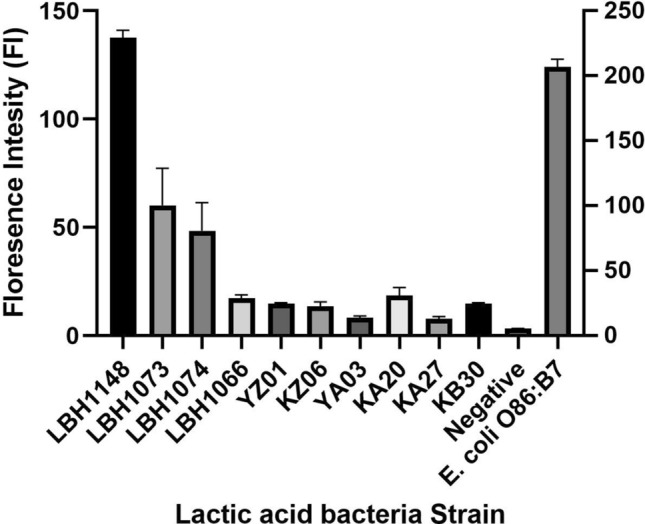
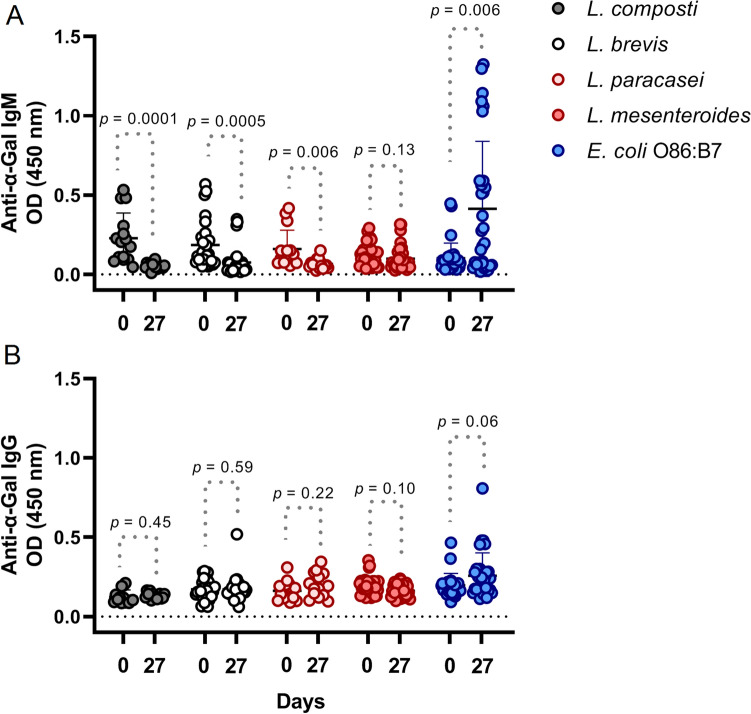
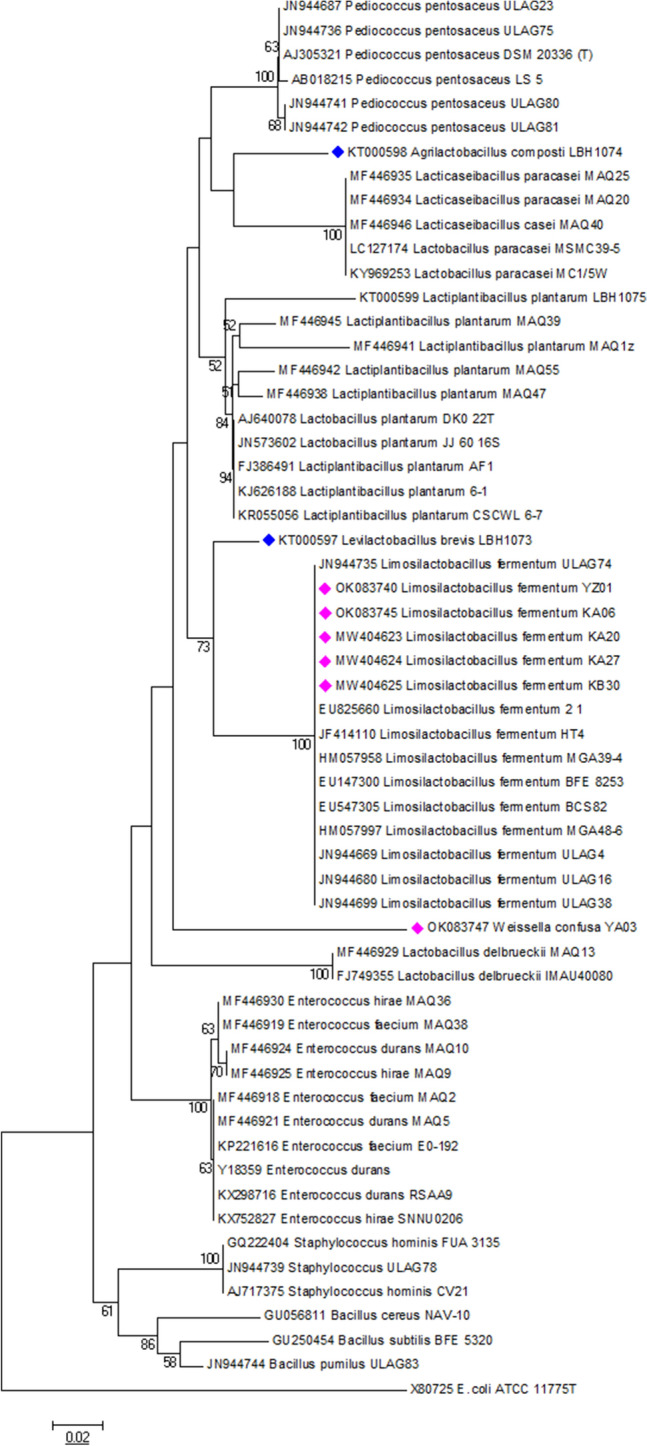
The possibility of exploiting the human immune response to glycan α-Gal for the control of multiple infectious diseases has been the objective of recent investigations. In this field of research, the strain of Escherichia coli O86:B7 has been at the forefront, but this Gram-negative microorganism presents a safety concern and therefore cannot be considered as a probiotic. To address this challenge, this study explored the identification of novel lactic acid bacteria with a safe history of use, producing α-Gal and having probiotic potential. The lactic acid bacteria were isolated from different traditionally fermented foods (kununn-zaki, kindirmo, and pulque) and were screened for the production of α-Gal and some specific probiotic potential indicators. The results showed that Ten (10) out of forty (40) [25%] of the tested lactic acid bacteria (LAB) produced α-Gal and were identified as Limosilactobacillus fermentum, Levilactobacillus brevis, Agrilactobacillus composti, Lacticaseibacillus paracasei, Leuconostoc mesenteroides and Weissella confusa. Four (4) LAB strains with highest levels of α-Gal were further selected for in vivo study using a mouse model (α1,3GT KO mice) to elucidate the immunological response to α-Gal. The level of anti-α-Gal IgG observed were not significant while the level of anti-α-Gal IgM was lower in comparison to the level elicited by E. coli O86:B7. We concluded that the lactic acid bacteria in this study producing α-Gal have potential probiotic capacity and can be further explored in α-Gal-focused research for both the prevention and treatment of various infectious diseases and probiotic development.
利用人类对糖蛋白 α-Gal 的免疫反应来控制多种传染病的可能性一直是最近研究的目标。在这个研究领域,大肠杆菌 O86:B7 菌株一直处于前沿,但这种革兰氏阴性微生物存在安全隐患,因此不能被视为益生菌。为了解决这一挑战,本研究探索了鉴定具有安全使用历史、产生 α-Gal 并具有益生菌潜力的新型乳酸菌。从不同的传统发酵食品(kununn-zaki、kindirmo 和 pulque)中分离出乳酸菌,并对其产生 α-Gal 和一些特定益生菌潜力指标进行筛选。结果表明,在 40 株测试的乳酸菌(LAB)中,有 10 株(25%)产生了 α-Gal,并被鉴定为发酵乳杆菌、短乳杆菌、复合乳杆菌、副干酪乳杆菌、肠膜明串珠菌和魏斯氏菌。进一步从 4 株具有最高水平 α-Gal 的 LAB 菌株中选择了 4 株进行体内研究,使用α1,3GT KO 小鼠模型来阐明对 α-Gal 的免疫反应。观察到的抗-α-Gal IgG 水平没有显著差异,而与大肠杆菌 O86:B7 相比,抗-α-Gal IgM 水平较低。我们得出结论,本研究中产生 α-Gal 的乳酸菌具有潜在的益生菌能力,可以进一步探索在以 α-Gal 为重点的研究中,用于预防和治疗各种传染病和益生菌的开发。