State Key Laboratory of Agricultural Microbiology, Key Laboratory for the Development of Veterinary Products, Ministry of Agriculture, College of Veterinary Medicine, Huazhong Agricultural University, Wuhan, 430070, Hubei, China.
College of Animal Science and Technology, Guangxi University, Nanning, 530004, Guangxi, China.
Parasit Vectors. 2022 May 7;15(1):159. doi: 10.1186/s13071-022-05274-y.
Ivermectin (IVM) is one of the most important and widely used anthelmintics in veterinary medicine. However, its efficacy is increasingly compromised by widespread resistance, and the exact mechanism of IVM resistance remains unclear for most parasitic nematodes, including Haemonchus contortus, a blood-sucking parasitic nematode of small ruminants.
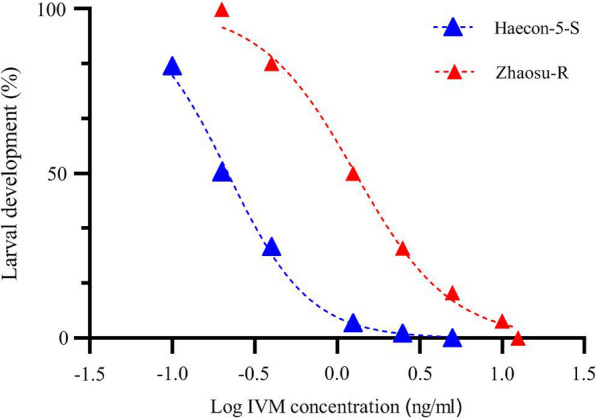
In this study, an H. contortus IVM-resistant strain from Zhaosu, Xinjiang, China, was isolated and assessed by the control test, faecal egg count reduction test (FECRT) and the larval development assay (LDA). Subsequently, comparative analyses on the transcriptomics of IVM-susceptible and IVM-resistant adult worms of this parasite were carried out using RNA sequencing (RNA-seq) and bioinformatics.
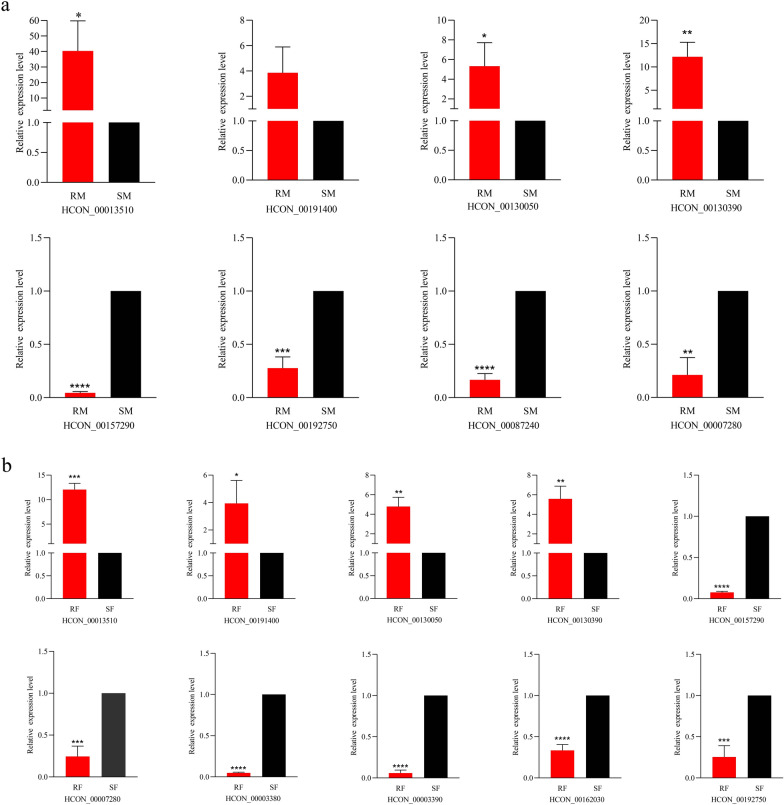
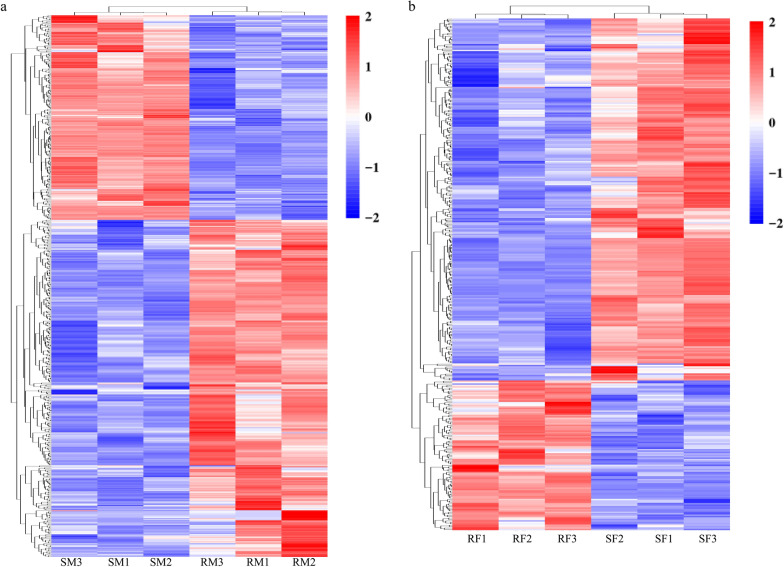
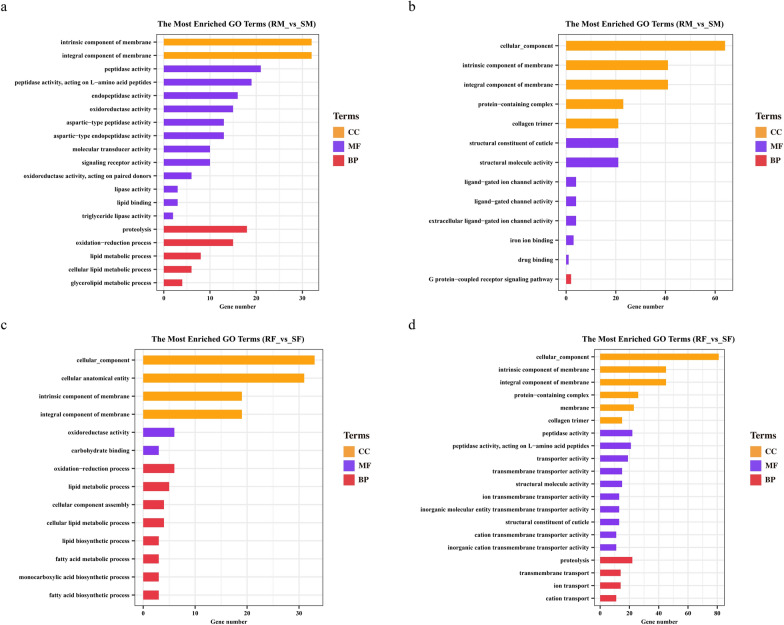
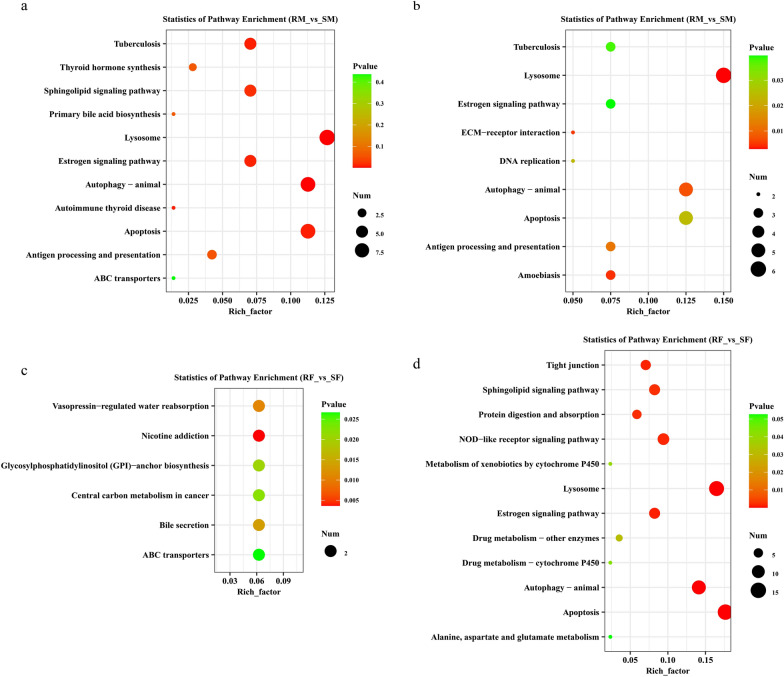
In total, 543 (416 known, 127 novel) and 359 (309 known, 50 novel) differentially expressed genes (DEGs) were identified in male and female adult worms of the resistant strain compared with those of the susceptible strain, respectively. In addition to several previously known candidate genes which were supposed to be associated with IVM resistance and whose functions were involved in receptor activity, transport, and detoxification, we found some new potential target genes, including those related to lipid metabolism, structural constituent of cuticle, and important pathways such as antigen processing and presentation, lysosome, autophagy, apoptosis, and NOD1-like receptor signalling pathways. Finally, the results of quantitative real-time polymerase chain reaction confirmed that the transcriptional profiles of selected DEGs (male: 8 genes, female: 10 genes) were consistent with those obtained by the RNA-seq.
Our results indicate that IVM has multiple effects, including both neuromuscular and non-neuromuscular targets, and provide valuable information for further studies on the IVM resistance mechanism in H. contortus.
伊维菌素(IVM)是兽医领域应用最广泛的驱虫药之一。然而,由于广泛的耐药性,其疗效越来越受到影响,对于大多数寄生线虫,包括反刍动物的吸血寄生线虫捻转血矛线虫,IVM 耐药的确切机制仍不清楚。
本研究从中国新疆昭苏分离并评估了捻转血矛线虫 IVM 耐药株,采用对照试验、粪便卵计数减少试验(FECRT)和幼虫发育测定(LDA)。随后,使用 RNA 测序(RNA-seq)和生物信息学对该寄生虫 IVM 敏感和 IVM 耐药成虫的转录组进行了比较分析。
与敏感株相比,耐药株雄虫和雌虫成虫分别鉴定出 543(416 个已知、127 个新)和 359(309 个已知、50 个新)个差异表达基因(DEGs)。除了几个先前认为与 IVM 耐药相关且功能涉及受体活性、转运和解毒的候选基因外,我们还发现了一些新的潜在靶基因,包括与脂质代谢、表皮结构组成以及抗原加工和呈递、溶酶体、自噬、凋亡和 NOD1 样受体信号通路等重要途径相关的基因。最后,定量实时聚合酶链反应的结果证实了所选 DEGs(雄虫:8 个基因,雌虫:10 个基因)的转录谱与 RNA-seq 结果一致。
我们的研究结果表明,IVM 具有多种作用,包括神经肌肉和非神经肌肉靶标,为进一步研究捻转血矛线虫 IVM 耐药机制提供了有价值的信息。