Federal Centre of Neurosurgery, Tyumen, Russia.
Рeoples' Friendship University of Russia (RUDN University), 6 Miklukho-Maklaya Street, Moscow, 117198, Russian Federation.
Curr Neuropharmacol. 2023;21(5):1065-1080. doi: 10.2174/1570159X20666220507021445.
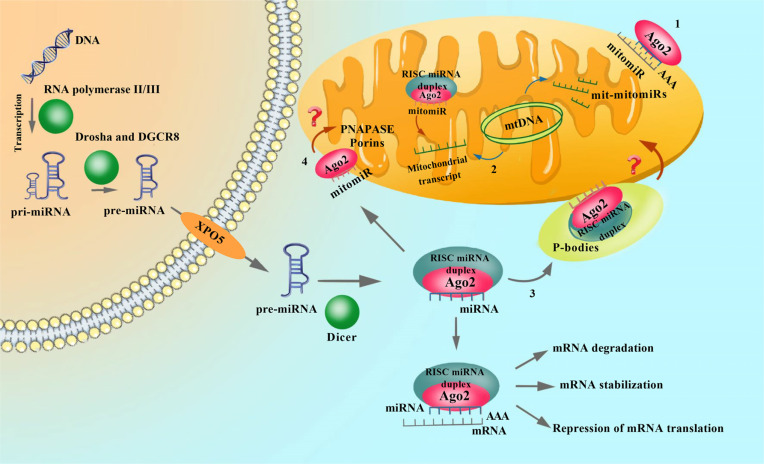
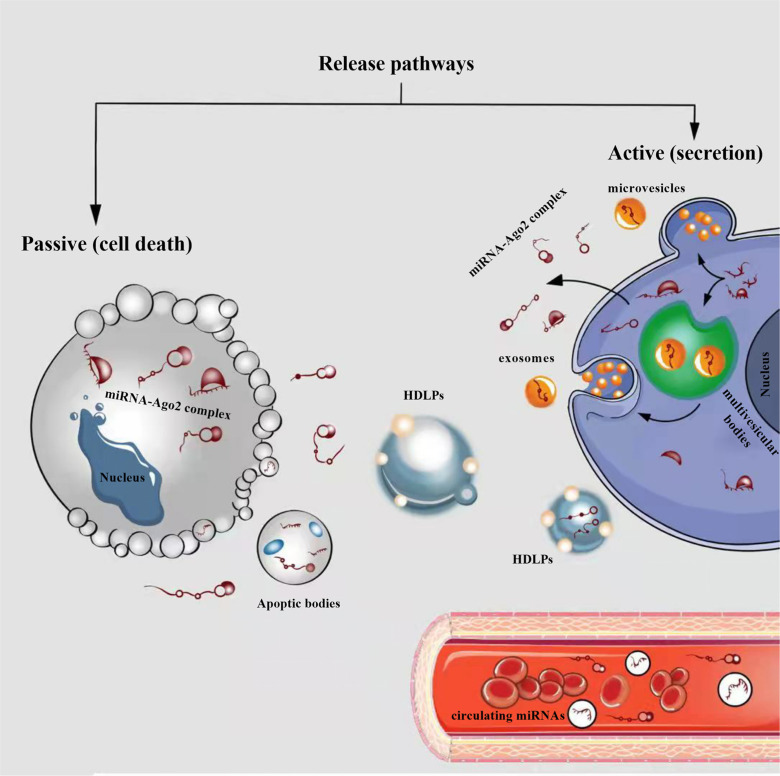
Non-traumatic intracerebral hemorrhage (ICH) is the most common type of hemorrhagic stroke, most often occurring between the ages of 45 and 60. Arterial hypertension (AH) is most often the cause of ICH, followed by atherosclerosis, blood diseases, inflammatory changes in cerebral vessels, intoxication and vitamin deficiencies. Cerebral hemorrhage can occur by diapedesis or as a result of a ruptured vessel. AH is difficult to treat, requires surgery and can lead to disability or death. One of the important directions in the study of the pathogenesis of ICH is mitochondrial dysfunction and its regulation. The key role of mitochondrial dysfunction in AH and atherosclerosis, as well as in the development of brain damage after hemorrhage, has been acknowledged. MicroRNAs (miRNAs) are a class of non-coding RNAs (about 18-22 nucleotides) that regulate a variety of biological processes including cell differentiation, proliferation, apoptosis, etc., primarily through gene repression. There is growing evidence to support dysregulated miRNAs in various cardiovascular diseases, including ICH. Further, the realization of miRNAs within mitochondrial compartment has challenged the traditional knowledge of signaling pathways involved in the regulatory network of cardiovascular diseases. However, the role of miRNAs in mitochondrial dysfunction for ICH is still under-appreciated, with comparatively much lesser studies and investigations reported, than those in other cardiovascular diseases. In this review, we summarize the up-to-date findings on the published role miRNAs in mitochondrial function for ICH, and the potential use of miRNAs in clinical settings, such as potential therapeutic targets and non-invasive diagnostic/prognostic biomarker tools.
非创伤性脑内出血(ICH)是最常见的出血性中风类型,最常发生在 45 岁至 60 岁之间。动脉高血压(AH)是 ICH 的最常见原因,其次是动脉粥样硬化、血液疾病、脑血管炎症变化、中毒和维生素缺乏。脑出血可以通过渗透或由于血管破裂而发生。AH 难以治疗,需要手术,并可能导致残疾或死亡。ICH 发病机制研究的一个重要方向是线粒体功能障碍及其调节。线粒体功能障碍在 AH 和动脉粥样硬化以及出血后脑损伤的发展中的关键作用已得到认可。微小 RNA(miRNA)是一类非编码 RNA(约 18-22 个核苷酸),主要通过基因抑制来调节多种生物学过程,包括细胞分化、增殖、凋亡等。越来越多的证据支持各种心血管疾病中失调的 miRNA,包括 ICH。此外,miRNA 在线粒体区室中的实现挑战了参与心血管疾病调控网络的信号通路的传统知识。然而,miRNA 在 ICH 中线粒体功能障碍中的作用仍未得到充分认识,与其他心血管疾病相比,报道的研究和调查相对较少。在这篇综述中,我们总结了发表的 miRNA 在 ICH 中线粒体功能中的最新发现,以及 miRNA 在临床中的潜在用途,如潜在的治疗靶点和非侵入性诊断/预后生物标志物工具。