Cellzome GmbH, GlaxoSmithKline (GSK), Heidelberg, Germany.
Cellzome GmbH, GlaxoSmithKline (GSK), Heidelberg, Germany.
Mol Cell Proteomics. 2022 Jun;21(6):100241. doi: 10.1016/j.mcpro.2022.100241. Epub 2022 May 5.
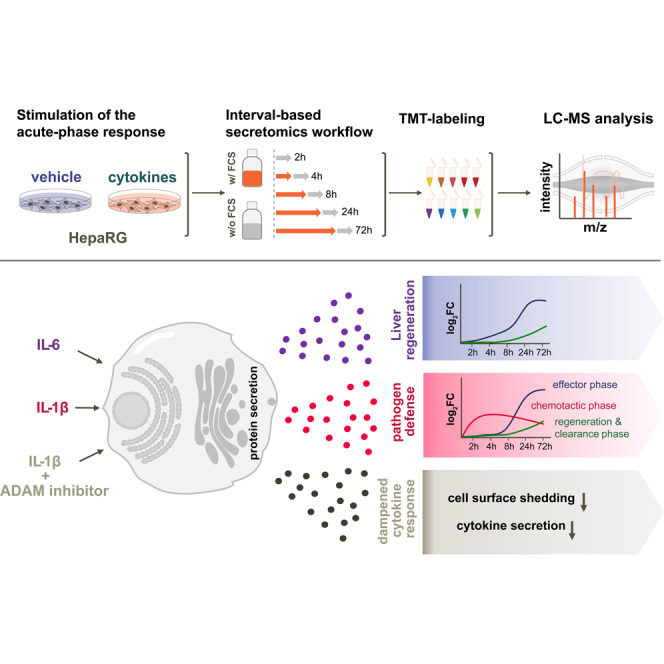
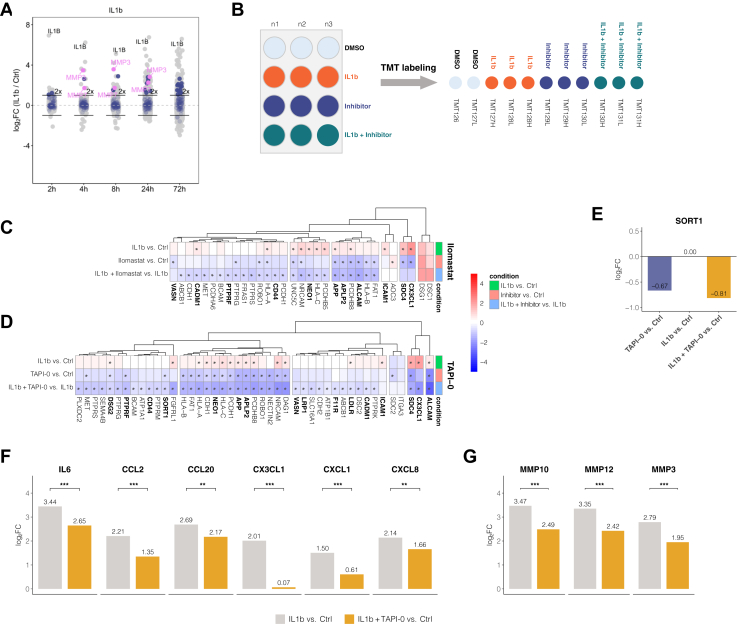
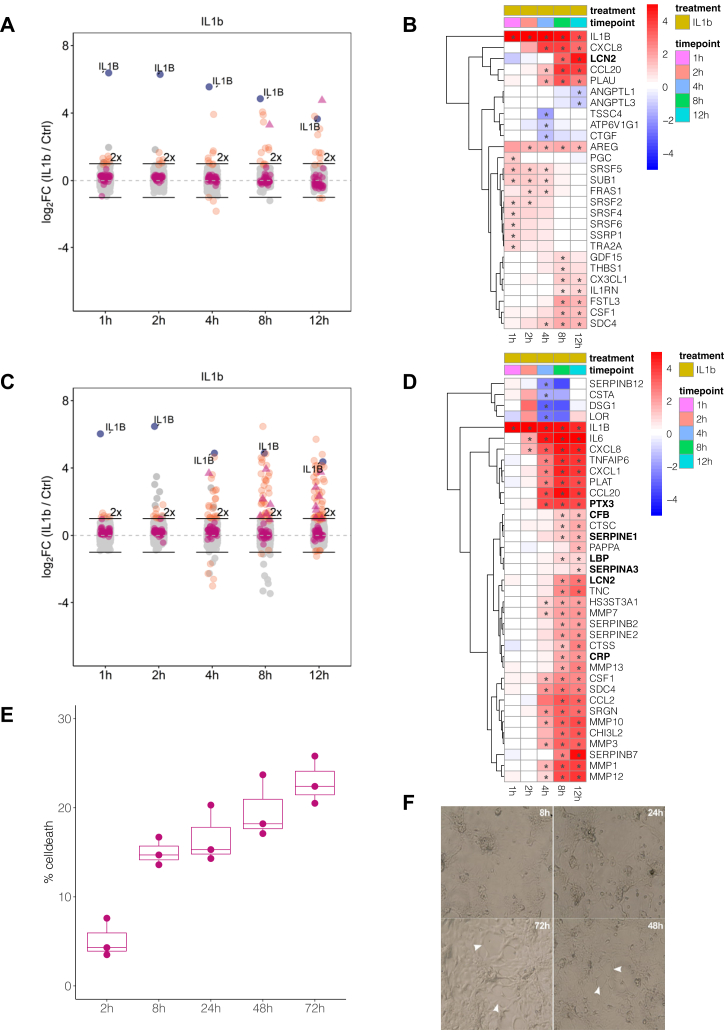
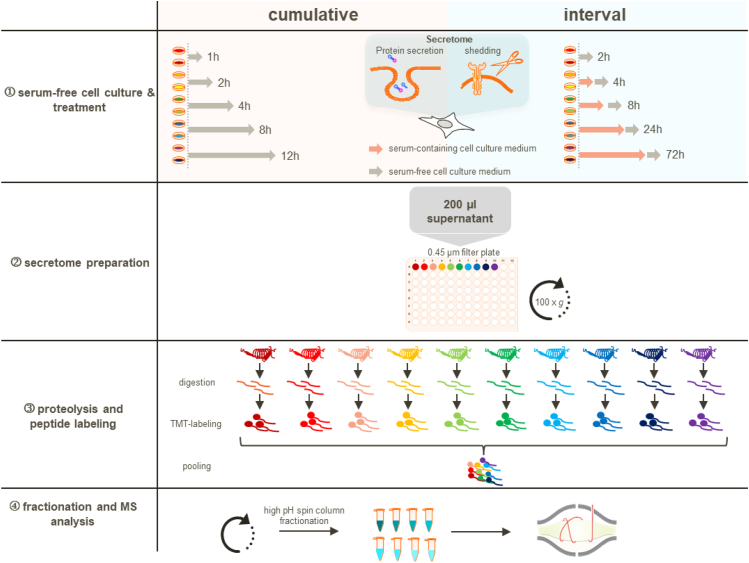
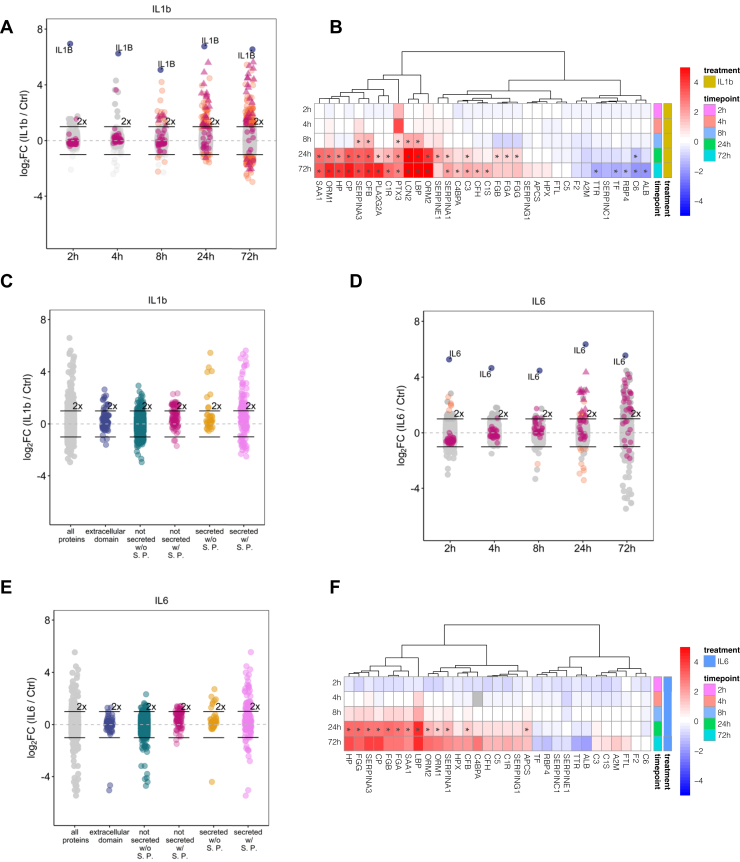
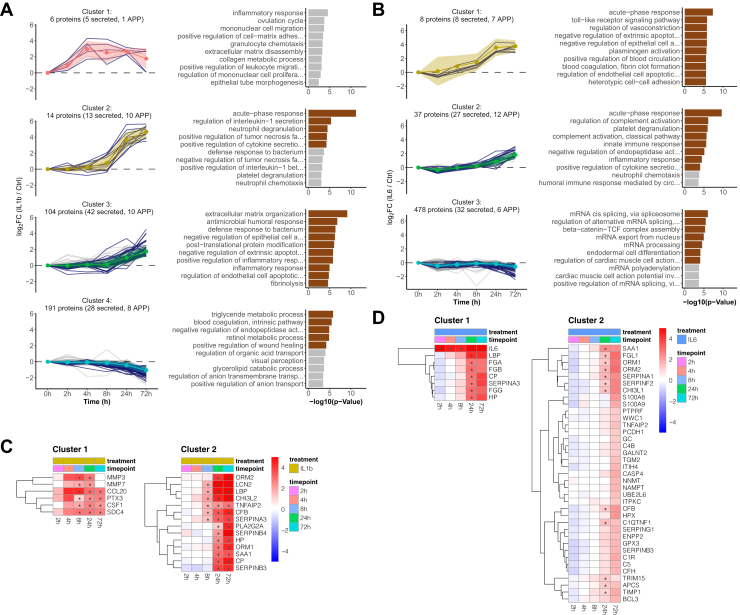
Mass spectrometry-based secretomics approaches frequently utilize serum-free culture conditions to circumvent serum-induced interference and to increase analytical depth. However, this can negatively affect a wide range of cellular functions and cell viability. These effects become particularly apparent when investigating transcriptionally regulated secretion events and feedback-loops in response to perturbations that require 48 h or more to fully manifest. We present an "interval-based" secretomics workflow, which determines protein secretion rates in short serum-free time windows. Relative quantification using tandem mass tags enables precise monitoring of time-dependent changes. We applied this approach to determine temporal profiles of protein secretion in the hepatocyte model cell lines HepG2 and HepaRG after stimulation of the acute-phase response (APR) by the cytokines IL1b and IL6. While the popular hepatocarcinoma cell line HepG2 showed an incomplete APR, secretion patterns derived from differentiated HepaRG cells recapitulated the expected APR more comprehensively. For several APR response proteins, substantial secretion was only observed after 72 h, a time window at which cell fitness is substantially impaired under serum-free cell culture conditions. The interval-based secretomics approach enabled the first comprehensive analysis of time-dependent secretion of liver cell models in response to these proinflammatory cytokines. The extended time range facilitated the observation of distinct chronological phases and cytokine-dependent secretion phenotypes of the APR. IL1b directed the APR toward pathogen defense over three distinct phases-chemotaxis, effector, clearance-while IL6 directed the APR toward regeneration. Protein shedding on the cell surface was pronounced upon IL1b stimulation, and small molecule inhibition of ADAM and matrix metalloproteases identified induced as well as constitutive shedding events. Inhibition of ADAM proteases with TAPI-0 resulted in reduced shedding of the sorting receptor SORT1, and an attenuated cytokine response suggesting a direct link between cell surface shedding and cytokine secretion rates.
基于质谱的分泌组学方法经常使用无血清培养条件来避免血清引起的干扰,并增加分析深度。然而,这可能会对广泛的细胞功能和细胞活力产生负面影响。当研究转录调节的分泌事件和反馈回路时,这些影响变得尤为明显,因为这些事件需要 48 小时或更长时间才能完全显现。我们提出了一种“基于间隔的”分泌组学工作流程,该流程可在短时间的无血清间隔内确定蛋白质分泌率。使用串联质量标签进行相对定量可精确监测随时间变化的情况。我们应用此方法来确定在细胞因子 IL1b 和 IL6 刺激急性相反应 (APR) 后,肝细胞模型细胞系 HepG2 和 HepaRG 中的蛋白质分泌的时间分布。虽然流行的肝癌细胞系 HepG2 表现出不完全的 APR,但源自分化的 HepaRG 细胞的分泌模式更全面地再现了预期的 APR。对于几种 APR 反应蛋白,只有在 72 小时后才观察到大量分泌,而在无血清细胞培养条件下,这个时间窗口细胞活力会受到严重损害。基于间隔的分泌组学方法能够首次全面分析肝模型细胞对这些促炎细胞因子的时间依赖性分泌。延长的时间范围有助于观察 APR 的不同时间阶段和细胞因子依赖的分泌表型。IL1b 引导 APR 通过三个不同的阶段——趋化、效应、清除——进行病原体防御,而 IL6 则引导 APR 进行再生。IL1b 刺激后细胞表面的蛋白脱落明显,ADAM 和基质金属蛋白酶的小分子抑制鉴定出诱导和组成性脱落事件。用 TAPI-0 抑制 ADAM 蛋白酶导致分选受体 SORT1 的脱落减少,细胞因子反应减弱,表明细胞表面脱落与细胞因子分泌率之间存在直接联系。