Division of Pharmaceutics and Pharmacology, Ohio State University, 412 Riffe Building, 12th Ave, Columbus, OH, 43210, USA.
Department of Neuroscience, Ohio State University, Graves Hall, 333 W. 10th Ave, Columbus, OH, 43210, USA.
Mol Neurodegener. 2022 May 7;17(1):35. doi: 10.1186/s13024-022-00537-9.
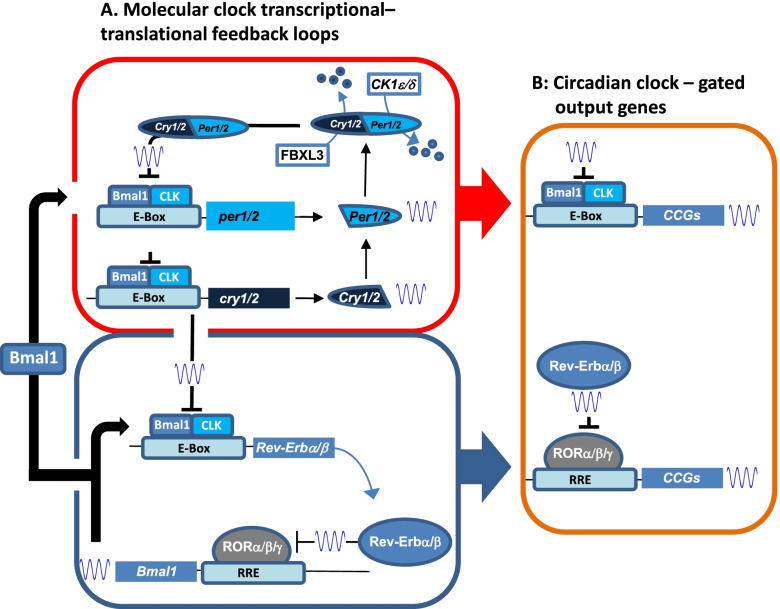
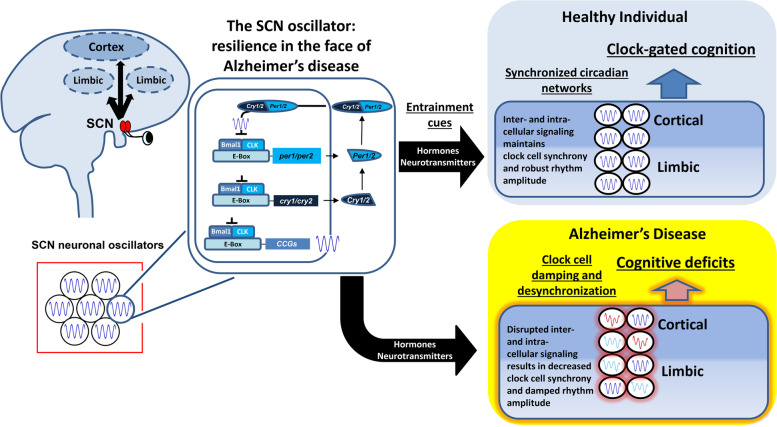
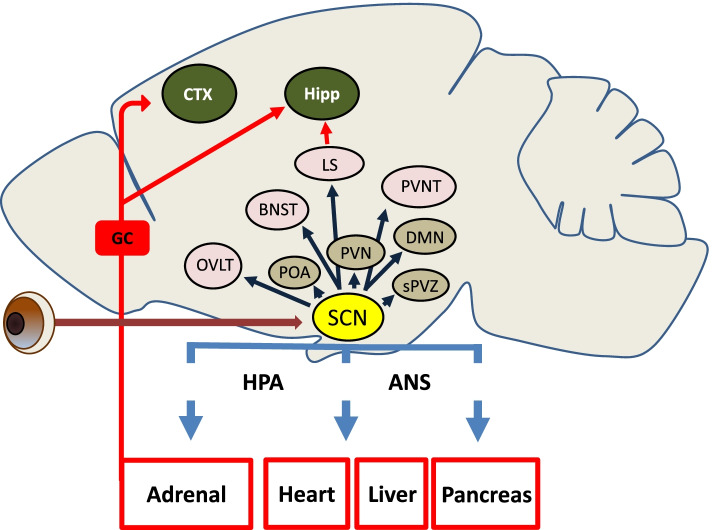
Modulation of basic biochemical and physiological processes by the circadian timing system is now recognized as a fundamental feature of all mammalian organ systems. Within the central nervous system, these clock-modulating effects are reflected in some of the most complex behavioral states including learning, memory, and mood. How the clock shapes these behavioral processes is only now beginning to be realized. In this review we describe recent findings regarding the complex set of cellular signaling events, including kinase pathways, gene networks, and synaptic circuits that are under the influence of the clock timing system and how this, in turn, shapes cognitive capacity over the circadian cycle. Further, we discuss the functional roles of the master circadian clock located in the suprachiasmatic nucleus, and peripheral oscillator populations within cortical and limbic circuits, in the gating of synaptic plasticity and memory over the circadian cycle. These findings are then used as the basis to discuss the connection between clock dysregulation and cognitive impairments resulting from Alzheimer's disease (AD). In addition, we discuss the conceptually novel idea that in AD, there is a selective disruption of circadian timing within cortical and limbic circuits, and that it is the disruption/desynchronization of these regions from the phase-entraining effects of the SCN that underlies aspects of the early- and mid-stage cognitive deficits in AD. Further, we discuss the prospect that the disruption of circadian timing in AD could produce a self-reinforcing feedback loop, where disruption of timing accelerates AD pathogenesis (e.g., amyloid deposition, oxidative stress and cell death) that in turn leads to a further disruption of the circadian timing system. Lastly, we address potential therapeutic approaches that could be used to strengthen cellular timing networks and, in turn, how these approaches could be used to improve cognitive capacity in Alzheimer's patients.
目前,人们已经认识到,生物钟计时系统对基本生化和生理过程的调节是所有哺乳动物器官系统的基本特征。在中枢神经系统中,这些时钟调节作用反映在一些最复杂的行为状态中,包括学习、记忆和情绪。时钟如何塑造这些行为过程,现在才刚刚开始被认识到。在这篇综述中,我们描述了最近关于一系列复杂的细胞信号事件的发现,包括激酶途径、基因网络和受时钟计时系统影响的突触回路,以及这反过来如何在昼夜节律周期内塑造认知能力。此外,我们还讨论了位于视交叉上核中的主生物钟以及皮质和边缘回路中的外周振荡器群体在昼夜节律周期内调节突触可塑性和记忆的功能作用。然后,我们利用这些发现来讨论时钟失调与阿尔茨海默病(AD)导致的认知障碍之间的联系。此外,我们还讨论了一个概念性的新观点,即在 AD 中,皮质和边缘回路中的生物钟存在选择性破坏,正是这些区域与 SCN 的相位同步效应的破坏/失同步,导致了 AD 早期和中期认知缺陷的某些方面。此外,我们还讨论了 AD 中生物钟破坏可能产生自我强化反馈循环的可能性,其中,破坏生物钟会加速 AD 发病机制(例如淀粉样蛋白沉积、氧化应激和细胞死亡),进而进一步破坏生物钟计时系统。最后,我们探讨了潜在的治疗方法,这些方法可以用来增强细胞计时网络,进而如何利用这些方法来提高阿尔茨海默病患者的认知能力。