Wiesen Eric, Dankoli Raymond, Musa Melton, Higgins Jeff, Forbi Joseph, Idris Jibrin, Waziri Ndadilnasiya, Ogunbodede Oladapo, Mohammed Kabiru, Bolu Omotayo, WaNganda Gatei, Adamu Usman, Pinsker Eve
US Centers for Disease Control and Prevention, Atlanta, USA.
World Health Organization, Maiduguri, Borno State, Nigeria.
Confl Health. 2022 May 7;16(1):20. doi: 10.1186/s13031-022-00452-2.
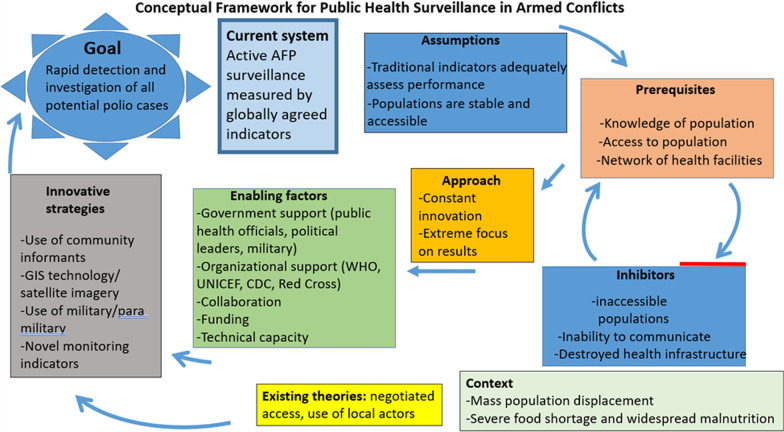
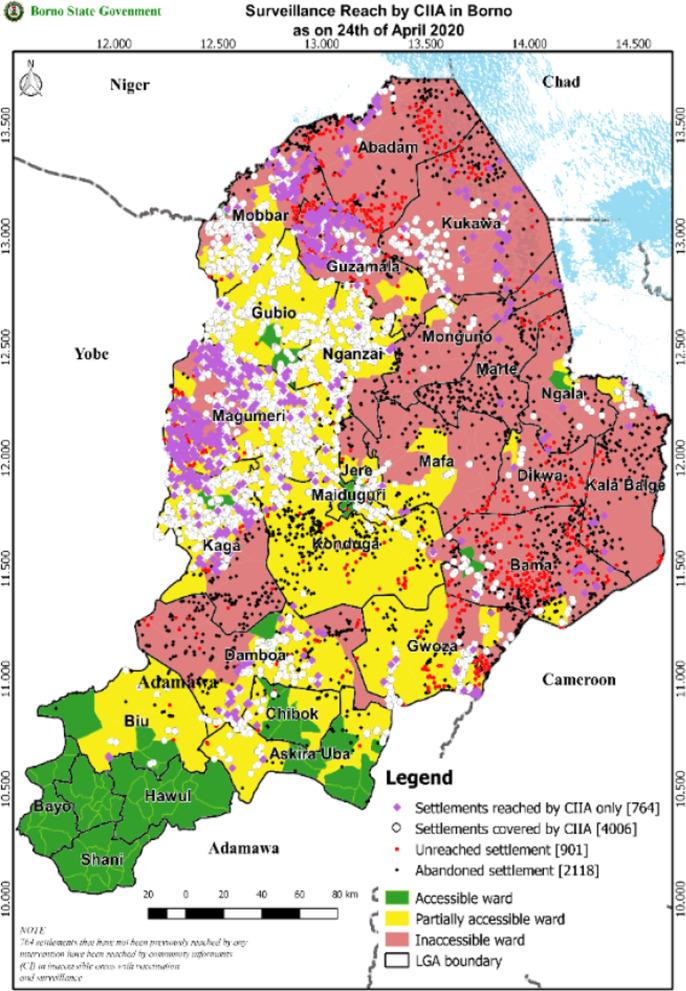
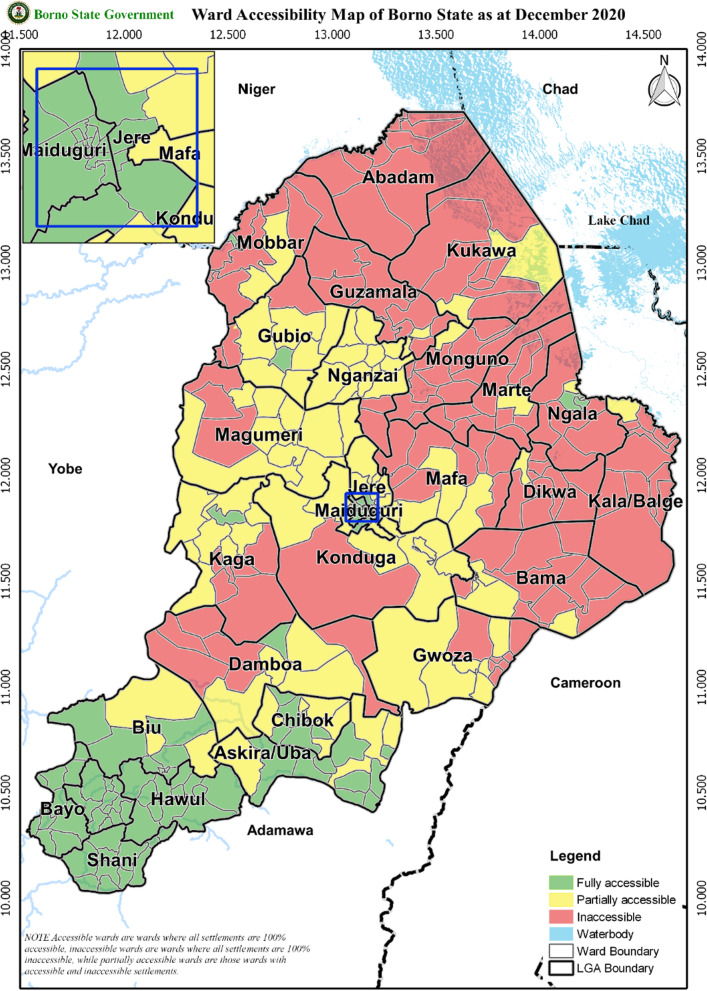
This study examined the impact of armed conflict on public health surveillance systems, the limitations of traditional surveillance in this context, and innovative strategies to overcome these limitations. A qualitative case study was conducted to examine the factors affecting the functioning of poliovirus surveillance in conflict-affected areas of Borno state, Nigeria using semi-structured interviews of a purposeful sample of participants. The main inhibitors of surveillance were inaccessibility, the destroyed health infrastructure, and the destroyed communication network. These three challenges created a situation in which the traditional polio surveillance system could not function. Three strategies to overcome these challenges were viewed by respondents as the most impactful. First, local community informants were recruited to conduct surveillance for acute flaccid paralysis in children in the inaccessible areas. Second, the informants engaged in local-level negotiation with the insurgency groups to bring children with paralysis to accessible areas for investigation and sample collection. Third, GIS technology was used to track the places reached for surveillance and vaccination and to estimate the size and location of the inaccessible population. A modified monitoring system tracked tailored indicators including the number of places reached for surveillance and the number of acute flaccid paralysis cases detected and investigated, and utilized GIS technology to map the reach of the program. The surveillance strategies used in Borno were successful in increasing surveillance sensitivity in an area of protracted conflict and inaccessibility. This approach and some of the specific strategies may be useful in other areas of armed conflict.
本研究考察了武装冲突对公共卫生监测系统的影响、传统监测在此背景下的局限性以及克服这些局限性的创新策略。采用定性案例研究方法,通过对有目的抽样的参与者进行半结构化访谈,考察影响尼日利亚博尔诺州受冲突影响地区脊髓灰质炎病毒监测运作的因素。监测的主要阻碍因素包括难以进入、卫生基础设施遭到破坏以及通信网络被摧毁。这三个挑战导致传统的脊髓灰质炎监测系统无法运行。受访者认为有三种策略对克服这些挑战最具影响力。第一,招募当地社区线人,对难以进入地区的儿童急性弛缓性麻痹进行监测。第二,线人与叛乱组织进行地方层面的谈判,将瘫痪儿童带到可进入地区进行调查和样本采集。第三,利用地理信息系统(GIS)技术追踪监测和疫苗接种所覆盖的地点,并估计难以进入地区的人口规模和位置。一个经过改进的监测系统追踪定制指标,包括监测所覆盖的地点数量以及检测和调查的急性弛缓性麻痹病例数量,并利用GIS技术绘制该项目的覆盖范围。博尔诺州采用的监测策略成功提高了在长期冲突和难以进入地区的监测敏感性。这种方法和一些具体策略可能在其他武装冲突地区有用。