Bolu Omotayo, Nnadi Chimeremma, Damisa Eunice, Braka Fiona, Siddique Anisur, Archer W Roodly, Bammeke Philip, Banda Richard, Higgins Jeffrey, Edukugo Aboyowa, Nganda Gatei Wa, Forbi Joseph C, Liu Hongmei, Gidado Saheed, Soghaier Mohammed, Franka Richard, Waziri Ndadilnasiya, Burns Cara C, Vertefeuille John, Wiesen Eric, Adamu Usman
MMWR Morb Mortal Wkly Rep. 2018 Mar 2;67(8):253-256. doi: 10.15585/mmwr.mm6708a5.
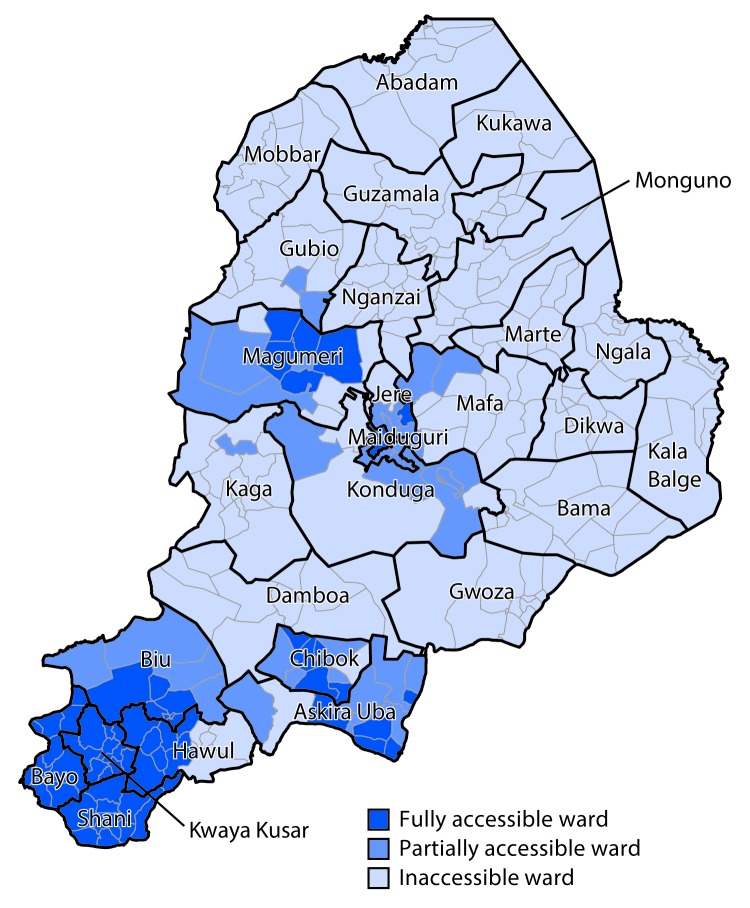
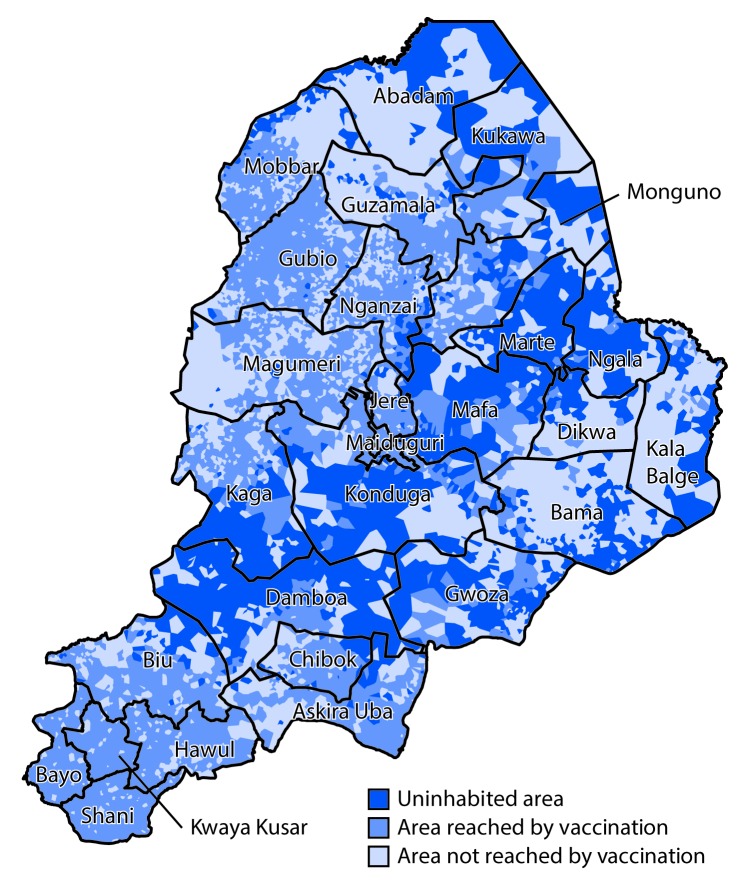
Nearly three decades after the World Health Assembly launched the Global Polio Eradication Initiative in 1988, four of the six World Health Organization (WHO) regions have been certified polio-free (1). Nigeria is one of three countries, including Pakistan and Afghanistan, where wild poliovirus (WPV) transmission has never been interrupted. In September 2015, after >1 year without any reported WPV cases, Nigeria was removed from WHO's list of countries with endemic WPV transmission (2); however, during August and September 2016, four type 1 WPV (WPV1) cases were reported from Borno State, a state in northeastern Nigeria experiencing a violent insurgency (3). The Nigerian government, in collaboration with partners, launched a large-scale coordinated response to the outbreak (3). This report describes progress in polio eradication activities in Nigeria during January-December 2017 and updates previous reports (3-5). No WPV cases have been reported in Nigeria since September 2016; the latest case had onset of paralysis on August 21, 2016 (3). However, polio surveillance has not been feasible in insurgent-controlled areas of Borno State. Implementation of new strategies has helped mitigate the challenges of reaching and vaccinating children living in security-compromised areas, and other strategies are planned. Despite these initiatives, however, approximately 130,000-210,000 (28%-45%) of the estimated 469,000 eligible children living in inaccessible areas in 2016 have not been vaccinated. Sustained efforts to optimize surveillance and improve immunization coverage, especially among children in inaccessible areas, are needed.
1988年世界卫生大会发起全球根除脊髓灰质炎行动近30年后,世界卫生组织(WHO)六个区域中的四个已被认证为无脊髓灰质炎(1)。尼日利亚是包括巴基斯坦和阿富汗在内的三个野生脊髓灰质炎病毒(WPV)传播从未中断的国家之一。2015年9月,在连续1年多未报告WPV病例后,尼日利亚从WHO的WPV地方性传播国家名单中被除名(2);然而,在2016年8月和9月期间,尼日利亚东北部一个正在经历暴力叛乱的博尔诺州报告了4例1型WPV(WPV1)病例(3)。尼日利亚政府与合作伙伴协作,针对此次疫情发起了大规模的协调应对行动(3)。本报告描述了2017年1月至12月尼日利亚根除脊髓灰质炎活动的进展,并更新了之前的报告(3 - 5)。自2016年9月以来,尼日利亚未报告WPV病例;最新病例于2016年8月21日出现麻痹症状(3)。然而,在博尔诺州叛乱分子控制的地区,脊髓灰质炎监测尚不可行。新策略的实施有助于缓解在安全受威胁地区接触儿童并为其接种疫苗的挑战,并且还计划了其他策略。然而,尽管有这些举措,2016年估计生活在难以进入地区的46.9万名符合条件的儿童中,仍有约13万 - 21万(28% - 45%)未接种疫苗。需要持续努力优化监测并提高免疫覆盖率,尤其是在难以进入地区的儿童中。