School of Basic Medical Science, Wenzhou Medical University, Wenzhou, China.
Department of Laboratory Medicine, The Sixth People Hospital of Wenzhou, Wenzhou, China.
J Clin Lab Anal. 2022 Jun;36(6):e24479. doi: 10.1002/jcla.24479. Epub 2022 May 9.
SARS-CoV-2 has spread worldwide causing more than 400 million people with virus infections since early 2020. Currently, the existing vaccines targeting the spike glycoprotein (S protein) of SARS-CoV-2 are facing great challenge from the infection of SARS-CoV-2 virus and its multiple S protein variants. Thus, we need to develop a new generation of vaccines to prevent infection of the SARS-CoV-2 variants. Compared with the S protein, the nucleocapsid protein (N protein) of SARS-CoV-2 is more conservative and less mutations, which also plays a vital role in viral infection. Therefore, the N protein may have the great potential for developing new vaccines.
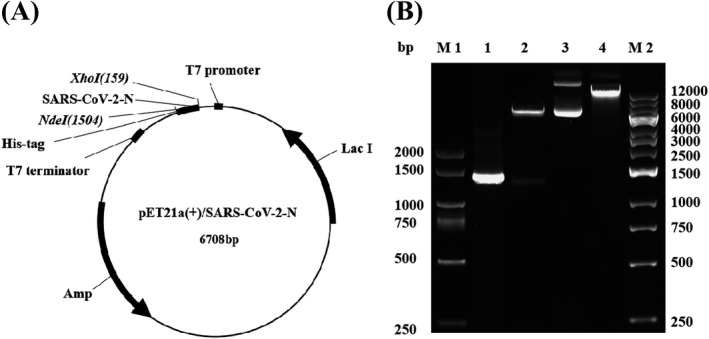
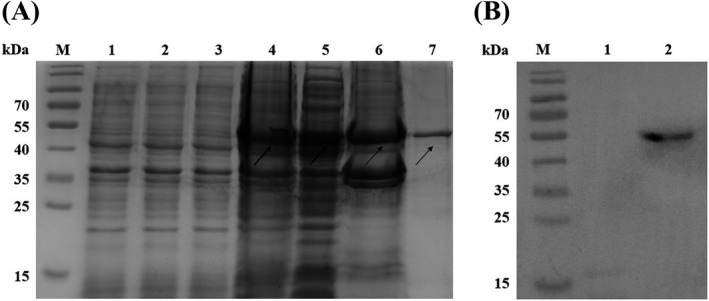
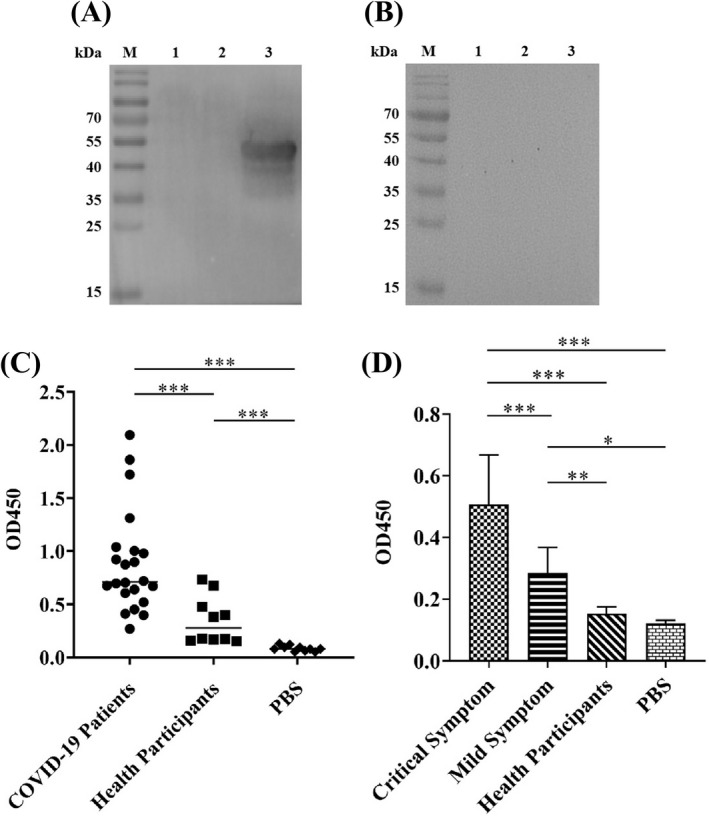
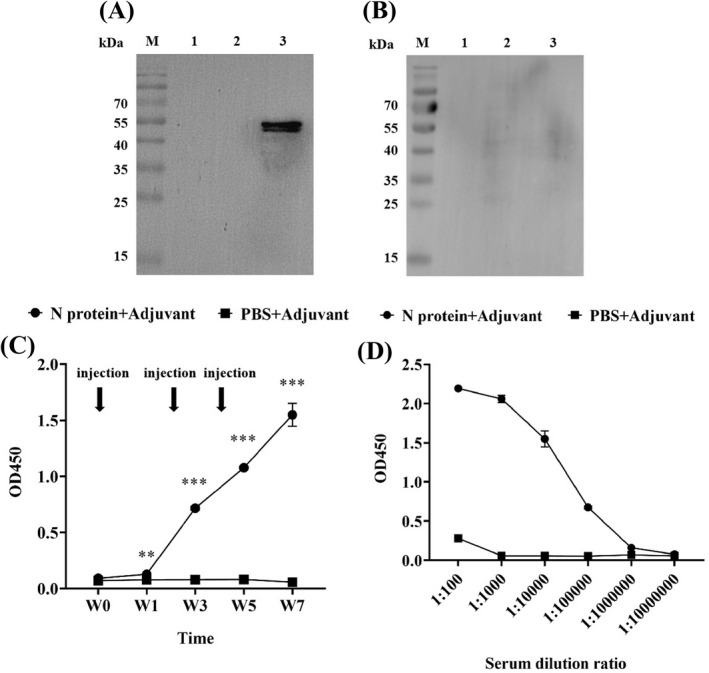
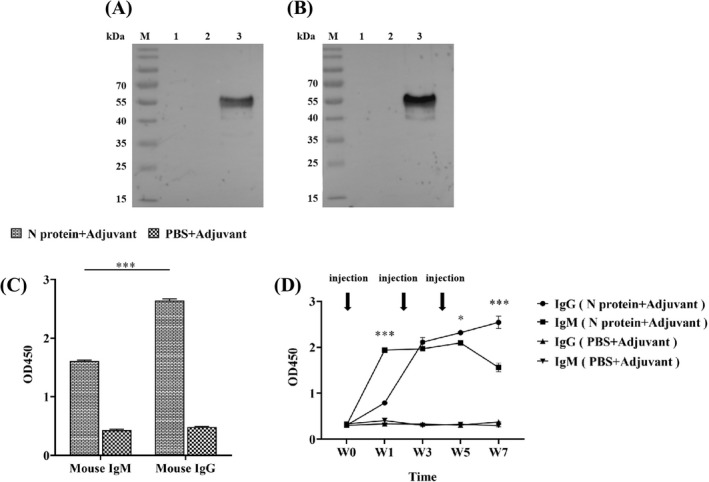
The N protein of SARS-CoV-2 was recombinantly expressed and purified in Escherichia coli. Western Blot and ELISA assays were used to demonstrate the immunoreactivity of the recombinant N protein with the serum of 22 COVID-19 patients. We investigated further the response of the specific serum antibodies and cytokine production in BALB/c mice immunized with recombinant N protein by Western Blot and ELISA.
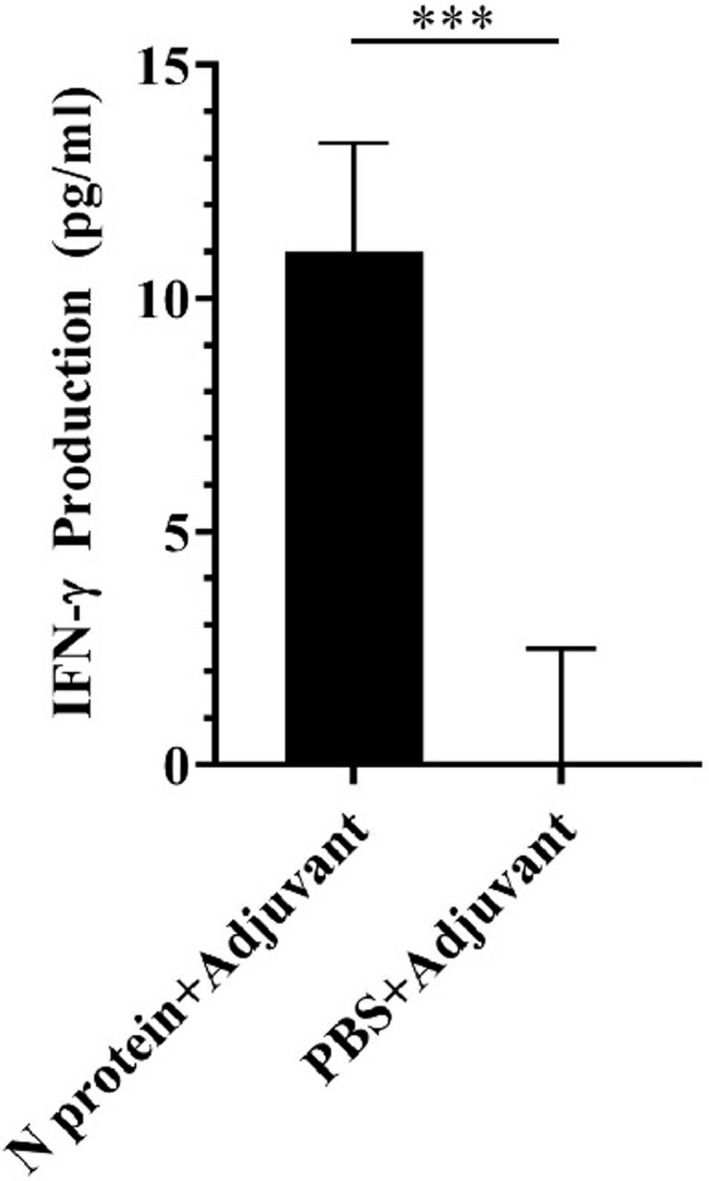
The N protein had good immunoreactivity and the production of IgG antibody against N protein in COVID-19 patients was tightly correlated with disease severity. Furthermore, the N protein was used to immunize BALB/c mice to have elicited strong immune responses. Not only high levels of IgG antibody, but also cytokine-IFN-γ were produced in the N protein-immunized mice. Importantly, the N protein immunization induced a high level of IgM antibody produced in the mice.
SARS-CoV-2 N protein shows a great big bundle of potentiality for developing a new generation of vaccines in fighting infection of SARS-CoV-2 and its variants.
自 2020 年初以来,SARS-CoV-2 已在全球范围内传播,导致超过 4 亿人感染该病毒。目前,针对 SARS-CoV-2 刺突糖蛋白(S 蛋白)的现有疫苗正面临来自 SARS-CoV-2 病毒及其多种 S 蛋白变异体感染的巨大挑战。因此,我们需要开发新一代疫苗来预防 SARS-CoV-2 变异体的感染。与 S 蛋白相比,SARS-CoV-2 的核衣壳蛋白(N 蛋白)更为保守,突变较少,在病毒感染中也起着至关重要的作用。因此,N 蛋白可能具有开发新型疫苗的巨大潜力。
在大肠杆菌中重组表达和纯化 SARS-CoV-2 的 N 蛋白。Western Blot 和 ELISA 检测用于证明重组 N 蛋白与 22 例 COVID-19 患者血清的免疫反应性。我们通过 Western Blot 和 ELISA 进一步研究了重组 N 蛋白免疫 BALB/c 小鼠后特异性血清抗体的反应和细胞因子的产生。
N 蛋白具有良好的免疫反应性,COVID-19 患者针对 N 蛋白的 IgG 抗体的产生与疾病严重程度密切相关。此外,N 蛋白用于免疫 BALB/c 小鼠可引起强烈的免疫反应。N 蛋白免疫小鼠不仅产生高水平的 IgG 抗体,还产生细胞因子 IFN-γ。重要的是,N 蛋白免疫诱导小鼠产生高水平的 IgM 抗体。
SARS-CoV-2 N 蛋白在开发新一代疫苗以对抗 SARS-CoV-2 及其变异体感染方面显示出巨大的潜力。