Department of Research, The National Hospital of the Faroe Islands, Tórshavn, Faroe Islands.
Center of Health Science, University of the Faroe Islands, Tórshavn, Faroe Islands.
Front Immunol. 2024 Jul 3;15:1418678. doi: 10.3389/fimmu.2024.1418678. eCollection 2024.
Knowledge about SARS-CoV-2 antibody dynamics in neonates and direct comparisons with maternal antibody responses are not well established. This study aimed to characterize and directly compare the maternal and infant antibody response in a national birth cohort from the Faroe Islands.
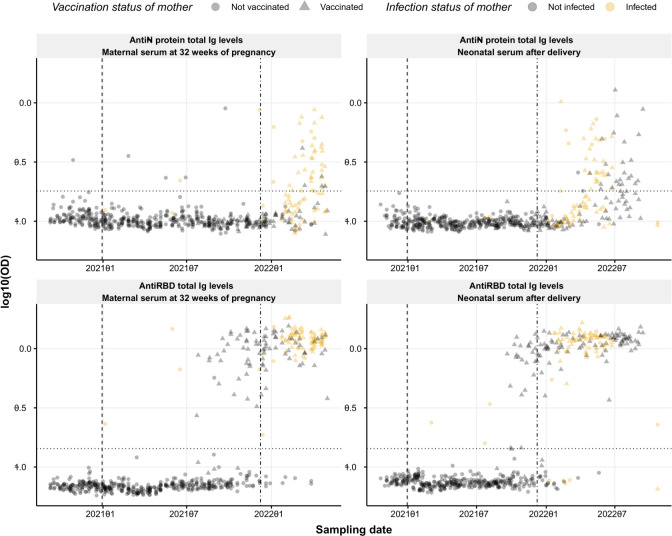
The levels of immunoglobulins (Ig) targeting the receptor binding domain (RBD) of the spike protein and the nucleocapsid protein (N protein) of SARS-CoV-2 were investigated in maternal blood and umbilical cord blood from neonates. The study included 537 neonates and 565 mothers from the Faroe Islands, and follow-up samples were collected 12 months after birth. Multiple linear regression models were used to assess associations of maternal parameters with maternal and neonatal Ig levels and pregnancy outcomes.
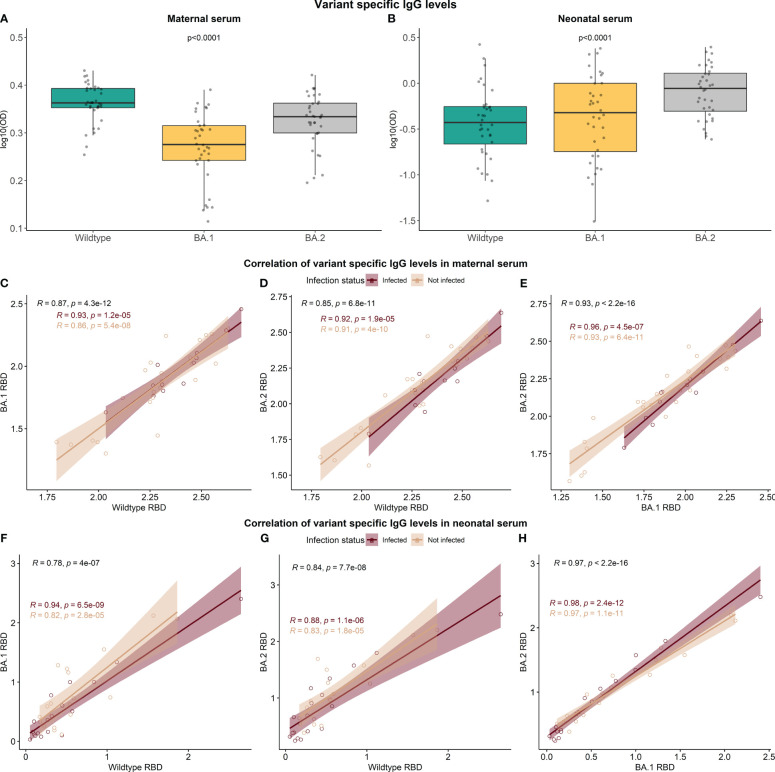
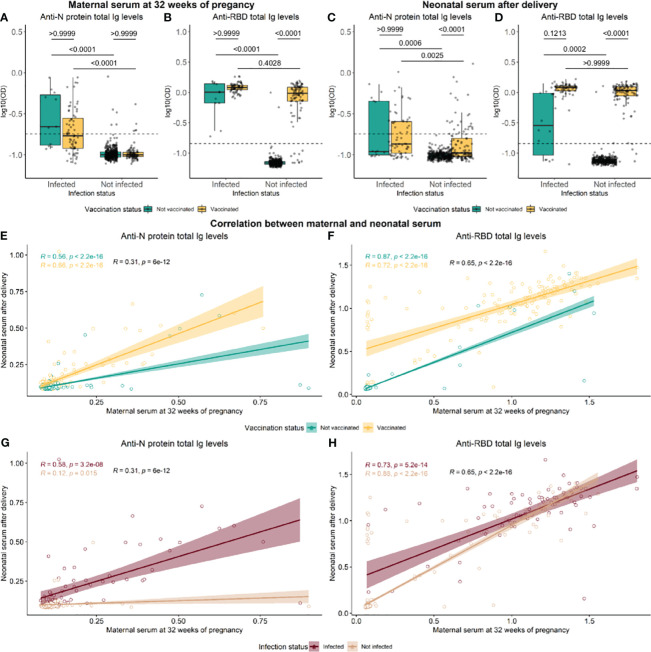
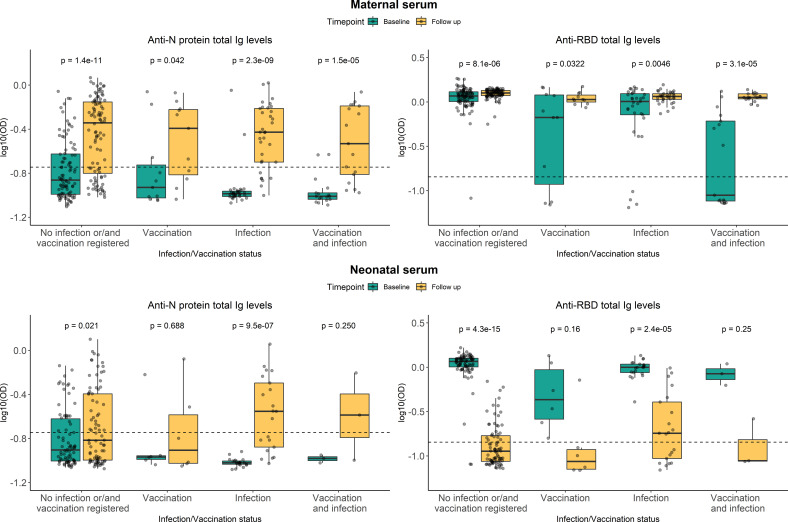
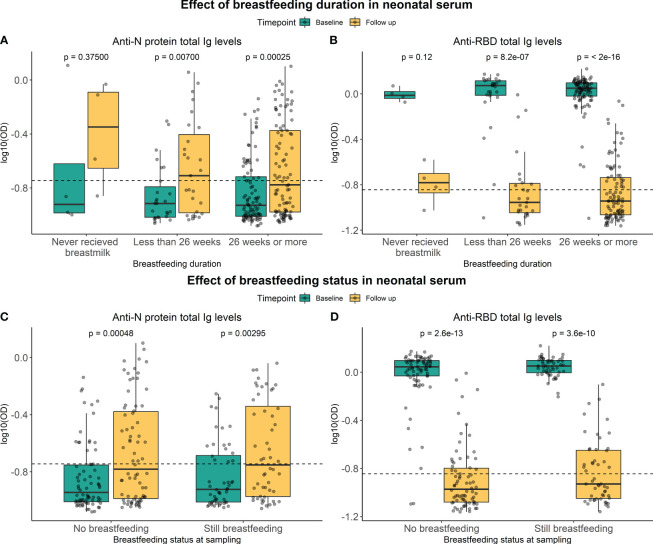
The finding showed that neonates acquired varying levels of SARS-CoV-2 antibodies through transplacental transfer, and the levels were significantly influenced by the mother's vaccination and infection status. The study also found that maternal vaccination and the presence of SARS-CoV-2 antibodies targeting spike RBD were associated with gestational age and APGAR scores. Furthermore, the anti-RBD and -N protein-specific antibody response dynamics during 12 months after birth exhibited differences between mothers and children. RBD and N protein responses were maintained at follow-up in the mother's cohort, while only the N protein response was maintained at follow-up in the children's cohort.
In conclusion, SARS-CoV-2-specific immune responses in newborns rely on maternal immunity, while the persistence of SARS-CoV-2-specific Igs appears to be differently regulated between mothers and children. The study provides new insights into the dynamics of SARS-CoV-2-specific immune responses in newborns and underscores the nuanced relationship between maternal factors and neonatal humoral responses.
关于 SARS-CoV-2 抗体在新生儿中的动态变化以及与母体抗体反应的直接比较,目前尚不清楚。本研究旨在描述并直接比较法罗群岛全国性出生队列中母亲和婴儿的抗体反应。
检测了来自法罗群岛的 537 名新生儿及其 565 名母亲的母血和脐血中针对刺突蛋白受体结合域(RBD)和核衣壳蛋白(N 蛋白)的免疫球蛋白(Ig)水平。本研究包括了随访样本,在出生 12 个月后采集。采用多元线性回归模型评估母体参数与母体和新生儿 Ig 水平及妊娠结局的关系。
研究发现,新生儿通过胎盘转移获得了不同水平的 SARS-CoV-2 抗体,而母体的疫苗接种和感染状况显著影响了抗体水平。研究还发现,母体疫苗接种和针对刺突 RBD 的 SARS-CoV-2 抗体的存在与胎龄和 APGAR 评分有关。此外,出生后 12 个月内抗 RBD 和 -N 蛋白特异性抗体反应动态在母亲和儿童之间存在差异。母亲组的 RBD 和 N 蛋白反应在随访时得到维持,而儿童组仅 N 蛋白反应在随访时得到维持。
总之,新生儿的 SARS-CoV-2 特异性免疫反应依赖于母体免疫,而 SARS-CoV-2 特异性 Ig 的持续存在似乎在母亲和儿童之间受到不同的调节。本研究为新生儿 SARS-CoV-2 特异性免疫反应的动态变化提供了新的见解,并强调了母体因素与新生儿体液反应之间的微妙关系。