Haghighi Elahe, Zeinali Sedigheh
Department of Nanochemical Engineering, Faculty of Advanced Technologies, Shiraz University Shiraz Iran
RSC Adv. 2019 Aug 7;9(42):24460-24470. doi: 10.1039/c9ra04152d. eCollection 2019 Aug 2.
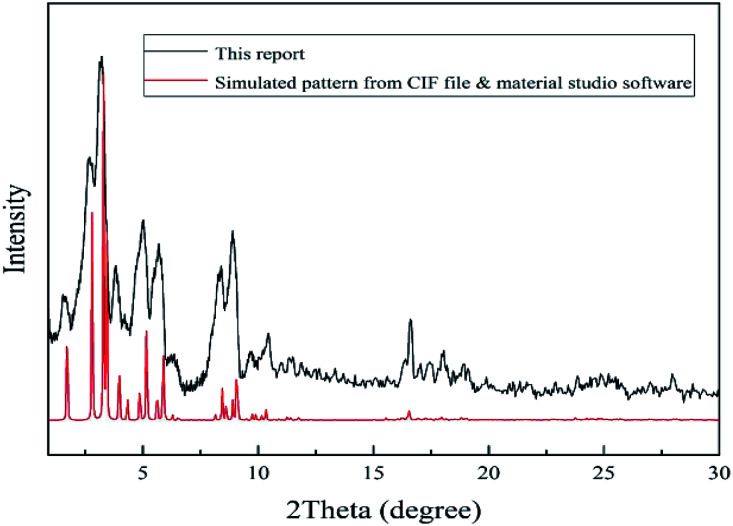
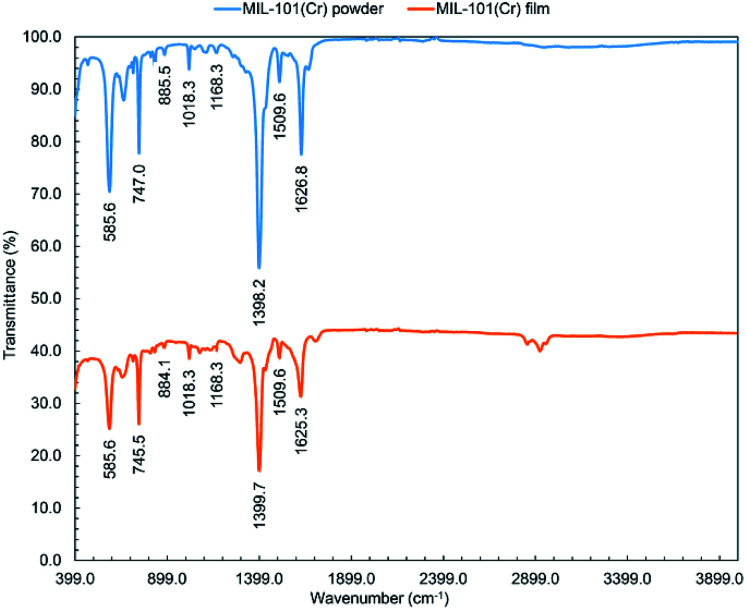
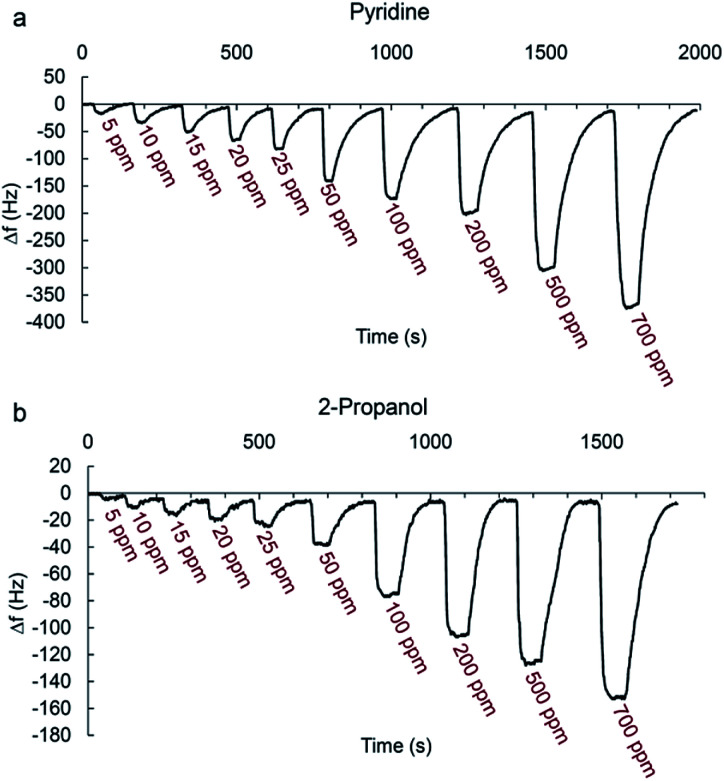
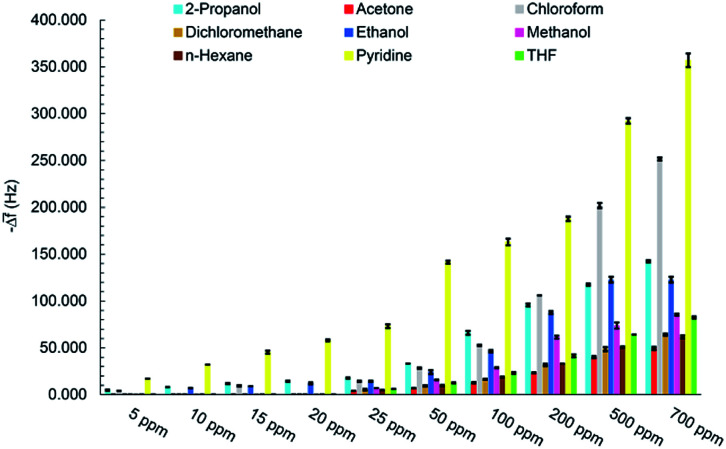
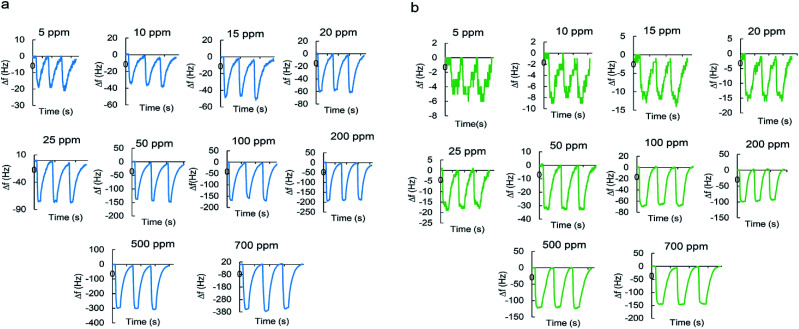
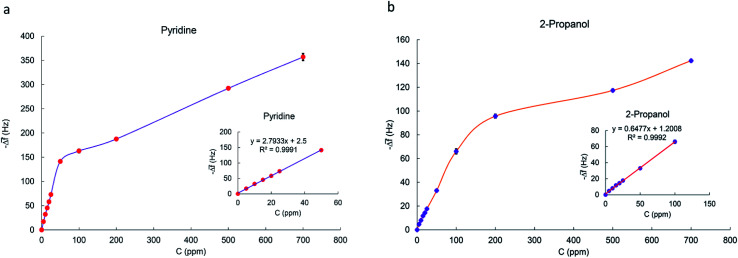
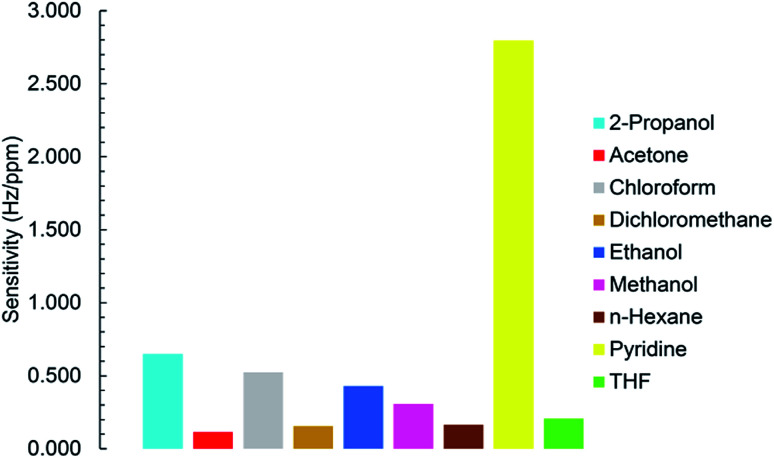
The application of metal-organic frameworks (MOFs) as a sensing layer has been attracting great interest over the last decade, due to their high porosity and tunability, which provides a large surface area and active sites for trapping or binding target molecules. MIL-101(Cr) is selected as a good candidate from the MOFs family to fabricate a quartz crystal microbalance (QCM) nanosensor for the detection of volatile organic compound (VOC) vapors. The structural and chemical properties of synthesized MIL-101(Cr) are investigated by X-ray diffraction (XRD), Fourier-transfer infrared spectroscopy (FTIR) and scanning electron microscopy (SEM) and so on. A stable and uniform layer of MOF is coated onto the surface of a QCM sensor by the drop casting method. The frequency of the QCM crystal is changed during exposure to different concentrations of target gas molecules. Here, the sensor response to some VOCs with different functional groups and polarities, such as methanol, ethanol, isopropanol, -hexane, acetone, dichloromethane, chloroform, tetrahydrofuran (THF), and pyridine under N atmosphere at ambient conditions is studied. Sensing properties such as sensitivity, reversibility, stability, response time, recovery time, and limit of detection (LOD) of the sensor are investigated. The best sensor response is observed for pyridine detection with sensitivity of 2.793 Hz ppm. The sensor shows short response/recovery time (less than two minutes), complete reversibility and repeatability which are attributed to the physisorption of the gases into the MOF pores and high stability of the device.
在过去十年中,金属有机框架(MOFs)作为传感层的应用一直备受关注,这归因于其高孔隙率和可调节性,能够提供较大的表面积和活性位点用于捕获或结合目标分子。从MOFs家族中选择MIL-101(Cr)作为制备用于检测挥发性有机化合物(VOC)蒸气的石英晶体微天平(QCM)纳米传感器的良好候选材料。通过X射线衍射(XRD)、傅里叶变换红外光谱(FTIR)和扫描电子显微镜(SEM)等手段对合成的MIL-101(Cr)的结构和化学性质进行了研究。通过滴铸法将稳定且均匀的MOF层涂覆在QCM传感器表面。在暴露于不同浓度的目标气体分子期间,QCM晶体的频率会发生变化。在此,研究了该传感器在环境条件下的氮气气氛中对一些具有不同官能团和极性的VOCs(如甲醇、乙醇、异丙醇、正己烷、丙酮、二氯甲烷、氯仿、四氢呋喃(THF)和吡啶)的响应。研究了该传感器的灵敏度、可逆性、稳定性、响应时间、恢复时间和检测限(LOD)等传感特性。对于吡啶检测观察到最佳的传感器响应,灵敏度为2.793 Hz/ppm。该传感器显示出短的响应/恢复时间(不到两分钟)、完全可逆性和可重复性,这归因于气体在MOF孔中的物理吸附以及该装置的高稳定性。