De Matos Raphaël, Vuilleumier Jérémy, Mas Christophe, Constant Samuel, Staedler Davide, Gerber-Lemaire Sandrine
Institute of Chemical Sciences and Engineering, Ecole Polytechnique Fédérale de Lausanne, Group for Functionalized Biomaterials EPFL SB ISIC SCI-SB-SG, Station 6 CH-1015 Lausanne Switzerland
Oncotheis 18 chemin des Aulx, CH-1228 Plan-les-Ouates Geneva Switzerland.
RSC Adv. 2019 Oct 4;9(54):31659-31669. doi: 10.1039/c9ra05299b. eCollection 2019 Oct 1.
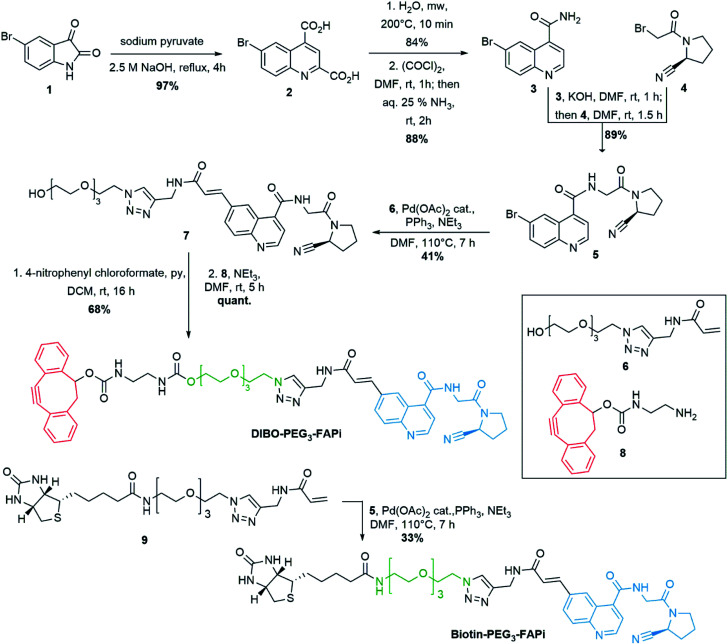
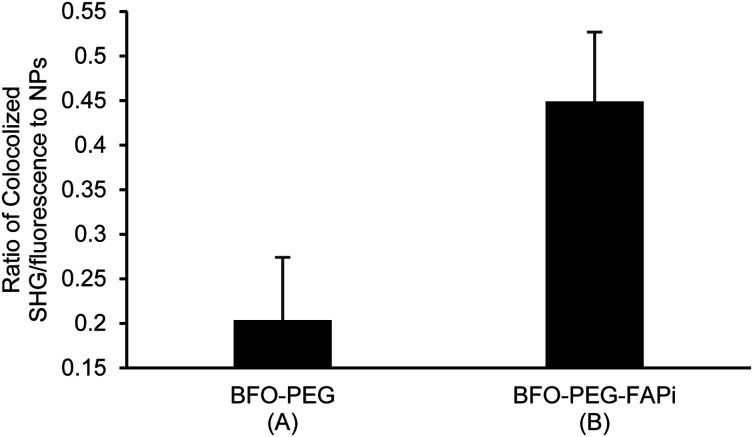
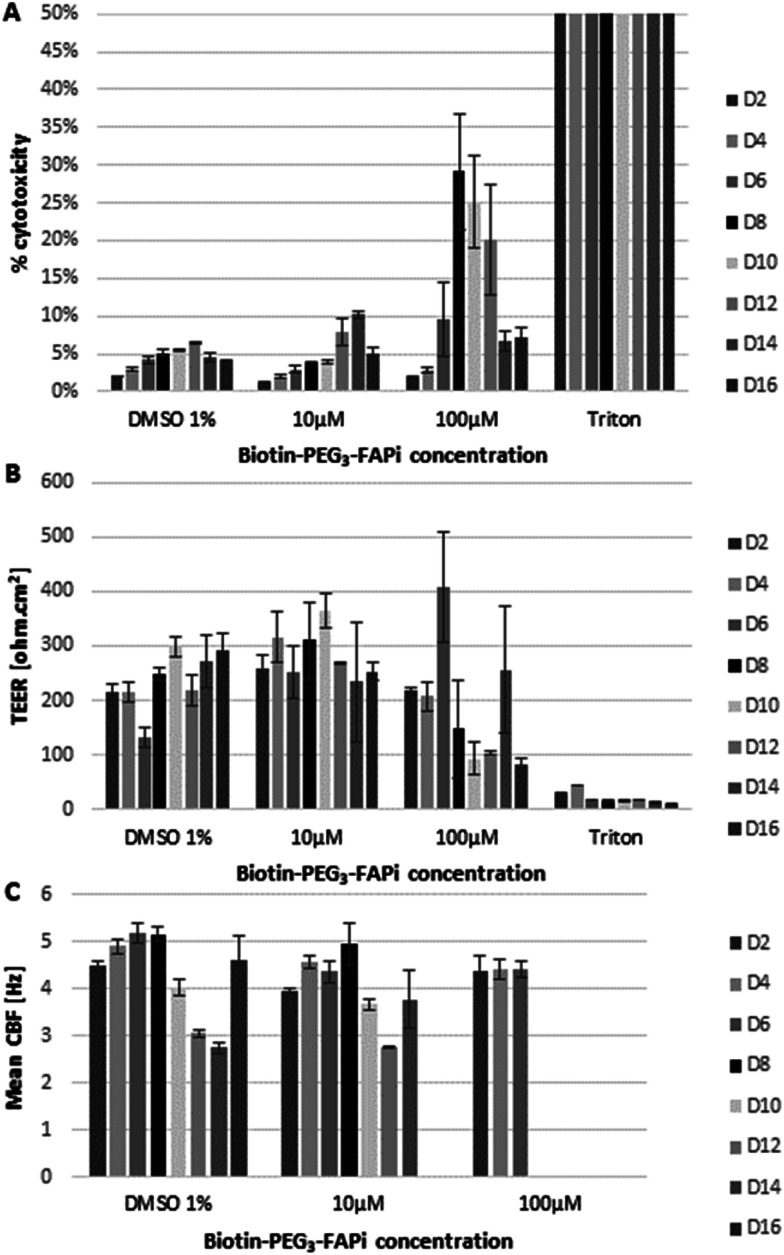
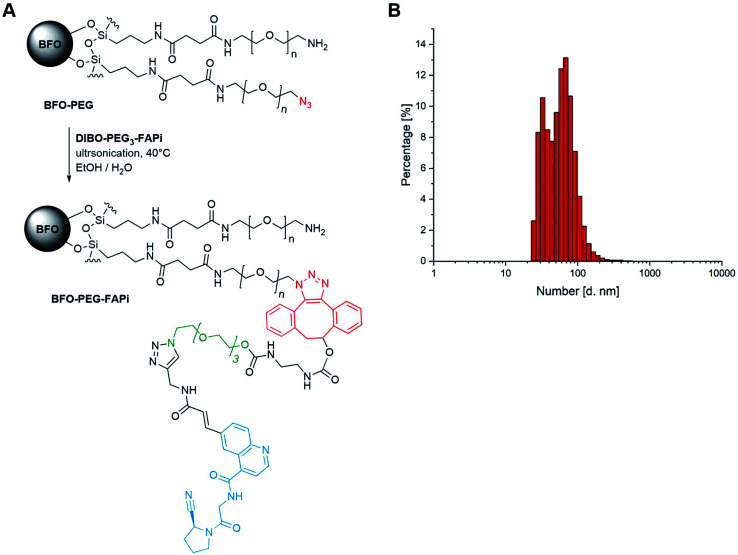
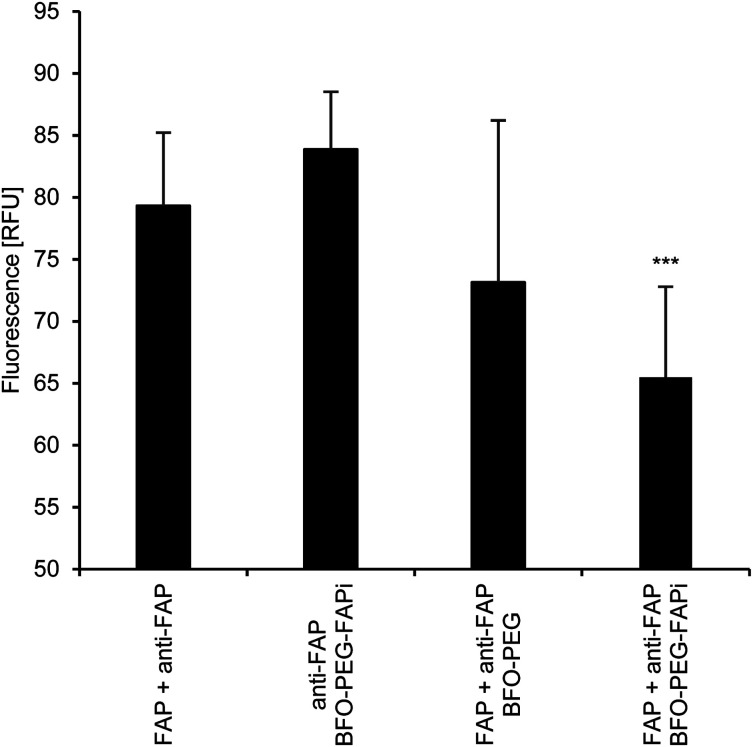
The recent progress in the engineering of nanosized inorganic materials presenting tailored physical properties and reactive surface for post-functionalization has opened promising avenues for the use of nanoparticles (NPs) in diagnosis and therapeutic intervention. Surface decoration of metal oxide NPs with ligands modulating circulation time, cellular uptake, affinity and extravasation through active targeting led to efficient cancer specific bioimaging probes. The most relevant cancer biomarkers studied so far include surface and transmembrane cancer cell receptors. More recently, tumor microenvironments and more specifically the fibroblastic element of the tumor stroma have emerged as a valuable target for diagnosis and treatment of several types of cancers. In this study, a low molecular weight ligand targeting fibroblast activation protein α (FAP), which is specifically expressed by activated fibroblasts of the tumor stroma, was synthesized. This ligand demonstrated nanomolar inhibition of FAP with high selectivity with respect to prolyl oligopeptidase (PREP) and dipeptidyl peptidase (DPP) IV, as well as good biocompatibility toward a human lung tissue model. Bismuth ferrite (BFO) harmonic nanoparticles (HNPs) conjugated to this ligand showed target-specific association to FAP as demonstrated by reverse ELISA-type assay using Human Fibroblast Activation Protein alpha/FAP Alexa Fluor® 594-conjugated Antibody and multiphoton multispectral microscopy experiments. These functionalized HNPs may provide new nanocarriers to explore the role of FAP in tumorigenesis and to target the fibroblastic component of the tumor microenvironment.
纳米尺寸无机材料工程领域的最新进展为后功能化提供了具有定制物理性质和反应性表面的材料,这为纳米颗粒(NPs)在诊断和治疗干预中的应用开辟了广阔前景。通过活性靶向作用,用调节循环时间、细胞摄取、亲和力和渗出的配体对金属氧化物纳米颗粒进行表面修饰,从而得到了高效的癌症特异性生物成像探针。迄今为止,研究最多的相关癌症生物标志物包括表面和跨膜癌细胞受体。最近,肿瘤微环境,尤其是肿瘤基质中的成纤维细胞成分,已成为多种癌症诊断和治疗的重要靶点。在本研究中,合成了一种靶向成纤维细胞活化蛋白α(FAP)的低分子量配体,FAP由肿瘤基质中的活化成纤维细胞特异性表达。该配体对FAP具有纳摩尔级别的抑制作用,对脯氨酰寡肽酶(PREP)和二肽基肽酶(DPP)IV具有高选择性,并且对人肺组织模型具有良好的生物相容性。与该配体偶联的铋铁氧体(BFO)谐波纳米颗粒(HNPs)通过使用人成纤维细胞活化蛋白α/FAP Alexa Fluor®594偶联抗体的反向ELISA型测定和多光子多光谱显微镜实验表明与FAP具有靶向特异性结合。这些功能化的HNPs可能提供新的纳米载体,以探索FAP在肿瘤发生中的作用,并靶向肿瘤微环境中的成纤维细胞成分。